Public Interest at the Core of UP Government’s ‘Calibrated Approach’ to Smart Meters

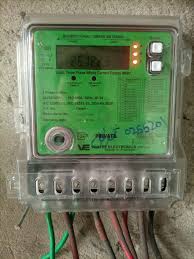
Lucknow, April 2026 : The ongoing debate over smart meters in Uttar Pradesh appears to be moving toward a more balanced and mature direction, with the state government adopting a cautious, consumer-centric approach. What initially began as a discussion on technological reform has now evolved into a broader issue involving public trust, convenience, and administrative accountability.
Under the leadership of Chief Minister Yogi Adityanath, the government has handled the matter with restraint and a phased strategy, signalling that both reform and sensitivity are being given equal importance. The government has made it clear that smart meters are not merely a technological upgrade, but a matter closely tied to public confidence, and therefore must be implemented thoughtfully rather than hastily.
In line with this approach, while acknowledging smart meters as a modern tool for transparency, efficiency, and better energy management, the government has refrained from rushing their rollout without adequate testing and satisfactory outcomes.
Several key measures—including a temporary halt to the process, consumer relief directives, and the formation of a high-level expert committee—underscore the administration’s commitment to ensuring that public interest remains paramount in the final decision. This cautious stance is particularly significant at a time when hurried implementation of policies often leads to unintended complications. Learning from such instances, Uttar Pradesh has prioritised prudence, reflecting a responsible governance model.
The expert committee formed to examine the smart meter issue has emerged as a cornerstone of this process. Constituted in line with the Chief Minister’s vision, the panel includes professors from IIT Kanpur, technical research experts, and experienced officials from the power sector. This is not merely a formal body but a highly capable team equipped to analyse both the technical complexities and the practical implications for consumers.
It is therefore expected that the committee’s report will go beyond technical findings to present a balanced, practical, and consumer-friendly solution.
Before implementing any new technology, a multi-dimensional assessment of its impact is essential. The same principle is being applied in the case of smart meters. While technological advancement is undoubtedly necessary for the future, its implementation must align with current ground realities, consumer behaviour, and practical challenges.
The expert committee is expected to strike this balance, ensuring that the benefits of technology reach consumers without creating new problems. It is equally important to recognise that reforms in the energy sector are not solely about increasing revenue, but also about improving consumer satisfaction and service quality.
Notably, Chief Minister Yogi Adityanath’s stance on the issue has consistently remained clear and consumer-focused. His assertion that the average consumer is fundamentally honest and willing to pay if billed correctly forms the basis of this policy direction. In line with this thinking, directives have been issued that no electricity connection should be disconnected if the consumer is not at fault.
This approach establishes a balance between administrative discipline and human sensitivity, reinforcing the message that reforms will not impose undue burdens on citizens but will instead be carried out with their participation and trust.
Recent decisions by the government further reflect this balanced outlook. Provisions such as maintaining electricity supply for a limited period even in zero-balance situations, setting thresholds below which connections will not be disconnected, and ensuring no disconnection for a defined period after new installations are clearly aimed at protecting consumer interests.
Additionally, the introduction of a multi-level SMS alert system and the decision to avoid disconnections on holidays ensure that consumers receive timely information and are not subjected to unnecessary inconvenience. These steps demonstrate that alongside technological advancement, equal emphasis is being placed on a humane and responsive approach.
Another significant aspect of this process is the government’s decision to defer the installation of smart meters until the expert committee submits its report. This clearly indicates that the administration is not acting in haste, but is following a structured approach—thorough evaluation first, followed by a balanced decision, and then implementation.
Such an approach not only enhances practicality but also strengthens public confidence, conveying that decisions are being made after careful consideration rather than under pressure.
Efforts at the ground level further reinforce this commitment. A special seven-day campaign has been launched, during which officials are being sent door-to-door to listen to consumer grievances and resolve them. The activation of the helpline 1912, regular monitoring of complaints, and prompt action in cases of overbilling highlight the government’s intent to ensure accountability and transparency.
These initiatives are expected not only to address current concerns but also to improve consumer services in the long run.
Overall, while the final decision on smart meters is still under process, its direction is already clear—public interest remains the top priority. The Chief Minister’s directives, the role of the expert committee, and the relief measures introduced so far all indicate that the government is neither under pressure nor inclined toward haste.
Technological advancement is indeed the need of the hour, but its implementation must be balanced, transparent, and consumer-centric.
In conclusion, initial apprehensions surrounding smart meters are gradually giving way to growing trust. If this balance of caution and sensitivity continues, the initiative is likely to succeed and could serve as a model of governance where development and public welfare go hand in hand.






US Says Naval Blockade on Iran Remains in Force, Multiple Commercial Vessels Intercepted
Washington, July 2026: The United States has reaffirmed that its naval blockade against Ir…

US Says Naval Blockade on Iran Remains in Force, Multiple Commercial Vessels Intercepted
Washington, July 2026: The United States has reaffirmed that its naval blockade against Iran …