Kerala Verdict 2026: United Democratic Front Ends Left Era, Signals National Shift

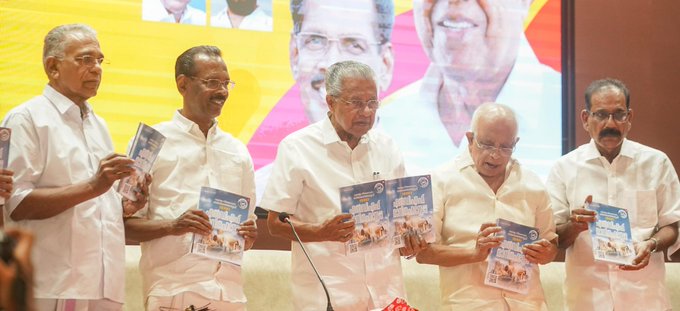
Thiruvananthapuram, May 2026 : The 2026 Kerala Assembly election has delivered more than just a change in government—it has marked the end of a political era. The Congress-led United Democratic Front (UDF) has decisively unseated the Left Democratic Front (LDF), bringing to a close a decade of rule under Chief Minister Pinarayi Vijayan.
More significantly, the verdict leaves India without a single Left-led state government for the first time in over 50 years, underscoring a broader national decline of Left politics. With earlier setbacks in states like West Bengal and Tripura, Kerala had remained the last major bastion of the CPI(M)-led Left.
Although final results are awaited, trends indicate a commanding lead for the UDF with 102 seats, while the LDF trails at 35 and the Bharatiya Janata Party (BJP) has secured three. The scale of the defeat for the ruling front is stark, with 13 out of 21 Cabinet ministers losing their seats—an unmistakable sign of widespread voter dissatisfaction.
Even Pinarayi Vijayan, who managed to retain his constituency, experienced a sharp drop in his victory margin and was trailing in early counting rounds—an unusual development in what was once considered a stronghold.
The UDF’s resurgence has been largely credited to Leader of Opposition V.D. Satheesan, whose campaign focused on governance issues and the promise of a reset in administration. The Indian National Congress recorded its highest-ever tally in the state, winning 63 seats, while the alliance successfully mobilised support among women, youth, and sections of traditional Left voters.
Senior leaders like Rahul Gandhi and Priyanka Gandhi Vadra added momentum to the campaign, but analysts note that the outcome was driven primarily by strong grassroots mobilisation and effective booth-level strategies.
A key feature of the verdict was the erosion of the Left’s traditional strongholds. Regions such as Kannur, long regarded as ideological bastions, witnessed unexpected reverses. The victories of former CPI(M) leaders like G. Sudhakaran, T.K. Govindan, and V. Kunjikrishnan outside the party fold further highlighted internal fractures within the Left’s base.
Meanwhile, the BJP’s improved performance, with wins by Rajeev Chandrasekhar, B.B. Gopakumar, and V. Muraleedharan, points to a gradual expansion in urban pockets, adding a new dimension to Kerala’s traditionally bipolar politics.
The 2026 verdict reflects a maturing electorate willing to reassess loyalties based on governance, credibility, and performance rather than long-standing ideological affiliations. For the UDF, the mandate brings both opportunity and responsibility to deliver on its promise of change.
For the Left, however, the loss of its last remaining stronghold signals a moment of reckoning, requiring deep introspection and reinvention. In essence, Kerala has not only changed its government but also reshaped the national political narrative, marking the end of uninterrupted Left rule at the state level in India.

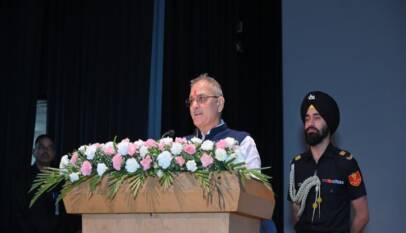

Museums will be named after India’s National Heroes, not invaders: Chief Minister
Grand museum named after Chhatrapati Shivaji Maharaj being constructed at a rapid pace: CM…
Museums will be named after India’s National Heroes, not invaders: Chief Minister
Grand museum named after Chhatrapati Shivaji Maharaj being constructed at a rapid pace: CM …