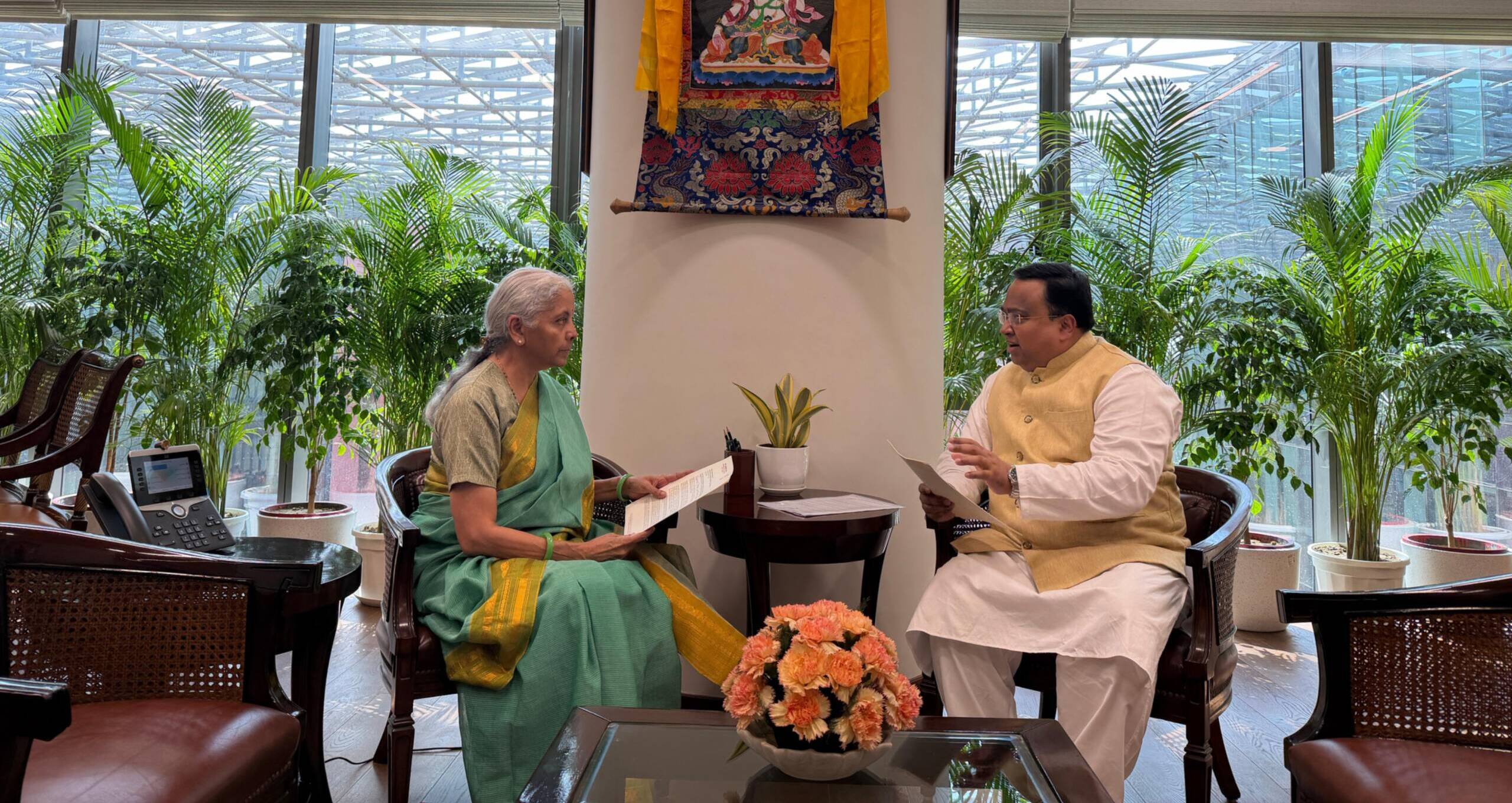
Sasmit Patra Urges Centre to Begin Deliberations on Bringing Petrol and Diesel Under GST

New Delhi, May 2026 : Rajya Sabha MP Sasmit Patra on Wednesday met Union Finance Minister Nirmala Sitharaman and submitted a detailed representation calling for structured national-level discussions on bringing petrol and diesel under the Goods and Services Tax (GST) regime.
In his memorandum, Patra stressed that the constitutional framework under Article 279A(5) already provides for the eventual inclusion of petroleum products within the GST system, subject to the recommendation of the GST Council. He noted that while the issue has been discussed earlier—particularly following directions of the Kerala High Court—current economic conditions make it necessary to revisit the proposal in a more practical and consultative manner.
The Biju Janata Dal (BJD) MP argued that fuel pricing continues to have a direct and wide-ranging impact on inflation across sectors, including transportation, logistics, agriculture, and small businesses. He pointed out that high fuel costs significantly increase the operational burden on MSMEs, raise agricultural input costs, and influence household expenditure patterns across the country.
Patra also highlighted that the existing system, where states levy Value Added Tax (VAT) independently on petroleum products, creates significant interstate variations in fuel prices. According to him, this undermines the core GST objective of creating a unified, harmonised national market and ensuring tax consistency across states.
Referring to Odisha’s economic structure, Patra noted that the state is heavily dependent on mining, industrial production, and logistics networks. He said that inclusion of petrol and diesel under GST could help reduce freight costs, improve supply chain efficiency, and enhance overall industrial competitiveness. He added that such a reform would benefit not only industry but also farmers, transport operators, and common consumers.
At the same time, the MP acknowledged the concerns of states regarding potential revenue losses from petroleum taxation. He therefore advocated a balanced and phased approach rather than immediate full integration. He suggested that the GST Council consider a structured slab system, transitional compensation support for states, a limited revenue-protection cess, and a formula-based fiscal stabilisation mechanism during the transition period.
Patra further urged the Finance Minister to initiate broad-based consultations with all states to build consensus on the issue. He also proposed the formation of a technical and fiscal working group to study implementation models and examine the feasibility of phased integration of petroleum products into the GST framework.
He emphasised that such a step, if implemented carefully, could strengthen India’s tax system, reduce price disparities, and improve economic efficiency while ensuring that state revenues remain protected during the transition phase.



Trump Ties US-Saudi Civil Nuclear Deal to Israel Normalisation Under Abraham Accords
Washington, July 2026 : US President Donald Trump has made Saudi Arabia’s participation in…
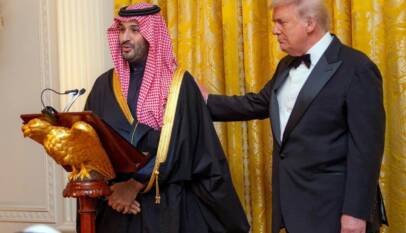
Trump Ties US-Saudi Civil Nuclear Deal to Israel Normalisation Under Abraham Accords
Washington, July 2026 : US President Donald Trump has made Saudi Arabia’s participation in …