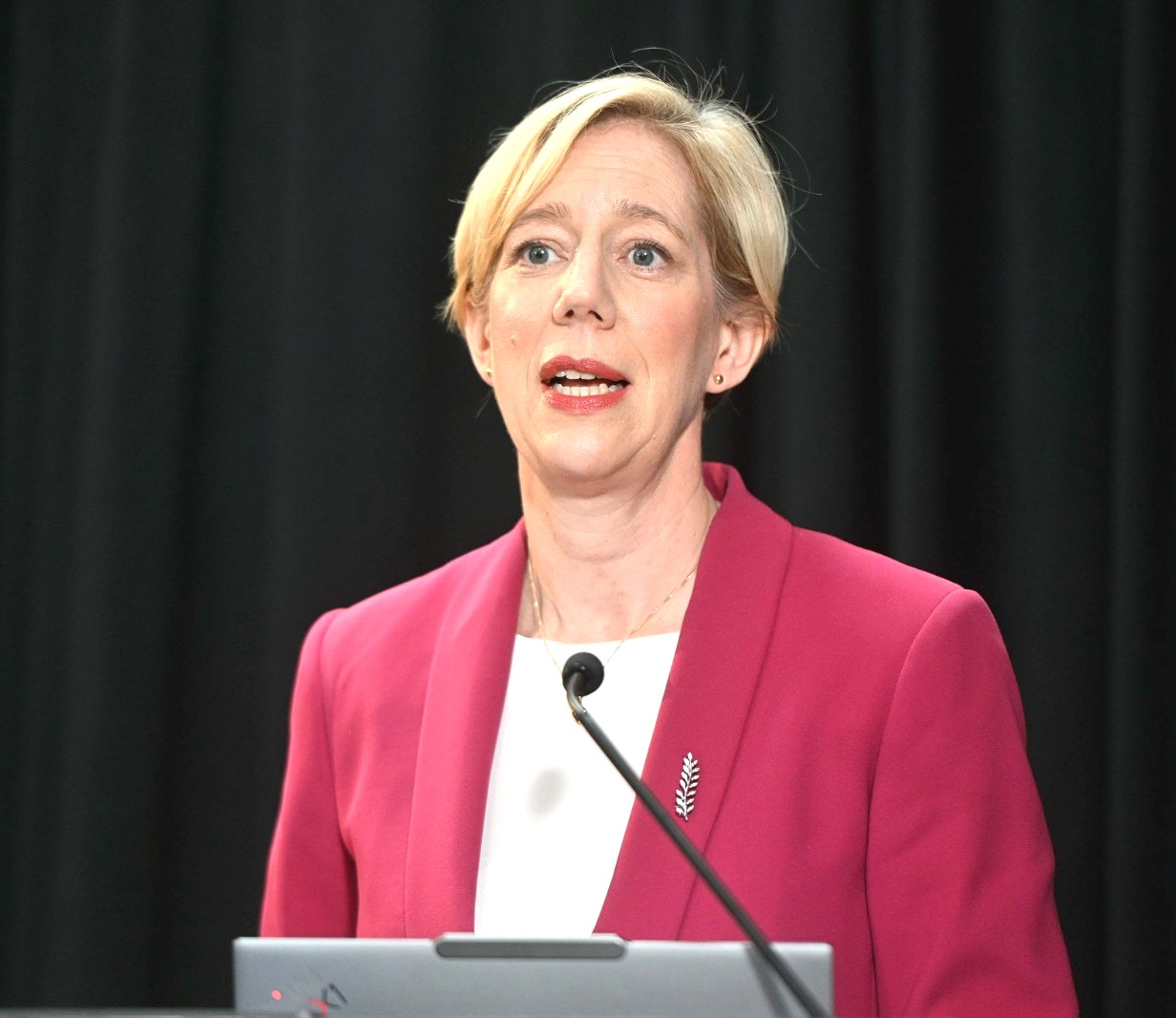
New Zealand: Post Fiscal Budget Yesterday, RBNZ Governor Signals Faster And Larger Rate Hikes.

Wellington; May 2026: New Zealand’s Finance Minister Nicola Willis have presented the nation’s fiscal budget for FY: 2026-2027 yesterday (Thursday – 28th May 2026), as Maverick News 30 reported. The Governor of the Reserve Bank Of New Zealand Anna Breman has categorically signalled a surge in faster and longer hikes are going to be the determining factors.
Reserve Bank of New Zealand Governor Anna Breman delivered the central bank’s most explicit tightening signal of the current cycle today (Friday – 29th May 2026) saying the Official Cash Rate (OCR) is likely to rise sooner and by more than the bank had previously indicated, as the Middle East conflict drives a combination of weaker growth and higher near-term inflation across New Zealand and its trading partners.
Breman framed the shift in explicit terms, pointing to a global backdrop that remains deeply uncertain, with supply chain disruptions and rising input costs bearing down on the economic outlook. She said New Zealand would not be insulated from those pressures, with both the domestic economy and key trading partners likely to absorb weaker growth alongside an inflation pulse that shows little sign of easing quickly.
The governor also flagged a risk that has become increasingly central to the RBNZ’s concern: that expectations of higher costs could themselves become a driver of sustained inflation, creating a self-reinforcing dynamic that monetary policy must move to arrest before it becomes entrenched. That framing gives the bank explicit cover to hike even as growth weakens, prioritising price stability over near-term activity support in a manner consistent with its mandate.
The comments clearly demonstrate the Central Bank Of New Zealand is shifting their strategy towards tighter monetary policies, such as raising interest rates or reducing liquidity, to aggressively control inflation. These policy shifts impact borrowing costs and currencies using market and economic h turn that has been building at the RBNZ through the week. Assistant Governor Karen Silk had said yesterday (Thursday – 28th May) that the bank’s bias is toward rate increases at coming meetings, that it does not need to wait for a quarterly CPI print before acting, and that even a swift end to the Middle East conflict would not fully unwind the inflationary damage already done. Breman’s Friday remarks go further, moving from a directional signal to something closer to a commitment on both timing and magnitude.
The broader data context supports the change in stance by the Reserve Bank. This week’s ANZ-Roy Morgan consumer confidence survey showed two-year inflation expectations at 5.3% in May, down from a record 6.6% in April but still elevated by historical standards. ANZ Research has separately projected that the RBNZ will move the OCR back toward a neutral setting of around 03% sooner rather than later, with July as the likely starting point for the hiking sequence (as hinted by the NZ Finance Minister while delivering her budget speech).
The New Zealand dollar had already strengthened following the RBNZ’s hold earlier this week, which was accompanied by stringent guidance. Breman’s explicit signal that the pace and scale of hikes will exceed prior projections adds further upward pressure on the currency and is likely to prompt a significant repricing at the front end of New Zealand’s interest rate curve. For a central bank that has been navigating the competing pressures of conflict-driven inflation and slowing domestic demand, Friday’s remarks mark a clear decision to prioritise the inflation fight.
This happens to be the most explicit hawkish guidance the RBNZ has delivered in this cycle. “Sooner and by more than previously signalled” is unambiguous forward guidance, and combined with Assistant Governor Silk’s remarks earlier this week pointing to rate increases at coming meetings and a July bias, the RBNZ has now effectively pre-committed to a tightening path. The New Zealand dollar should find firm support on the comments, and the front end of the domestic rates curve is likely to reprice materially. The acknowledgement that inflation expectations themselves could keep prices elevated adds a self-reinforcing dimension to the hiking argument that gives the bank cover to move aggressively even if activity data softens. The growth warning is secondary for markets at this point: the RBNZ has signalled it will hike through weakness if necessary.
Team Maverick.








Indonesian Ferry Fire Kills Five, Leaves 41 Missing
Jakarta, Aug 2026 : Five people were killed and 41 others remained missing after an Indone…

Indonesian Ferry Fire Kills Five, Leaves 41 Missing
Jakarta, Aug 2026 : Five people were killed and 41 others remained missing after …