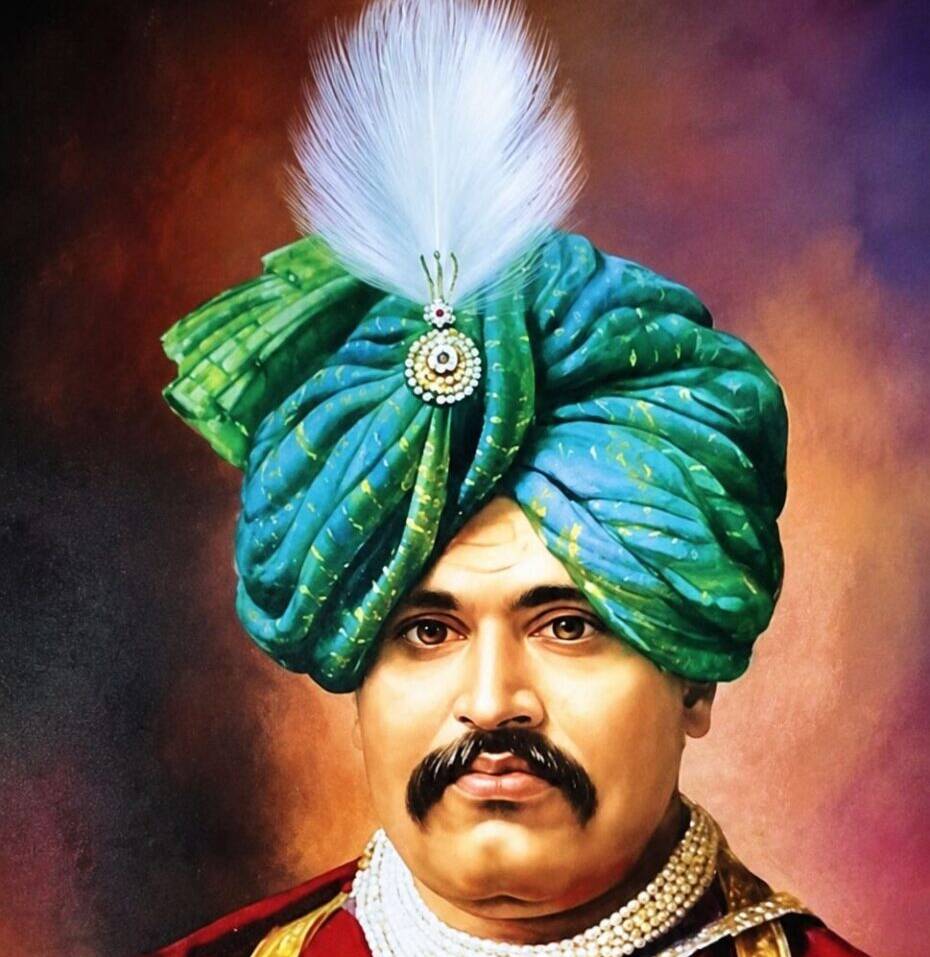
Rajarshi Shahu Maharaj: A Pioneer of Social Justice

June 2026: June 26 marks the birth anniversary of Chhatrapati Shahu Maharaj, one of India’s greatest social reformers and a visionary ruler who dedicated his life to public welfare and the upliftment of the underprivileged. In recognition of his extraordinary contribution to social equality and inclusive development, the Government of Maharashtra commemorates his birth anniversary every year as Social Justice Day across the state.
Shahu Maharaj is widely regarded as a champion of social justice and an architect of progressive reforms that transformed education, governance, and social welfare in India.
Born as Yeshwantrao Jaysingrao Ghatge on June 26, 1874, into the Ghatge family of Kagal, he was the son of Jaysingrao and Radhabai. Following the untimely demise of Chhatrapati Shivaji IV, he was adopted into the Kolhapur royal family on March 17, 1884, and ascended the throne of Kolhapur.
Shahu Maharaj was deeply influenced by Mahatma Jyotirao Phule and the Satyashodhak Samaj. He carried forward Phule’s mission of social equality and became one of the foremost advocates of education for the masses. Believing that compulsory and free education was essential for India’s progress, he introduced several educational reforms in the Kolhapur State. His efforts earned him recognition as the “King of the Farmers” and the pioneer of the hostel movement in India.
In April 1919, during the 13th session of the All India Kshatriya Mahasabha held in Kanpur, he was conferred the title “Rajarshi” in recognition of his remarkable contribution to the upliftment of the marginalized sections of society.
To ensure educational opportunities for poor and deserving students from different communities, especially those migrating from rural to urban areas, Shahu Maharaj established community hostels across his state. In 1901, he founded the Victoria Maratha Boarding House in Kolhapur for Maratha students. He also established the Udoji Students’ Hostel in Nashik, enabling economically weaker students to pursue higher education.
One of his most revolutionary reforms came in 1902, when he introduced 50 per cent reservation in government jobs for backward classes—one of the earliest affirmative action policies in India. He also established the King Edward Mohammedan Education Society in 1906 to promote education among Muslim communities.
In 1907, he founded the Miss Clarke Boarding House for students from the then “untouchable” communities, ensuring them access to education and accommodation. In 1911, he announced financial assistance for 15 per cent of economically disadvantaged students, further expanding educational access.
Shahu Maharaj also introduced teacher training programmes and merit-based promotions for teachers in 1911. In 1917, he made secondary education free and compulsory in the Kolhapur State, significantly boosting educational opportunities for children from poor families. On February 14, 1919, he established the Patil School along with a training programme for village accountants (Talathis).
Recognising that ignorance, poverty, and superstition could only be eradicated through education, he enacted legislation making primary education free and compulsory, ensuring that every village in his state had a primary school despite the substantial financial burden on the administration.
He also promoted technical and military education by establishing the Infantry School, the Shri Shivaji Preparatory Military School in Pune, and the Jaysingrao Ghatge Technical Institute, opening new avenues of professional education for young people.
Shahu Maharaj was equally committed to social reform. In 1917, he legalised widow remarriage, and in 1918, he enacted legislation recognising inter-caste marriages, challenging deeply entrenched social customs. He abolished the Mahar Watan system, granted land rights under the Ryotwari system, outlawed bonded labour, and organised the Mangaon Conference on the Eradication of Untouchability in 1920.
He also removed occupational restrictions imposed on the so-called untouchables, granting them the freedom to pursue any profession. A staunch opponent of caste discrimination, Shahu Maharaj considered the upliftment of the oppressed and backward classes as his life’s mission. He firmly believed that education was the only path to liberation and declared that he would never abandon his commitment to serving the marginalized, even if it meant sacrificing his throne.
He also encouraged workers to unite and fight for their rights, promoting labour welfare and social empowerment.
Paying tribute to his democratic spirit, renowned social reformer Bhai Madhavrao Bagal remarked:
“He was a king, but a democratic king.”
Similarly, eminent social reformer Vitthal Ramji Shinde described him as:
“Shahu Maharaj was not merely a Maratha king, nor was he confined to any caste identity. He was a complete national leader of a new era and a natural force behind Maharashtra’s progress.”
The enduring legacy of Rajarshi Shahu Maharaj continues to inspire India’s pursuit of social justice, equality, education, and inclusive development. His visionary reforms laid the foundation for many of the constitutional principles of affirmative action and social welfare that continue to shape modern India.



No compromise on security during the Kanwar Yatra, take strict action against those spreading rumours: CM Yogi
Chief Minister reviews preparations with officials of Meerut and Saharanpur divisions Issu…
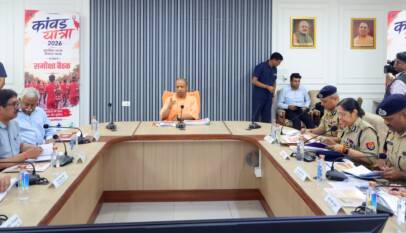
No compromise on security during the Kanwar Yatra, take strict action against those spreading rumours: CM Yogi
Chief Minister reviews preparations with officials of Meerut and Saharanpur divisions Issues clear instructions …