Iran Prepares Final Farewell for Ayatollah Khamenei Amid Renewed Regional Tensions

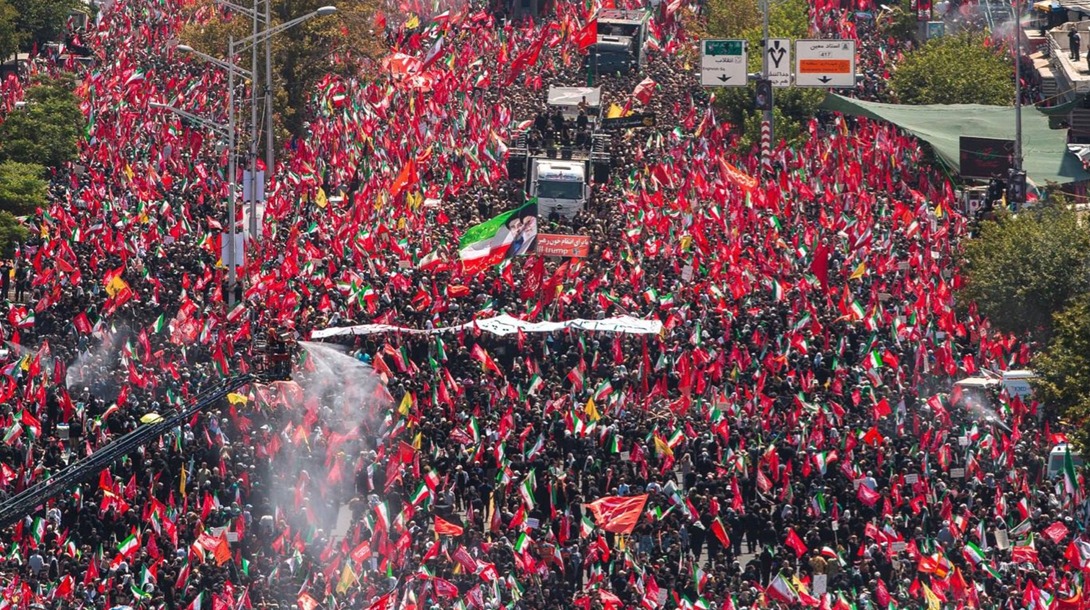
Mashhad, July 2026 : Iran was preparing on Thursday to lay its late Supreme Leader Ayatollah Ali Khamenei to rest in the holy city of Mashhad, bringing to a close several days of elaborate funeral ceremonies that drew millions of mourners across Iran and Iraq. However, the solemn occasion unfolded against the backdrop of renewed military escalation after fresh US airstrikes targeted Iranian positions, raising concerns that the fragile ceasefire in the Middle East could collapse.
Khamenei, who led Iran for nearly four decades, was killed on February 28 during the opening phase of the US-Israeli military campaign against Iran. His death marked one of the most consequential moments in the country’s modern history, leaving a leadership vacuum while dramatically reshaping the regional security landscape.
According to Iranian state media, Khamenei’s burial was scheduled to take place at the revered Shrine of Imam Reza in Mashhad, one of the holiest sites in Shia Islam and the resting place of Imam Reza, the eighth Shia Imam. The shrine has long served as the burial site for several prominent Iranian leaders and monarchs, including former President Ebrahim Raisi.
The funeral procession had originally been planned for Thursday morning but was postponed until the afternoon after ceremonies held in Iraq extended beyond schedule. Officials in Mashhad estimated that nearly 15 million mourners could attend the final rites, reflecting Khamenei’s significance among supporters of the Islamic Republic.
The funeral journey traced symbolic locations central to Iran’s religious and political identity. After three days of public mourning in Tehran, Khamenei’s remains were transported to the holy city of Qom before crossing into Iraq, where large crowds gathered in Najaf and Karbala to pay their respects. The body was then returned to Iran for burial in Mashhad.
Iranian authorities have portrayed the massive public participation as a demonstration of national unity and resilience following months of conflict and domestic unrest. The ceremonies also came just six months after widespread anti-government protests were met with a stringent security crackdown.
Attention has also focused on Mojtaba Khamenei, the late leader’s son and widely viewed as a potential successor. However, he has remained absent from public view since reports emerged that he was injured in the same strike that killed his father. His continued absence has fuelled speculation over Iran’s future leadership.
Khamenei will reportedly be buried alongside several members of his family who also died in the February 28 strike, including his infant granddaughter, daughter, son-in-law and daughter-in-law Zahra Haddad Adel.
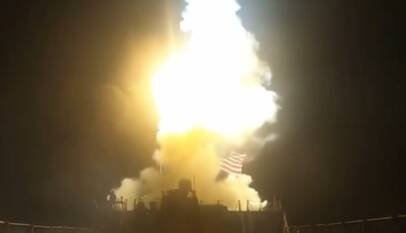
Meanwhile, the regional security situation remained volatile as the United States launched new strikes against Iranian military installations along the country’s southern coastline. The action came after Washington accused Tehran of attacking commercial shipping in the Strait of Hormuz, one of the world’s most critical maritime trade routes for global oil supplies.
US President Donald Trump warned that even stronger military action could follow if Iran continued targeting vessels in the strategic waterway. US Central Command stated that the strikes were aimed at degrading Iran’s capability to threaten international shipping and ensuring freedom of navigation through the Strait.
Iran, in turn, claimed responsibility for missile attacks on US military bases in Bahrain and Kuwait, further heightening fears of a broader regional confrontation despite previous attempts to establish a ceasefire.
Diplomatic efforts have continued alongside military operations, but the latest exchange of attacks has cast fresh uncertainty over prospects for de-escalation. As Iran bids farewell to its longest-serving leader, the nation now faces both an uncertain political transition and the possibility of a renewed phase in the Middle East conflict.
(The content of this article is sourced from a news agency and has not been edited by the Mavericknews30 team.)





ISRO Successfully Tests Indigenous Ship-Borne Tracking System for Gaganyaan Mission
New Delhi, July 2026 : The Indian Space Research Organisation (ISRO) has successfully vali…
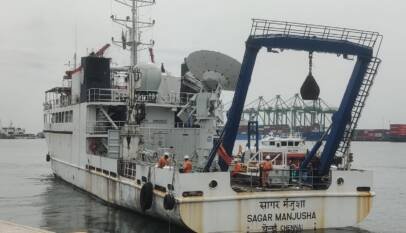
ISRO Successfully Tests Indigenous Ship-Borne Tracking System for Gaganyaan Mission
New Delhi, July 2026 : The Indian Space Research Organisation (ISRO) has successfully validated …