Turkey Plans To Sell Russian S 400 Air Defence System To Gulf Nations To Revive US F-35 Programme.

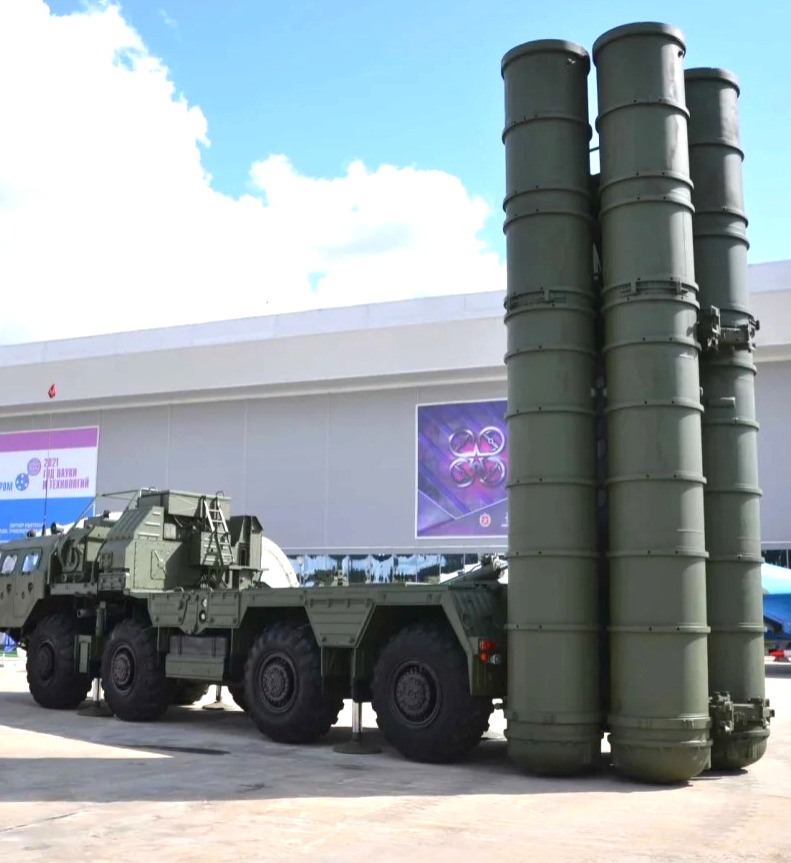
Ankara; July 2026: Turkey could be moving to remove one of the biggest obstacles to restoring defence ties with the United States by exploring the sale of its Russian-made S-400 Triumf air defence missile systems to a Gulf Cooperation Council (GCC) member. The proposal could reopen discussions on Turkey’s long-standing effort to rejoin the US Lockheed Martin F-35 Lightning II program while accelerating its transition toward a NATO-compatible air defence architecture, since the S-400 systems have never entered operational service, their potential transfer would represent a strategic realignment rather than the loss of an active military capability. If completed, the move could reduce tensions with The United States, improve NATO interoperability, and strengthen Turkey’s shift toward Western air and missile defence technologies.
For the Gulf states, acquiring the S-400 would also have far-reaching implications. While the system remains one of the world’s most capable long-range air defence platforms against aircraft, cruise missiles, and selected ballistic missile threats, integrating it into predominantly Western command-and-control networks would require complex technical solutions and could complicate defence cooperation with the United States. Any prospective buyer would therefore have to balance the operational advantages of the Russian system against the diplomatic and interoperability challenges of integrating it into a Western-oriented defence architecture.
On the part of Turkey, acquiring the SAMP/T NG would offer several strategic advantages beyond simply replacing the Russian S-400 air defence system. The program includes industrial cooperation and technology transfer opportunities that support Ankara’s objective of strengthening its domestic defence industry while restoring full interoperability with NATO allies. Replacing the politically controversial Russian system with a European NATO-compatible solution would also remove one of the United States’s principal objections to restoring broader defence-industrial cooperation.
Nevertheless, disposing of the S-400 alone may not automatically restore Turkey’s participation in the F-35 program. Although President Trump has expressed support for reconsidering the issue, US legislation adopted after Turkey’s acquisition of the S-400 remains in force, and any reversal would likely face close scrutiny in Congress. Lawmakers have consistently argued that Turkey must permanently eliminate the risks associated with the Russian system before any return to the F-35 program can be considered.
The report emerged shortly after US President Donald Trump indicated, following discussions with Turkish President Recep Tayyip Erdoğan during the NATO Summit, that his administration would consider lifting sanctions imposed on Turkey under the Countering America’s Adversaries Through Sanctions Act (CAATSA) and was open to discussing Ankara’s eventual return to the US F-35 fighter jet program if the Russian S-400 air defence missile system issue could be satisfactorily resolved. Although no formal policy change has been announced yet, Trump’s remarks represent the clearest indication to date that The United States may be prepared to revisit one of the most contentious defence disputes between the two NATO allies.
Russia has also confirmed that discussions are taking place regarding the future of the S-400 systems. Speaking to Russian media, Kremlin spokesman Dmitry Peskov described the issue as ‘extremely sensitive’ and acknowledged that Russia remains in contact with the Turkish authorities regarding the possible transfer. While Peskov declined to identify any prospective buyer, his remarks indicate that Moscow is directly involved in evaluating any re-export proposal, as Russian approval would be required under the original export agreement.
Turkey’s acquisition of the S-400 from Russia in 2017 triggered one of NATO’s most significant defence crises in recent years. Deliveries began in July 2019 despite repeated warnings from The United States that operating the Russian-made strategic air defence system alongside the F-35 could expose sensitive information about the aircraft’s stealth characteristics, sensor fusion capabilities, and electronic warfare systems. In response, the United States removed Turkey from the multinational F-35 program and imposed CAATSA sanctions on Turkey’s Presidency of Defence Industries (SSB), effectively freezing major areas of bilateral defence cooperation.
Although Turkey accepted delivery of the S-400 batteries, the systems have never entered operational service. Ankara has deliberately refrained from deploying them operationally, preserving strategic flexibility while continuing diplomatic efforts to restore defence relations with The United States. A resale to a third country would provide Turkey with a politically acceptable solution that removes the principal source of friction with the United States without formally canceling the original contract with Russia.
The identity of the prospective buyer has not been officially disclosed, but speculation has centered on the 06 members of the Gulf Cooperation Council: Saudi Arabia, the United Arab Emirates, Qatar, Kuwait, Bahrain, and Oman.
Among these countries, the United Arab Emirates appears to be one of the most credible candidates. Abu Dhabi has pursued a diversified procurement strategy, maintaining close defence cooperation with the United States and Europe while simultaneously expanding partnerships with Asian defence suppliers. Although the UAE previously sought to acquire the F-35, negotiations stalled, prompting the country to explore alternative options to strengthen its integrated air and missile defence capabilities.
Saudi Arabia has also expressed interest in the Russian S-400 air defence system in previous years while continuing to invest heavily in Patriot PAC-3 and Terminal High Altitude Area Defence (THAAD) systems supplied by the United States. However, introducing a Russian long-range air defence system into an architecture built around Western command-and-control networks would present significant interoperability and political challenges. Kuwait and Bahrain remain deeply integrated into the US security framework, while Qatar already operates Patriot systems. Oman, which traditionally pursues a balanced foreign policy, could theoretically enjoy greater diplomatic flexibility, although there is currently no indication that Muscat intends to acquire the Russian system.
Any transfer would require formal approval from Moscow. Russian defence export agreements generally prohibit the re-export of major weapon systems without the original supplier’s consent. Beyond the legal aspect, Russia would also remain responsible for technical assistance, maintenance, spare parts and operator training, making its participation indispensable for any future transaction.
The reported negotiations also coincide with renewed discussions regarding Turkey’s future long-range air and missile defence architecture. Ankara has resumed talks with France and Italy on the possible acquisition and co-production of the SAMP/T NG (New Generation) air defence system, developed by the Eurosam consortium, which brings together MBDA France, MBDA Italy, and Thales. Unlike the S-400, the SAMP/T NG is fully interoperable with NATO’s Integrated Air and Missile Defence architecture and is designed to counter advanced aircraft, cruise missiles, and ballistic missile threats.
Should the reported transfer proceed, it would represent the first known resale of an S-400 system by an export customer, establishing a significant precedent for future Russian arms exports. More importantly, it would signal Turkey’s broader effort to rebalance its strategic partnerships by reducing dependence on Russian strategic systems while strengthening defence cooperation with the United States and European NATO partners.
Team Maverick.





Taiwan Reaffirms South China Sea Claims After Philippines Submits Scarborough Shoal Chart to UN
Taipei, Aug 2026 : Taiwan on Sunday reaffirmed its sovereignty claims over islands in the …
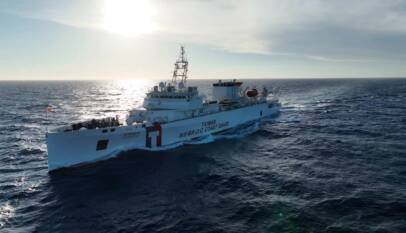
Taiwan Reaffirms South China Sea Claims After Philippines Submits Scarborough Shoal Chart to UN
Taipei, Aug 2026 : Taiwan on Sunday reaffirmed its sovereignty claims over islands in …