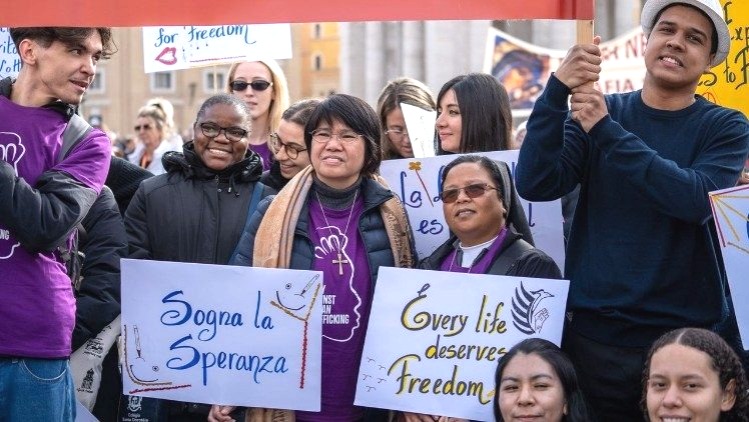
Today, 08th February Is The World Day Of Prayer And Reflection Against Trafficking In Person.

Rome; February 2026: Human trafficking remains one of the most widespread and least visible forms of violence in the world today. It affects millions of people across continents, and operates almost silently, adapting to new technologies, migration routes and global inequalities. Each year, the World Day of Prayer and Reflection against Trafficking in Persons seeks to bring this hidden crime into the light.
From the 04th to the 08th of February, Rome hosted a series of meetings, prayers and public initiatives marking the 12th World Day. Promoted by a broad network of organisations committed to addressing human trafficking, including Talitha Kum, the week focuses on awareness, prevention and concrete action, under the theme Peace begins with dignity.
Among those engaged daily in this work is Sister Abby Avelino, a Maryknoll Sister and International Coordinator of Talitha Kum, the global network of Catholic Sisters working against human trafficking. Speaking to Vatican News, she reflects on how trafficking is changing, why prevention is increasingly urgent, and how dignity must remain at the centre of responses to migration and exploitation.
Sister Abby was born in the Philippines and raised largely in the United States after her family emigrated. “I am Filipino by heart”, she says, “but my life has been shaped by living between cultures”. Her missionary work in Japan marked the beginning of her involvement in anti-trafficking efforts, particularly through accompanying migrants and refugees, many of them women and children. “Through listening to their experiences”, she explains, “I began to see how closely migration and trafficking are linked”. That experience led her to Talitha Kum, a network now present in more than one hundred countries. While awareness of trafficking has increased, she notes that the problem itself continues to grow. “More people today recognise trafficking as a violation of human dignity”, she says. “But many cases are still hidden, and the numbers we see do not reflect the full reality”.
Trafficking methods, she explains, have changed significantly. “It is no longer only the poorest or least educated who are targeted”, Sister Abby says. “Today, traffickers increasingly target young people who are well educated and speak several languages”. Recruitment often takes place online, through offers that appear legitimate and professional. “Many victims believe they are applying for real jobs. They are shown contracts, visas and clear requirements”. From Talitha Kum’s experience, recruitment is particularly high in parts of Africa and Asia, including the Philippines. Some victims are trafficked into forced online scamming operations, often in border areas between Myanmar, Cambodia and Thailand.
“They are told they will work in Thailand, but they end up trapped in compounds. Once there, they cannot leave”. Victims are forced to work in order to repay the cost of their recruitment and transport. “They are trained, assigned roles and pressured to produce results. This is organised crime, and it is a form of modern slavery”.
Sister Abby explains, rescue remains difficult, particularly in conflict-affected regions. “Access to some areas is extremely limited. Often, assistance is only possible once someone reaches a border”. Talitha Kum works with collaborators who are present at these borders, ready to support those who manage to escape. For this reason, prevention is central to the network’s work. “We want to stop trafficking before it happens”, Sister Abby says. Education and awareness are key, particularly around safe migration. “Migration is a human right, but people must know their rights and understand the risks involved”.
She recalls an instance in which a priest she knows asked her to verify a job offer for a family member preparing to migrate. “Through our network, we discovered the company did not exist. That simple check prevented a potentially dangerous situation”. According to Sister Abby, many victims do not recognise that they are being trafficked. “Often, traffickers are people they trust. Some survivors have told us they never imagined a relative or acquaintance would exploit them”. In some situations, victims are coerced into recruiting others as a condition for their own survival.
The impact on the survivors is long-lasting. “Trafficking causes deep trauma. It affects a person’s sense of dignity and security”. Recovery requires time, accompaniment and access to stable work. Without economic stability, people remain vulnerable. Despite this, some survivors choose to speak publicly about their experiences. They want to prevent others from going through the same suffering. Sister Abby explained, for this reason, Talitha Kum places strong emphasis on education at every level. “Our Sisters work in schools, parishes and communities. We even begin with children, because awareness must start early”. Young people, she notes, are both highly vulnerable and powerful agents of change. “When young people understand what is happening, they help protect one another”.
Reflecting on current global debates around migration and ever stricter migration laws, Sister Abby stresses the need to keep the human person at the centre. Migration is often treated only as a political issue, she says. But it is fundamentally a human issue. She refers to her own family’s migration experience and to the fear felt by many migrants today. Policies that rely on exclusion or punishment increase vulnerability. They do not address the causes of migration or trafficking.
For Sister Abby, the message of this year’s World Day is clear. “Peace begins with dignity. If dignity is not protected, peace cannot be sustained”. Human trafficking, she stresses, cannot be separated from broader global issues. Poverty, climate-related disasters, conflict and forced migration all increase vulnerability. The work of Talitha Kum therefore extends beyond rescue and awareness to advocacy and collaboration at international level. The network works locally, she explains, but remains connected globally, sharing information and responding across borders.
“This is not something one group can do alone. It requires shared responsibility and solidarity, among institutions, governments, communities and individuals”.
Team Maverick.


Argentina vs England World Cup Semifinal Declared Highest-Risk Match as Security Tightens in Atlanta
July 16: The FIFA World Cup 2026 has entered its most dramatic stage, but ahead of the blo…
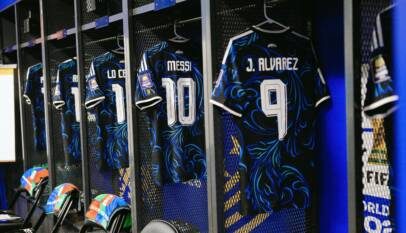
Argentina vs England World Cup Semifinal Declared Highest-Risk Match as Security Tightens in Atlanta
July 16: The FIFA World Cup 2026 has entered its most dramatic stage, but …