The Pope’s Solidarity Amid Ukraine’s Freezing Winter.

Vatican City; February 2026: The appeal for Ukraine voiced by the Pope at the General Audience on Wednesday, 04th February 2026, has taken the form of concrete charity in response to the “consequences of the bombings which”, as Pope Leo XIV said, “have once again begun to strike energy infrastructure”. While, speaking in the Paul VI Hall, the Pope also expressed his gratitude for the many initiatives of solidarity that have emerged in numerous dioceses, especially in Poland. That appeal has now been translated into action through the Dicastery for the Service of Charity, which, at the Pope’s request, has sent three lorries carrying 80 electricity generators to the country.
In doing so, the Pontiff responded to the appeals of many bishops who, aware of the suffering caused by the war, asked for assistance to help address the hardships brought about by the intense cold gripping Ukraine. Night-time temperatures are falling to minus 15 degrees Celsius, while daytime temperatures range between -100C and -12oC. Many people have been forced to leave their homes in order to find warmth in heated shelters where, thanks to the generators, they are also able to receive a hot meal.
The vehicles departed from the Basilica of Saint Sophia in Rome, the church of Ukrainians in Italy, and have already reached their destinations in Fastiv and Kyiv, areas that have been particularly affected by recent attacks. Military operations also took place overnight in Odessa and Kharkiv, where a 10-year-old child lost his life. War shows no mercy, not even towards the youngest. In this climate of fear and violence, every gesture of solidarity offers a moment of relief to those who have been living with the trauma of conflict for four years.
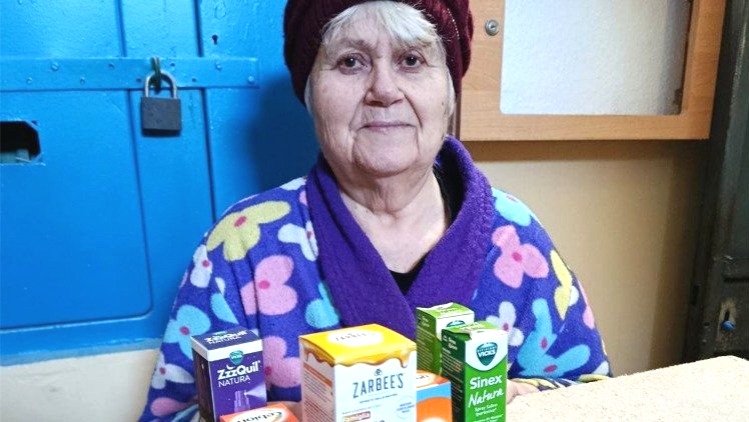
Alongside the generators, thousands of medicines have been sent to Ukraine, including antibiotics, anti-inflammatories, supplements and melatonin, which is especially in demand as it helps people sleep amid ongoing fear and constant stress.
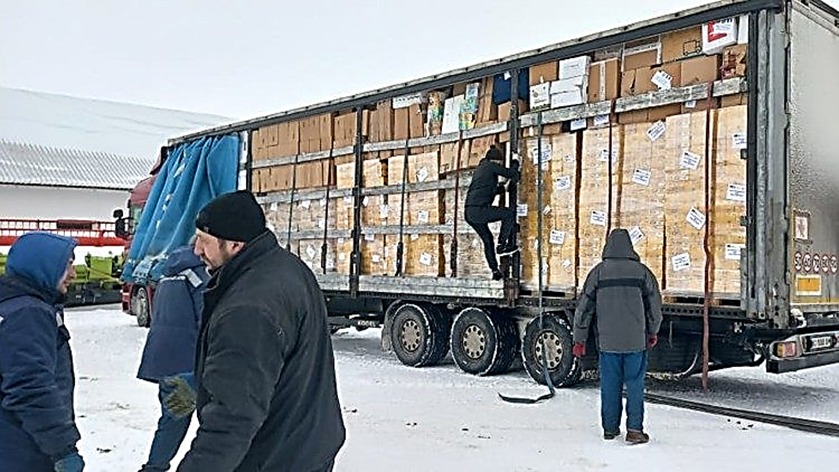
The Dicastery for the Service of Charity, which is headed by Cardinal Konrad Krajewski, has also announced that preparations are underway for the departure of another lorry carrying thousands of antibiotics, anti-inflammatories, antihypertensive medicines and various food supplies. Once the aid reaches the country, distribution is organised through the parish networks of the different dioceses. This outpouring of generosity has been made possible thanks to the Banco Farmaceutico, a network of pharmaceutical companies, the Procter & Gamble group and—Cardinal Krajewski emphasises, expressing thanks on behalf of the Pope—all people of goodwill who continue to support those who suffer.
Earlier, Bishop Jan Sobilo, Auxiliary Bishop of the Kharkiv–Zaporizhzhia Diocese, reiterated about the difficult night and the daily reality of life under shelling. In an interview with the papal media, the Auxiliary Bishop of the Roman Catholic Diocese of Kharkiv–Zaporizhzhia, Jan Sobilo, describes the situation following this particularly heavy night of shelling. He also speaks about the daily life of a city that continues to endure amid air-raid sirens, cold temperatures, and the lack of electricity and heating.
One of the most serious problems remains the lack of electricity. “Power outages happen frequently”, the bishop stresses. “Today, for example, some districts have electricity while others do not. A complete blackout in Zaporizhzhia is rare, but rotating outages in certain areas occur regularly, because there is not enough energy for everyone”. Heating conditions depend greatly on the type of building. “Those who have gas, like us, can heat their homes. But in many modern high-rise buildings everything runs on electricity. When there is no power, there is no heating, the pumps do not work, and there is not even water”.
Bishop Sobilo recounts how some people have to warm themselves in their cars in the evenings before heading back inside to sleep fully clothed to retain the heat. This situation affects not only Zaporizhzhia, but also other cities such as Kyiv and Dnipro.
In these difficult circumstances, parishes have become vital places of support. “People continue to come to Mass”, Bishop Sobilo says. “Near the co-cathedral, at the Shrine of God the Father, the Albertine Brothers distribute bread four times a week. Each time about 1,500 people come, and on Saturdays up to 2,000. They receive bread and canned food”.
However, resources are dwindling. The bishop admits that the situation is very hard as aid is becoming more and more scarce. “It is harder and harder to reach us, and not all transport companies agree to deliver aid”. Nevertheless, the Albertine Brothers continue to bake bread, some bring canned food, and certain organizations help. So, the bishop notes, “we carry on”.
After Christmas, a special shipment arrived, which was an aid truck from Cardinal Konrad Krajewski. One of the much-needed supplies came in the form of instant noodles. People really appreciate them, the bishops recounts, because they are tasty and a little spicy.
“When it’s cold, they warm you up. Soldiers at the front also ask for them because they are light and easy to transport. They say these noodles save their lives. So, there is something to share both with the poor and with the military”.
For the local Church, supporting the military is one of the top priorities. “Helping our soldiers is extremely important”, the bishop stressed. “If they do not defend us, then any other aid will no longer matter. The occupiers would come and take everything. That is why we pray for our soldiers and support them in every possible way. They are defending our country”.
The situation on the front lines remains extremely tense. “Before this winter, things were somewhat calmer. We were convinced that our army would keep the aggressor away from the city. Now we see that the Russians are pressing forward and approaching Zaporizhzhia, the front is cracking, and our boys are in a very difficult situation”.
In these circumstances, the cold only makes everything worse. “They are bombing our city, the energy system, everything that gives us light and heat. As a result, life is very hard for people and for the soldiers. The Russian army is using this winter to push further”.
On a human level, the burden of war is immense. “There are people who used to say, ‘I will never leave this place’. Now I see that even they are packing their bags and leaving with their families. Children can no longer cope: drones fly overhead day and night, and are shot down. It is an enormous emotional strain, especially for the youngest”.
The Auxiliary Bishop of Kharkiv–Zaporizhzhia calls on everyone who can to help in any way possible, emphasizing that people in his diocese have lost everything. “Without electricity and water, businesses cannot operate, and the needs are enormous”, he had noted.
Team Maverick.




Netherlands To Host Special Tribunal For Russia’s Crime Of Aggression Against Ukraine.
Amsterdam/Kyiv; July 2026: Ukrainian President Volodymyr Zelensky has announced today (Sat…
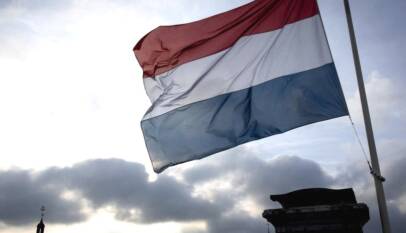
Netherlands To Host Special Tribunal For Russia’s Crime Of Aggression Against Ukraine.
Amsterdam/Kyiv; July 2026: Ukrainian President Volodymyr Zelensky has announced today (Saturday – 04th July …