Israel’s Autonomous Guard Signs $1.9M Surveillance Deal To Enter Indian Defense Market.

New Delhi/Tel Aviv; February 2026: Israeli defense contractor Autonomous Guard has signed a memorandum of understanding with an Indian security client, marking its first deal in the South Asian country. The company’s LinkedIn Post has affirmed the deal.
The LinkedIn post reads: “The $1.9M MoU for advanced surveillance systems underscores both the operational relevance of BeeSense technologies and the expanding cooperation between Israeli and Indian defense sectors.
India represents significant long-term potential, and this first step lays the groundwork for deeper engagement. With integrated ISR and Counter-UAS capabilities, and growing partnerships such as our collaboration with Kela Defense Systems, we continue to build modular, mission-ready architectures tailored to evolving security threats. We look forward to progressing this engagement and exploring additional opportunities in the region”.
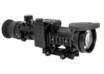
The agreement covers the phased delivery of the Bee 3 dual-channel observation system, developed by the company’s subsidiary BeeSense Sensor Systems. BEE-3 is a powerful day and night, multi-sensor observation and surveillance system specially designed for HLS and security applications. The system provides security operators with mid-range detection and observation capabilities using advanced Thermal and CMOS technology. BEE-3 is the ideal system for a wide range of security applications. The ruggedised system is designed to operate in the harshest environments and weather conditions.
The technology provides day-and-night surveillance using thermal and complementary metal-oxide-semiconductor or CMOS solutions and is designed for homeland security and critical infrastructure protection. The Kfar Saba-based company noted that the system, built with a rugged structure, can be deployed in harsh weather and complex domains.
Shipment is expected to begin immediately after the platform passes the necessary demonstrations, with the first units expected within six months and additional deliveries over the next nine months. Commenting on the deal, Autonomous Guard CEO Baruch Dillion called the agreement “an important milestone for BeeSense Sensor Systems as it carries substantial business potential”.
The agreement comes at the crucial juncture when India strengthens its ties with Israel. According to the Stockholm International Peace Research Institute, India accounted for about 34% of Israel’s defense exports between 2020 and 2024.
On 04 November 2025, the two countries signed a bilateral cooperation strategy to expand defense, industrial, and technological capabilities, including joint production and research initiatives. The memorandum of understanding (MoU) was signed in Tel Aviv during the 17th India-Israel Joint Working Group on defense cooperation, and was led by Indian Defence Secretary Rajesh Kumar Singh and Major General Amir Baram, director general of Israel’s Ministry of Defense.
During the meeting, officials also reviewed existing defense projects and new areas of collaboration, noting that both sides have benefited from each other’s capabilities. They had also reaffirmed their shared commitment to counterterrorism and addressing common security threats. “The MoU will enable the sharing of advanced technology and would promote co-development and co-production”, the Indian defense agency said.
Among the countries’ recent projects are a trial of the Israeli-developed Barak-8 missile for the Indian Armed Forces and joint components production for electric-powered tactical unmanned ground vehicles. In April 2025, the Indian Army has successfully conducted a series of acceptance tests for the Barak-8 missile, marking its operational readiness for deployment across the Indian armed forces. The medium-range surface-to-air missile (MRSAM) had already been integrated into the Indian Navy and Air Force following earlier proof-of-concept trials. During the tests, the Barak-8 system achieved direct hits and intercepted four aerial threats moving at various speeds, altitudes, and ranges.
Earlier, India’s Ministry of Defence had procured the Barak-8 MRSAM under a $1.6-billion deal in 2017, followed by a $777-million order for its long-range variant in 2018. In January 2025, New Delhi ordered over 70 MRSAMs from Bharat, where they will be deployed on several future Indian warships.
“To support the ongoing deployment, IAI has established local companies in India to ensure continuous maintenance and technological support”, the company reported in its press release.
The Israeli-Indian system provides comprehensive defense and protection against a wide range of air and missile threats, including aircraft, helicopters, and drones. It is equipped with an advanced multi-mission radar, a command-and-control system, mobile launchers, and interceptor missiles with a range of up to 70 kilometres (43 miles).
Additional milestones include New Delhi’s first acquisition of the Precise and Universal Launching System (PULS) long-range rocket system, and state-owned Israel Aircraft Industries’ potential selection as a prime contractor for the Indian Air Force’s $900-million replenishment aircraft program.
In the early January this year, the Indian Army has signed a 29.3 billion Indian rupee ($35 million) contract with domestic firm Nibe to deliver a long-range multiple rocket launcher (MRL). The system is based on Elbit Systems’ Precise and Universal Launching System (PULS), capable of engaging targets at ranges of up to 300 kilometres (186 miles).
The acquisition is expected to significantly bolster the army’s deep‑strike capability, an area in which India currently has limited capacity. The move comes as India continues to advance its indigenous rocket artillery programs, having recently test-fired the Pinaka long-range guided rocket at its maximum range of 120 kilometres (75 miles).
By comparison, the PULS system features a universal launcher capable of firing 122mm, 160mm, and 306mm rockets, as well as Predator Hawk tactical ballistic missiles with ranges of up to 300 kilometres (186 miles). It can engage multiple targets simultaneously with high accuracy demonstrated by a circular error probability of less than 5 metres (16.4 feet), and can also launch loitering munitions at ranges of up to 100 kilometres (62 miles), enhancing operational flexibility.
Suvro Sanyal – Team Maverick.








Trump Says US, Israel Agree to Hold Off Iran Strikes Pending Rapid Deal
Washington, Aug 2026 : US President Donald Trump said Saturday that the United States and …

Trump Says US, Israel Agree to Hold Off Iran Strikes Pending Rapid Deal
Washington, Aug 2026 : US President Donald Trump said Saturday that the United States …