Pakistan Bolsters Defence Export Campaign Targeting 13 Countries.

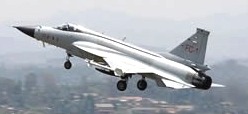
Islamabad; February 2026: During the recently concluded World Defence Show 2026 in Riyadh, Pakistan presented the JF-17 Block III multirole fighter jet, alongside the PL10E short-range air-to-air missile and the Super Mushshak trainer, as part of an export campaign targeting 13 countries across Africa, the Middle East, and Asia. The JF-17, a multirole fighter priced between $25 and $50 million, was displayed alongside the Chinese PL-10E short-range air-to-air missile and the Super Mushshak trainer. However, production constraints at Pakistan Aeronautical Complex and supply chain factors, including the Russian RD-93 engine, remain key variables in delivery timelines.
Countries publicly associated with interest or talks include Bangladesh, Indonesia, Iraq, Saudi Arabia, Libya, Sudan, Morocco, and Ethiopia, while Azerbaijan, Myanmar, and Nigeria already operate the JF-17. Azerbaijan expanded its order to 40 JF-17 Block III jets under a $4.6 billion agreement covering aircraft, training, and associated support, and Indonesia has discussed a potential acquisition of about 40 jets as part of a broader defence dialogue. Saudi Arabia has also been linked to defence negotiations, ranging between $2 billion and $4 billion, tied to fighter procurement, while Libya and Sudan have been associated with wider military packages that may include the JF-17. Pakistan Aeronautical Complex (PAC) currently manufactures fewer than 20 JF-17 aircraft per year, with most production allocated to the Pakistan Air Force, and 45 export orders are reported as outstanding.
One factor behind the increase in foreign interest is the aircraft’s price positioning relative to Western multirole fighters. The JF-17 is commonly cited in the $25 million to $50 million range per unit, depending on configuration and customisation, while some Western fighters, such as recent F-16 or Rafale variants, exceed $100 million per aircraft. Pakistan has emphasised that the JF-17 is developed and produced jointly with China, allowing integration of Chinese avionics and weapons without reliance on U.S. approval processes for munitions or upgrades. The aircraft fires Pakistani and Chinese missiles, drops locally integrated bombs, and is marketed as independent from Western supply chains.
For air forces with limited budgets or facing restrictions on Western systems, this fighter jet provides a multirole option that combines air defence and strike functions in a single-engine platform. The cost differential also allows some buyers to acquire a larger number of JF-17s within the same financial envelope compared with higher-priced alternatives. A second factor is the operational visibility gained during the May 2025 India-Pakistan confrontation, in which Pakistan Air Force squadrons flew JF-17s alongside Chinese-built J-10 fighters. Pakistan has stated that its aircraft and Chinese-origin weapons systems performed effectively during the four-day clash, and India acknowledged aircraft losses without specifying numbers.
As per Pakistani sources at least five countries expressed interest in the JF-17 in recent months, including Iraq, Bangladesh, Indonesia, Saudi Arabia, and Libya. Iraq formally signaled interest during high-level air force talks in Baghdad in January 2026, linking any acquisition to pilot training and maintenance support. Bangladesh discussed the potential procurement of 20 to 32 JF-17 Block III fighters within a wider defence cooperation package, while Indonesia framed its talks as part of a diversified fleet strategy. These discussions occur in parallel with global supply chain disruptions linked to the war in Ukraine and instability in the Middle East, which have affected delivery timelines for Western systems.
Industrial capacity remains a structural constraint for now, because Pakistan Aeronautical Complex produces between 16 and 20 JF-17s annually under the current arrangement, with 58% of production and final assembly carried out in Pakistan and 42% of avionics and major subsystems supplied by Chinese partners. The JF-17 supply chain also includes the Russian-made RD-93 turbofan jet engine produced by Klimov, and securing sufficient engines is a relevant consideration given sanctions linked to the Ukraine conflict. Pakistan’s air force operates more than 150 JF-17s and still plans to replace over 250 aging Dassault Mirage and Chinese F-7 aircraft, meaning domestic demand competes with export commitments.
Former Pakistani air force officers have indicated that production could significantly increase by the end of 2027 through factory upgrades and expansion at Kamra. Possible measures include additional assembly lines, higher production tempo, and deeper Chinese participation in component manufacturing while Pakistan focuses on airframe production and final assembly. Delivery sequencing for export customers would likely depend on phased contracts aligned with industrial expansion. The JF-17 Thunder originated from agreements signed in 1998 and 1999 between Pakistan and China following U.S. restrictions under the Pressler Amendment that blocked the delivery of 28 F-16 fighters to Pakistan.
JF-17:
Design: The airframe is of semi-monocoque structure, constructed primarily of aluminium alloys. High strength steel and titanium alloys are partially adopted in some critical areas. The airframe is designed for a service life of 4,000 flight hours, or 25 years, the first overhaul being due at 1,200 flight hours. Block 2 JF-17s incorporate greater use of composite materials in the airframe to reduce weight. The mid-mounted wings are of cropped-delta planform. Near the wing root are the LERX, which generate a vortex that has the effect of providing more lift to the wing at high angles of attack encountered during combat manoeuvres. A conventional tri-plane empennage arrangement is incorporated, with all-moving stabilators, single vertical stabiliser and rudder, as well as twin ventral fins. The flight control surfaces are operated by a computerised flight control system (FCS), which also adjusts the slats/flaps for improved manoeuvering. Up to 3,629 kg (8,000 lb) of ordnance, equipment and fuel can be mounted under the hardpoints, two of which are on the wing-tips, four under the wings and one under the fuselage. Two bifurcated air inlets, one on either side of the fuselage behind and below the cockpit, provide the engine’s air supply. The position and shape of the inlets is designed to give the required airflow to the jet engine during manoeuvres involving high angles of attack. A DSI design is used to simultaneously prevent boundary layer airflow entering the inlet and decelerate supersonic airflow.
Avionic: The software written for the JF-17’s avionics totals more than one million lines of instructions, incorporating the concept of open architecture. Rather than using the Ada programming language, which is optimised for military applications, the software is written using the popular civilian C++ programming language to better use the large number of civilian software programmers available.
The aircraft’s glass cockpit incorporates an electronic flight instrument system (EFIS) and a wide-angle holographic head-up display (HUD), which has a minimum total field of view of 25 degrees. The EFIS is made up of three colour multi-function displays (MFD) providing basic flight information, tactical information and information on the engine, fuel, electrical, hydraulics, flight control and environment control systems. The HUD and MFD can be configured by the pilot to show any of the available information. Each MFD is 20.3 cm (8 in) wide and 30.5 cm (12 in) tall, arranged side-by-side in a portrait orientation. The central MFD is placed lower down to accommodate an up-front control panel between it and the HUD. The aircraft also includes a health and usage monitoring system and automatic test equipment.
The aircraft has a composite FCS consisting of conventional controls with stability augmentation in the yaw and roll axis and a digital fly-by-wire (FBW) system in the pitch axis. The leading edge slats/flaps and trailing edge flaps are adjusted by the FCS automatically during manoeuvering to increase turning performance. Some sources state that the system has been upgraded to provide fly-by-wire flight control in the roll and yaw axis also, the serial production aircraft having a digital quadruplex (quad-redundant) FBW system in the pitch axis and duplex (dual-redundant) FBW system in the roll and yaw axis.
Propulsion: The JF-17 is powered by a single Russian RD-93 turbofan engine, which is a variant of the RD-33 engine used on the Mig-29 fighter. The engine gives more thrust and significantly lower specific fuel consumption than the turbojet engines fitted to older combat aircraft being replaced by the JF-17.
The Guizhou Aero Engine Group has been developing a new turbofan engine, the WS-13 Taishan, Guizhou WS-13. Dry Thrust 51.2 kN / Thrust After Burner 86.37 kN
The fuel system comprises internal fuel tanks located in the wings and fuselage, with capacity for 2330 kg (5,130 lb) of fuel, that are refuelled through a single point pressure refuelling system (see turbine fuel systems). Internal fuel storage can be supplemented by external fuel tanks. One 800 litre drop tank can be mounted on the aircraft’s centerline hardpoint under the fuselage and two 800 litre or 1100 litre drop tanks can be mounted on the two inboard under-wing hardpoints. The fuel system is also compatible with in-flight refuelling (IFR), allowing the aircraft to take on fuel from a tanker aircraft when an IFR probe is installed and increasing its range and loitering time significantly. All production aircraft for the Pakistan Air Force are to be fitted with IFR probes
Armament: JF-17 can be armed with up to 3,629 kg (8,000 lb) of air-to-air and air-to-ground weaponry, as well as other equipment, mounted externally on the aircraft’s seven hardpoints. The under-fuselage and inboard under-wing hardpoints are plumbed, enabling them to carry drop tanks of various sizes for extra fuel.
Air to Air Missiles: Short range infra-red homing missiles currently integrated include the Chinese PL-5E and PL-9C, as well as the AIM-9L.
Missiles & Bombs: Underwing hardpoints can be fitted with multiple ejector racks, allowing each hardpoint to carry two 500 lb (241 kg) unguided bombs or LGBs (Mk.82 or GBU-12). Unguided air-to-ground weaponry includes rocket pods, gravity bombs of various sizes and the Matra Durandal anti-runway munitions. Precision-guided munitions such as LGBs and satellite-guided bombs are also compatible with the JF-17, as are other guided weapons such as anti-ship missiles (CM-400AKG) and anti-radiation missiles. In July 2011, it was reported that Pakistan has taken delivery of the Brazilian MAR-1 anti-radiation missile and is integrating the weapon on its JF-17 fleet.
Guns: 1× 23 mm GSh-23-2 twin-barrel cannon (can be replaced with 30 mm GSh-30-2).
Team Maverick.





Chandrababu Naidu Reviews Preparations for PM Modi’s August 1 Inauguration of Bhogapuram International Airport
Amaravati, July 2026 : Andhra Pradesh Chief Minister N. Chandrababu Naidu on Monday conduc…
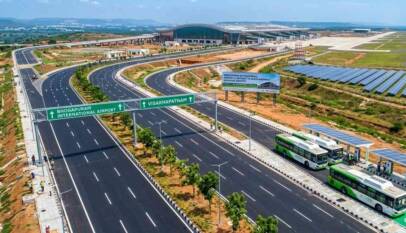
Chandrababu Naidu Reviews Preparations for PM Modi’s August 1 Inauguration of Bhogapuram International Airport
Amaravati, July 2026 : Andhra Pradesh Chief Minister N. Chandrababu Naidu on Monday conducted …