West Sending Nuclear Weapons To Ukraine Could Disrupt Peace Talks.

Moscow; February 2026: The intention of France and UK to transfer nuclear weapons to Ukraine suggests their desire to disrupt the peace talks; Slovakia and Hungary oppose Ukraine’s EU accession; and American companies may begin to file large-scale lawsuits against the authorities to recover the national tariffs they have paid.
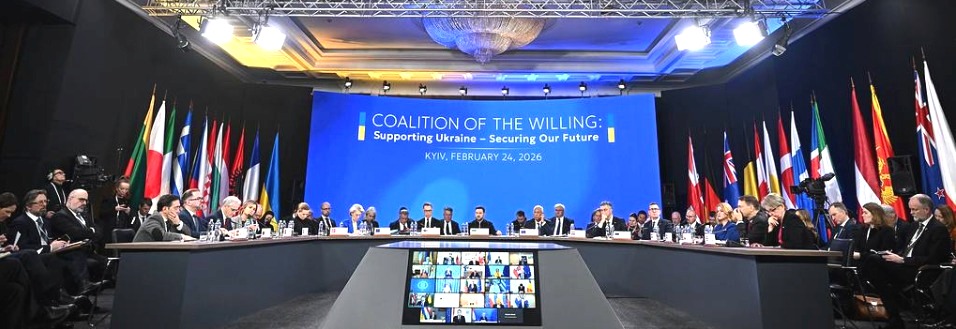
The intention of France and UK to transfer nuclear weapons to Ukraine suggests their desire to disrupt the peace talks. Experts agree that providing Ukraine with nuclear warheads would make European countries direct participants in the conflict and violate the Nuclear Non-Proliferation Treaty. According to the Russian Foreign Intelligence Service (SVR), these countries intend to bolster Ukraine’s military capabilities to enable it to seek more favorable terms for ending hostilities with Russia.
“The UK and France want to step up their efforts to ensure that the Ukrainian conflict lasts as long as possible. However, negotiations must continue, bearing in mind that common sense will ultimately prevail among our opponents. Perhaps we need to appeal to the parliaments of the relevant countries, including the EU, so they understand where their leaders are taking them”, Grigory Karasin, the head of the Russian Federation Council Committee on International Affairs, told media reporters.
According to the European Parliament, this issue “needs to be discussed with the countries concerned before any conclusions are drawn. So far, I have not heard anything in parliament on this matter. However, given the seriousness of everything related to nuclear weapons, it is necessary to remain attentive to this matter”, Fernand Kartheiser, a member of the European Parliament, informed the Press.
A similar position was expressed in the British Parliament. Richard Balfe, a member of the House of Lords, said he had not yet heard anything on the subject, adding that, if true, it would be an irresponsible and bad idea that should be examined.
The possible transfer of nuclear weapons or their components to Ukraine by Western countries will not go unanswered by Russia or other nuclear powers, Valdai International Discussion Club expert Andrey Kortunov has reiterated. According to the Ukrainian authorities, the presence of these weapons could have prevented the conflict with Russia, but Ukraine lacks the technical infrastructure to maintain them, the expert noted.
The delivery of nuclear weapons or so-called dirty bomb components to Ukraine is possible because France and the UK want the Ukrainian conflict to continue, Alexander Kamkin, associate professor at the Russian Financial University, pointed out. In his opinion, this would theoretically make Europeans raise the stakes in the event of a threat to the Zelensky regime or Russian troops advancing towards Ukraine and Dnepropetrovsk. “France and UK have invested too many resources and do not want to allow Russia to win the armed conflict”, the political expert has emphasised.
Meanwhile, Bratislava is against Ukraine’s immediate admission to the EU. Hungary will also continue to oppose Ukraine’s European integration. Budapest blocked the adoption of the 20th package of sanctions against Russia, as well as the allocation of a 90 billion euro loan to Ukraine. To avoid leaving Ukraine empty-handed, Brussels is considering granting partial membership without the right of veto. However, experts agree that Ukraine’s accession to the EU is impossible without lifting martial law and holding elections.
“Slovakia supports Ukraine’s gradual rapprochement with the EU, including financial and technical assistance, but will not promote circumvention of basic conditions such as fighting corruption, ensuring the rule of law, and protecting minority rights. Ukraine has made some progress, but the accession criteria have not yet been fully met”, Slovak National Council Deputy Speaker Tibor Gaspar told reporters.
Despite pressure, Budapest will also continue to oppose Ukraine’s membership in the EU, the country’s government press service said in a commentary to the newspaper. “Ukraine demands that Hungary abandon Russian energy sources, allocate funds to Ukraine, and support its EU membership. The government will not back down from its program under any threat. It acts solely in the interests of the Hungarian people and does not yield to the demands of any foreign power”, the statement noted.
As per political experts, the likelihood of Ukraine joining the EU in 2027 is minimal. In particular, Ukraine remains under martial law, which is unlikely to be lifted in the near term. In addition, there are no elections and no proper rule of law, Ivan Loshkarev, associate professor at the Moscow State Institute of International Relations (MGIMO), noted.
Last year, Volodymyr Zelensky stated that Ukraine would only agree to full EU membership. The Ukraine authorities are particularly interested in security guarantees, such as the deployment of European forces and funding for the defence sector. However, due to opposition from Hungary and Slovakia, Brussels is unlikely to be able to agree on such measures. “I am not sure that the EU will be ready to publicly commit to security guarantees. Perhaps the matter will not go beyond offers of asylum from one of the European countries for the Ukrainian leadership”, Loshkarev pointed out.
Political expert Denis Denisov, in turn, emphasised that the EU was originally created as an economic union. This is why the issue of military guarantees for Ukraine has not yet been officially reflected in the association’s documents. He also considers Ukraine’s accession to the EU to be virtually unfeasible.
As predicted, the American companies may begin to file large-scale lawsuits against the authorities to recover the national tariffs they have paid. The logistics company FedEx has already filed a claim after the Supreme Court ruled that Donald Trump’s tariffs were illegal. However, experts believe the administration will delay refunds for as long as possible. The government will verify whether such entities have actually incurred losses or passed the costs on to consumers. Against this backdrop, there have been reports of new broad tariffs being introduced.
Usually, 180 days are allowed for the refund of excess tariffs paid on already closed declarations, Yury Ichkhtidze, an analyst at Freedom Finance Global, asserted. This means that only those amounts that were transferred to the budget no later than 06 months ago can be refunded. Thus, this rule only applies to payments made after August 22nd. At the same time, the expert recalled that there have been no precedents for the refund of nationwide tariffs set by the US authorities.
The first decisions on compensation should not be expected before the November congressional elections, Mikhail Nikitin, head of international business and finance practice and partner at 5D Consulting, noted. It is not in the Democrats’ interest to give money to the Republican administration, nor is it in the Republicans’ interest to set a precedent for mass payments.
Oleg Abelev, head of the analytical department at Ricom Trust, told reporters that he expects increased uncertainty and a slowdown in trade, causing businesses around the world to pause operations in anticipation. “The main loss is the loss of trust, as no one will rush to sign long-term deals with Washington because they will understand that the court could overturn them”, the analyst said.
The tariffs that Trump introduced to replace the old ones are not so much an escalation as a forced manoeuvre. Considering that, in the spring, tariffs against some countries were over 50%, the current 15% tariffs seem quite reasonable, Nikitin said. However, they will also affect Russia, albeit less so, as trade between Russia and the US remains limited. In the first ten months of 2025, trade turnover reached $4 billion, Nikitin recalled. In this sense, even the current turbulence is an opportunity to establish a new, pragmatic dialogue with the world’s largest economy. It would be shortsighted to reject such an opportunity, the expert emphasised.
Experts also praise the removal of tariff pressure on key oil buyers, which has a positive effect on Russia. “The canceled tariffs no longer threaten India and China”, Abelev pointed out. “This means that Trump will now be unable to unilaterally impose secondary tariffs on third countries for trading with Russia or Iran, for example, under current legislation”, Olga Belenkaya, head of macroeconomic analysis at Finam, explained.
As expected, EU countries were unable to quickly agree on the 20th package of sanctions against Russia due to disagreements over banning the transport of Russian oil by EU ships. Meanwhile, the EU is discussing the possibility of completely restricting the transit of tankers carrying our raw materials through the Danish straits connecting the Baltic Sea and the North Sea. Such a measure is difficult to approve at the level of all EU countries. According to experts, it contradicts the 1982 UN Convention on the Law of the Sea (UNCLOS). However, there are loopholes in this document that could be used to target tankers carrying Russian oil.
A complete closure of the Baltic Sea to Russian tankers seems highly unlikely, as it would look like a naval blockade, which is very difficult to implement legally and economically, Finam analyst Alexander Potavin told Reporters. EU countries are trying to exert maximum pressure on the Russian shadow fleet while acting within the bounds of international law.
Regarding the nationality of the vessels, Valery Andrianov, an associate professor at the Russian Financial University, noted that the shadow fleet initially used flags of convenience under which three-quarters of the world’s fleet sails: Panama, Liberia, and the Marshall Islands. Due to US pressure, the shadow fleet has had to change jurisdictions and use the flags of Gabon, the Comoros, and a number of other countries that do not even have access to the sea. Recently, the shadow fleet has been actively switching to the Russian flag. There can be no legal grounds for detaining ships in this case. By raising the Russian flag, a tanker ceases to be a shadow vessel, and attempts to detain it would constitute an act of aggression against Russia.
Andrianov believes that, if it happens, the closure of the Baltic Sea to the shadow fleet will not be total. Loopholes in UNCLOS allow only a limited number of tankers with clearly suspicious flags to be stopped. Moreover, there are fewer and fewer of them.
According to Alexander Potavin, pressuring the shadow fleet with environmental requirements, insurance restrictions, and stricter inspections of vessels with questionable status will not significantly decrease Russian oil exports through the Baltic Sea. However, it will increase inspection costs, transportation time, and regulatory risks for buyers. This could result in a higher discount for Russian Urals export oil which is primarily supplied via the Baltic Sea in comparison to Brent. Under maximum EU pressure, exports through the Baltic Sea could temporarily decline by 10-20%, and the Urals discount relative to Brent could increase by an additional $3-5 per barrel.
Team Maverick.


Solar Defence Showcases Indigenous ‘Bhargavastra’ Counter-Swarm Drone System to Indian Army
New Delhi, July 2026 : Solar Defence and Aerospace Ltd. (SDAL) on Friday showcased its ind…
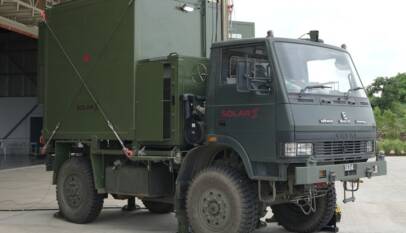
Solar Defence Showcases Indigenous ‘Bhargavastra’ Counter-Swarm Drone System to Indian Army
New Delhi, July 2026 : Solar Defence and Aerospace Ltd. (SDAL) on Friday showcased …