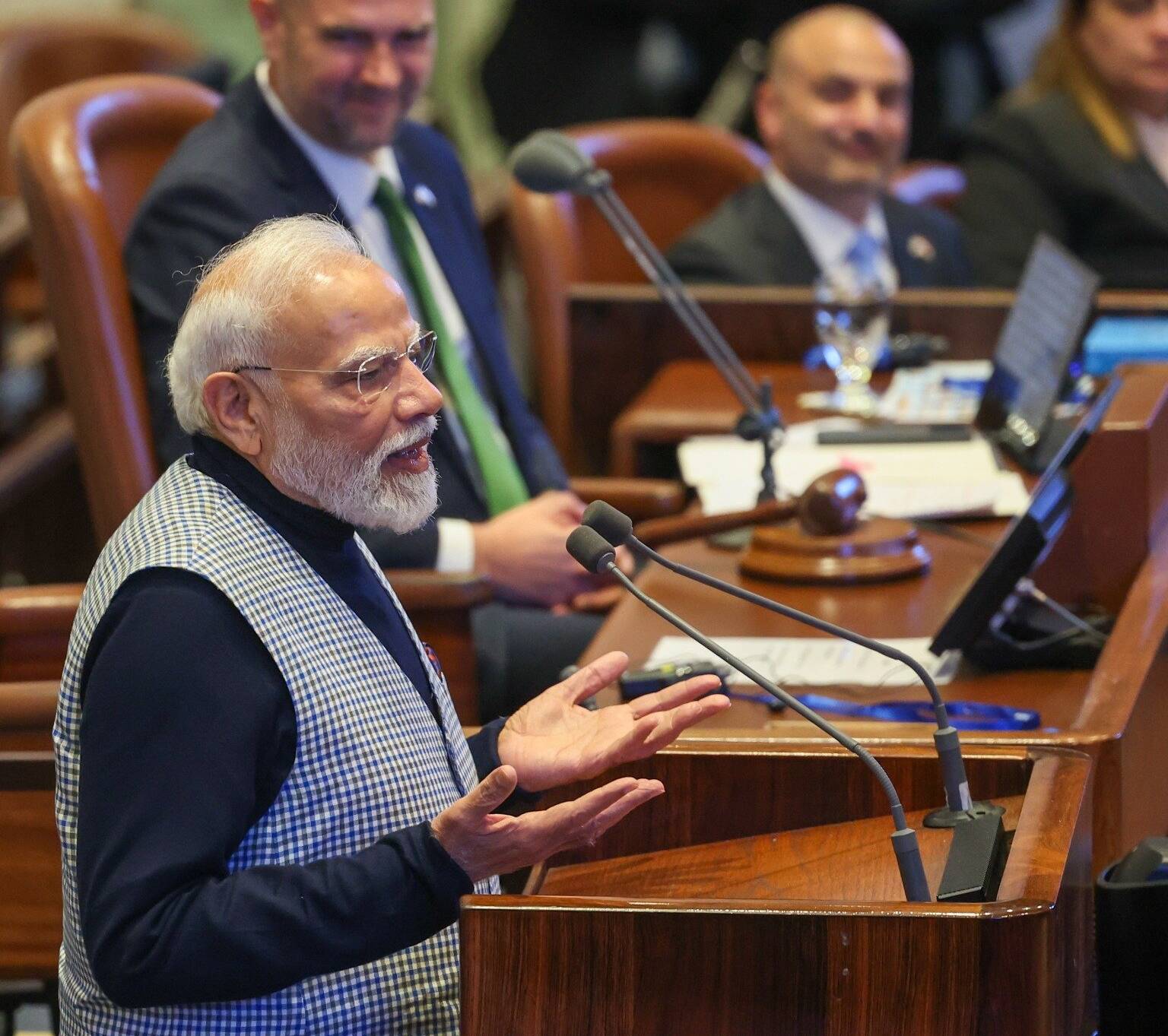
Prime Minister’s Address to the Knesset

His Excellency, Prime Minister Benjamin Netanyahu,
His Excellency, Mr. Amir Ohana, Speaker of the Knesset,
His Excellency, Mr. Yair Lapid, Leader of the Opposition,
Hon’ble Members of the Knesset,
My dear sisters and brothers,
Shalom!
Namaste!
It is a profound honour for me to stand before this distinguished House. I do so not only as the Prime Minister of India, but also as a representative of one of the world’s most ancient civilisations, addressing another that has shaped the moral and historical conscience of humanity. I bring with me the greetings of 1.4 billion Indians, and a message rooted in friendship, mutual respect, and an unwavering commitment to partnership.
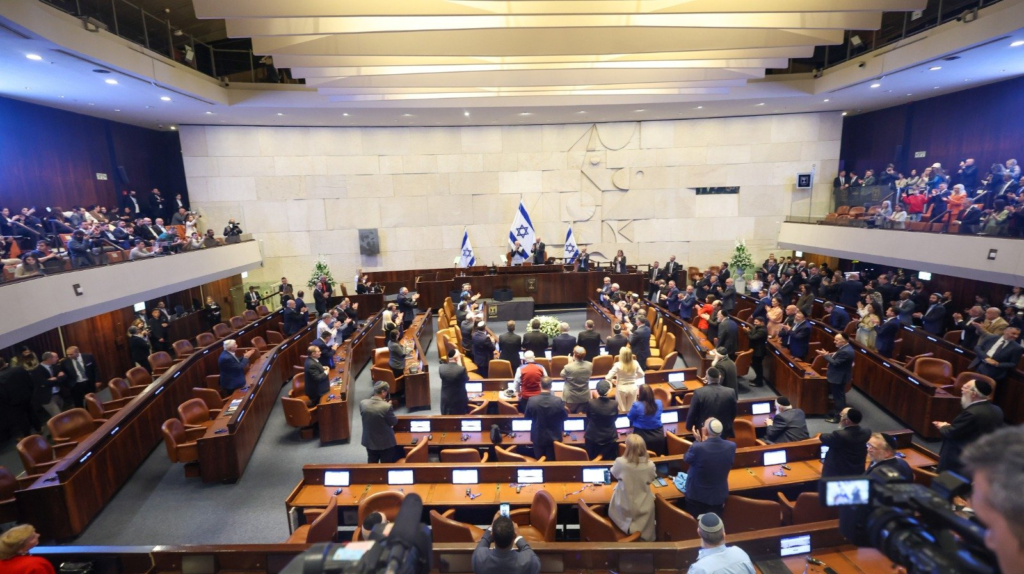
I thank you, Mr. Speaker, for your gracious invitation and for the symbolic gesture of illuminating this House in the colours of India. Your visit to India three years ago marked the first-ever visit by a Speaker of the Knesset to our country. Today, it is my privilege to reciprocate that honour as the first Prime Minister of India to address this august gathering.
Nine years ago, I had the honour of becoming the first Indian Prime Minister to visit Israel. It gives me immense joy to return to a land toward which I have always felt a deep personal connection. Coincidentally, I was born on September 17, 1950—the very day when India formally recognised Israel. History, it seems, has woven our destinies together in subtle yet meaningful ways.
Hon’ble Members,
I come here carrying the heartfelt condolences of the people of India for every innocent life lost and for every family devastated by the barbaric terrorist attack carried out by Hamas on October 7. We feel your pain. We share your grief. India stands firmly with Israel, not only in this moment of sorrow, but also in the long journey toward peace and security.
No cause, no ideology, and no grievance can ever justify the murder of innocent civilians. Terrorism, in all its forms, is an affront to humanity itself.
India understands this reality all too well. For decades, our nation has suffered from the scourge of terrorism. We still remember the horrific 26/11 Mumbai attacks, in which innocent lives—including Israeli citizens—were brutally taken. Like Israel, India follows a policy of zero tolerance toward terrorism, without ambiguity and without double standards.
Terrorism seeks to destabilise societies, obstruct development, and erode trust among nations. Combating it demands sustained, coordinated, and principled global action, because terror anywhere threatens peace everywhere. That is why India supports all sincere efforts that contribute to durable peace and long-term regional stability.
Some years ago, when Israel demonstrated courage and vision through the Abraham Accords, India welcomed that moment of hope for a region long marred by conflict. Today, the path ahead is undoubtedly more complex and challenging, but hope must not be abandoned. The Gaza Peace Initiative, endorsed by the United Nations Security Council, offers a possible pathway forward. India has expressed firm support for this initiative, believing that it can contribute to a just, comprehensive, and lasting peace—one that addresses the legitimate aspirations of all people in the region, including the Palestinian issue.
Let wisdom guide our choices, courage sustain our efforts, and humanity remain our compass. The road to peace is never easy, but India stands with Israel and with the global community in the pursuit of dialogue, stability, and coexistence.
Hon’ble Members,
In India, there is deep admiration for Israel’s resilience, ingenuity, and achievements. Long before our modern diplomatic relations, our peoples were connected by bonds that stretch back more than two millennia. The Book of Esther refers to India as “Hodu,” while ancient Jewish texts record trade with India in antiquity.
Jewish merchants travelled across sea routes linking the Mediterranean to the Indian Ocean, seeking opportunity and dignity. In India, they found both. Jewish communities lived in our land without fear of persecution or discrimination. They preserved their faith while contributing fully to Indian society—a legacy that remains a source of pride for us.
The Bene Israel of Maharashtra, the Cochini Jews of Kerala, the Baghdadi Jews of Kolkata and Mumbai, and the Bnei Menashe of the Northeast have all enriched India’s cultural and social fabric. In my home state of Gujarat, a school established by a Bene Israeli family—fondly known as the Best School—continues to shape young minds.
India’s cinema, science, culture, and public life bear the imprint of Jewish contributions: from Edwyn Myers in filmmaking, to Dr. Reuben David in conservation, to David Abraham Cheulkar in theatre and film. The legacy of David Sassoon lives on through institutions that continue to serve Indian society.
The heroic contribution of Lt. General J.F.R. Jacob during the 1971 war is etched deeply in India’s national memory. I had the privilege of knowing him personally and discussing India–Israel relations over many conversations. His life symbolised the trust and camaraderie between our nations.
Hon’ble Members,
Migration also flowed from India to Israel in the mid-20th century. Today, a vibrant Indian-origin Jewish community thrives here, contributing to Israel’s progress in laboratories, hospitals, classrooms, farms, and on the battlefield. They proudly say: Israel is their fatherland, and India their motherland. We are immensely proud of them.
Our shared history is also marked by sacrifice. During the First World War, more than four thousand Indian soldiers laid down their lives in this region. The cavalry charge at Haifa in 1918 remains one of the most inspiring episodes in military history. Major Thakur Dalpat Singh, remembered as the Hero of Haifa, symbolises this bond of blood and courage.
Hon’ble Members,
As we recently observed International Holocaust Remembrance Day, the world was reminded of one of humanity’s darkest chapters. Yet even in those times, acts of compassion shone through. The Maharaja of Nawanagar in Gujarat, Jam Saheb, offered refuge to Polish and Jewish children fleeing persecution. I am honoured that his memory is now commemorated here in Israel.
Hon’ble Members,
Following India’s independence, our leaders felt a natural affinity with Israel’s nation-building efforts. Parliamentary debates in India during the 1950s reflected admiration for Israel’s agricultural transformation. The Kibbutz movement inspired Indian thinkers such as Vinoba Bhave and Jayaprakash Narayan. Today, Israel’s expertise in water management and precision irrigation has transformed Indian agriculture under initiatives like “Per Drop, More Crop.”
My own engagement with Israel began in 2006 as Chief Minister of Gujarat and deepened in 2017, when we elevated our relationship to a Strategic Partnership. Since then, our cooperation has expanded across defence, innovation, agriculture, technology, and people-to-people ties.
India today is the world’s fastest-growing major economy and is poised to become one of the top three globally. Israel’s leadership in innovation and technology creates a natural synergy. We are strengthening trade, investment, and infrastructure collaboration, negotiating a Free Trade Agreement, and working together through frameworks like I2U2 and the India–Middle East–Europe Economic Corridor.
Hon’ble Members,
At the heart of this partnership are our people. Yoga, Ayurveda, education, culture, and tourism connect our societies. Indian caregivers and professionals in Israel have shown exceptional courage and compassion, even during moments of crisis. As Jewish wisdom teaches, saving one life is saving the entire world.
Our civilisations share philosophical ideals—Tikkun Olam and Vasudhaiva Kutumbakam—both reminding us that the world is one family. These values anchor our partnership and guide our shared responsibility toward humanity.
Let the friendship between India and Israel remain a beacon of strength, stability, and hope in an uncertain world.
Am Yisrael Chai.
Jai Hind.
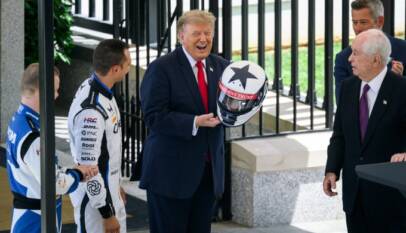
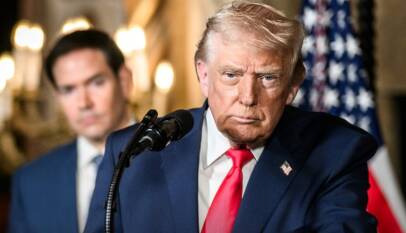

Trump Declares Strait of Hormuz Reopened Under US Protection, Imposes Full Blockade on Iranian Shipping
Washington, July 2026 : US President Donald Trump on Tuesday announced that the Strait of …
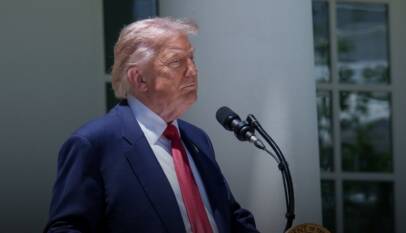
Trump Declares Strait of Hormuz Reopened Under US Protection, Imposes Full Blockade on Iranian Shipping
Washington, July 2026 : US President Donald Trump on Tuesday announced that the Strait …