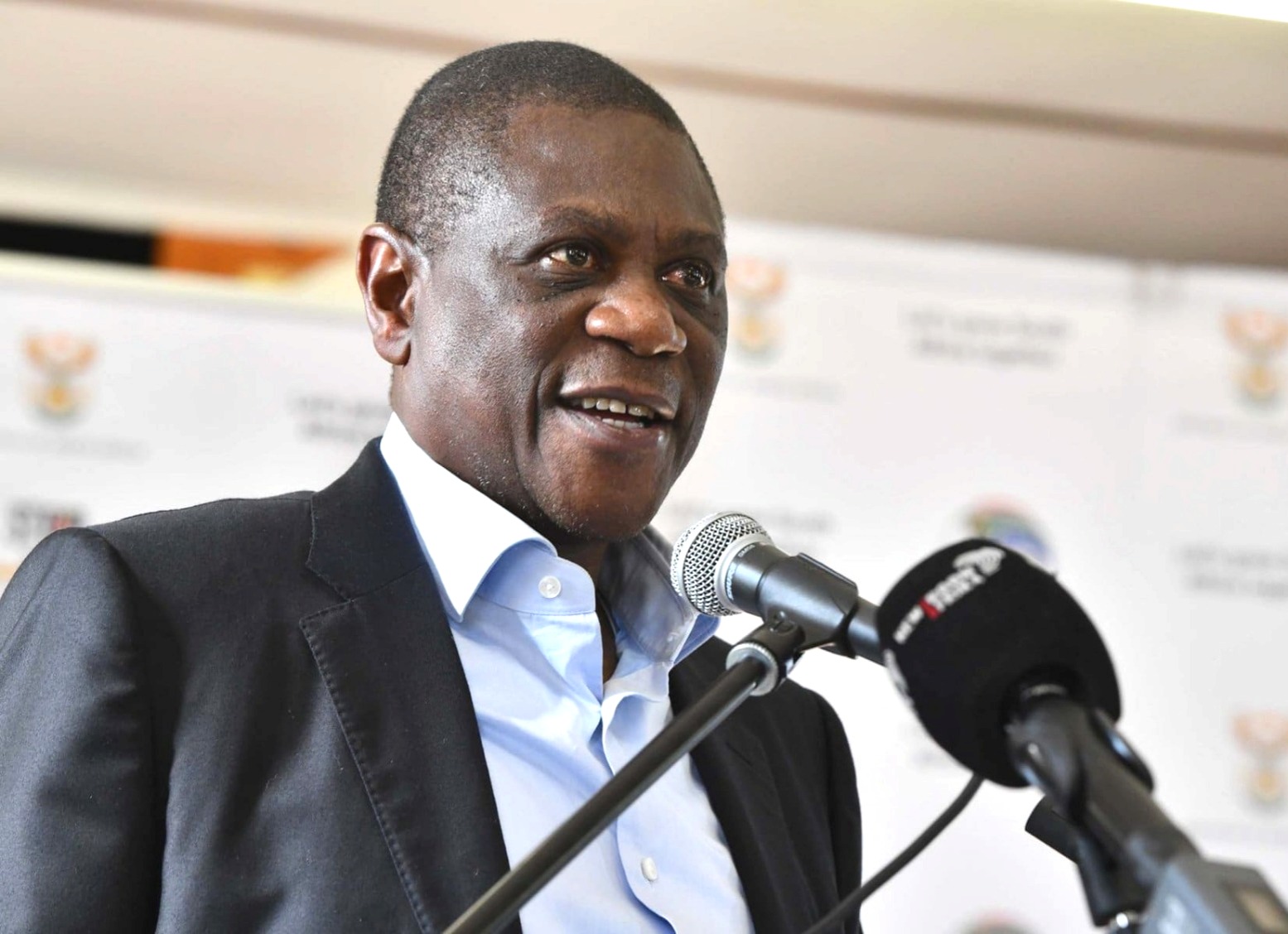
South Africa’s Deputy President Shipokosa Paulus Mashatile Discuss Broad-Based Black Economic Empowerment.

Johannesburg; March 2026: The South African Vice President has commended the importance of “Frank Dialogue” in the current socioeconomic architecture of the nation after more than thirty years of democracy, and prevailing entrenched economic patterns.
While speaking on the future of Broad-Based Black Economic Empowerment (B-BBEE), the Vice President reiterated that it is crucial to address historical inequities for fostering inclusive growth, emphasising the need for transformative policies such as the B-BBEE. He admitted that while implementing the B-BBEE, the state has faced inconsistencies and various hurdles over the years, some of which are still evident today. Economic opportunities remain largely concentrated, accompanied by significant skill deficits that impede the policy’s effectiveness. Furthermore, procurement processes often marginalise Black-owned enterprises, contradicting the B-BBEE’s objectives.
It is important to mention that policy legitimacy depends on outcomes. Where empowerment becomes paper based rather than production-based, where fronting occurs, and where exclusion persists, trust is weakened. Monitoring and Enforcement mechanisms needs to be bolstered to close the gaps exploited by fronting practices, thereby aligning agency interests more closely with the principles of B-BBEE. Our enforcement posture must therefore be firm and consistent, supported by credible oversight.
Importantly, it is essential not to conflate the failures of implementation and broader governance issues with the intrinsic purpose and design of B-BBEE. It is misleading to attribute complex macroeconomic outcomes solely to the policy while ignoring other pressing factors, including structural constraints. Such factors, however, do not necessitate the abandonment of the policy; abandoning B-BBEE is not an option, but the path forward is reform, strengthening, and disciplined implementation.
The South African Government is undertaking a two-phase review of the B-BBEE framework, led by the Department of Trade, Industry and Competition, led by Minister Parks Tau. The aim is clear: refine and reinforce the policy so that it drives transformation, reduces corruption, and promotes inclusive, broad-based growth.
Despite its shortcomings, B-BBEE has led to measurable progress in inclusion, notably evidenced by the growth of the Black middle class and advancements in industries such as mining and finance. The BEE Commission’s 2022 National Status Report highlights annual certification data that tracks improvements in ownership, management control, skills pipelines, and supplier development, suggesting that transformation is advancing, albeit unevenly, rather than stagnating.
This incremental upward trend is consistent with Government’s stance that B-BBEE is a vital policy tool for promoting the meaningful involvement of historically disadvantaged groups, specifically women, youth, and persons with disabilities, in sectors where inequality persists. B-BBEE is also a moral obligation rooted in democratic processes. It aligns with Section 9(2) of the Constitution, which allows corrective actions to promote equality and redress discrimination.
Transformative policies such as Affirmative Action, Employment Equity, and B-BBEE remain absolutely necessary because exclusion remains measurable and because exclusion remain unabated. These transformative policies offer an opportunity to shape a future where everyone has equal opportunities, despite not starting from an equal footing. These policies are essential in addressing the significant wealth gap between Black and White South Africans, highlighting the need for race-based laws to ensure a more equitable playing field. It is through the proper implementation, unemployment and youth exclusion in the key economic activities can be addressed.
In Q4 2025, Stats SA reported an official unemployment rate of 31.4%, with about 7.8 million unemployed. The same QLFS reported a combined measure (unemployment + potential labour force) of 42.1%, with discouraged work seekers at 3.7 million.
Youth exclusion is particularly severe: unemployment for 15 years to 24 years range stood at 57.0%; 25 years to 34 years range at 39.2%; around 3.5 million young people in the range of 15 years to 24 years stood at 34% (were NEET).
On poverty and inequality, the World Bank notes subdued growth (0.6% in 2024, which is projected at 0.7% in 2025) and that this is insufficient to shift socio economic outcomes, while inequality remains extreme (Gini about 63), with the bottom 40% at 11.5% of income and the top 20% at 59.9%.
Through proper implementation of the B-BBEE, companies are diversifying their workforce; setting representation targets; investing in training for historically disadvantaged individuals, directly aligning with EE Act goals. This paves the need to ensure that women’s economic inclusion is both tangible and measurable, but not rhetorical. It is for this reason that the government have dedicated instruments, like the NEF Women Empowerment Fund and Isivande Women’s Fund, that can unlock women’s enterprise growth when paired with market access.
While advancing the future of B-BBEE, the government needs to urgently address the equal need for inclusion of the Black majority in key sectors of the economy, such as agriculture, mining, finance and manufacturing. As economist Wandile Sihlobo in his book – A Country of Two Agricultures, have depicted that the Black farmers currently account for only around 10% of South Africa’s commercial agricultural output. Therefore, B-BBEE provides with the tools to bridge this divide. Through land reform and the release of Government land translate into genuine stakes for Black farmers in commercial agriculture. Through skills development, emerging farmers can be equipped with the technical expertise to thrive in modern agribusiness.
Through Preferential Procurement, markets can be widened requiring that Government institutions and retailers source produce from Black-owned farms, creating stable income streams and reducing exclusion. Through enterprise and supplier development, Black-owned farming enterprises can be incubated vide providing access to finance and equipment, and integrate them into agro-processing and distribution networks.
The Competition Commission’s work shows high concentration persists and that highly concentrated markets are more likely to become more concentrated over time. It also shows that although SMEs are about 95% of firms, they contribute only 24% of turnover, while only 05% of the large firms contribute 76%, a sign of structural barriers to scaling and participation. So, empowerment must be about opening value chains and expanding productive inclusion, not only compliance.
The KwaZulu-Natal Province is home to two of Africa’s most strategic maritime assets: the Ports of Durban and Richards Bay. These ports are more than points of trade; they anchor South Africa’s ocean economy and sit at the centre of the nation’s ambitions for industrial growth, investment, and job creation. South Africa’s ocean economy holds immense potential: ports, fisheries, marine manufacturing, coastal tourism, and even emerging sectors like biotechnology and renewable ocean energy.
The evidence cited, highlights the need for a new BBBEE model and an economy-wide transformation policy shift. It must be based on the following essential pillars:
Firstly, broadening black economic empowerment, necessitates some strategic policy implementation choices drawing on the research cited above. A primary point relates to the relationship between B-BBEE and South Africa’s overall economic development policy mix. Macro-economic trends and policy framework implementation choices influence the socio-economic impact of B-BBEE significantly.
Improving alignment between B-BBBE, industrial, competition, fiscal and monetary policy areas could potentially produce greater social returns. Recent developments in the implementation of the competition legislation are instructive for building this alignment between B-BBEE and the overall economic development policy mix.
For example, the merger and acquisition decision making from the Competition Commission in some cases has elevated the wider B-BBEE social returns and socio-economic indicators. This policy mix approach can equally be applied in fiscal, monetary, and industrial policy areas.
Secondly, policymakers need to connect B-BBEE and with industrial diversification. This point specifically applies to nascent or emerging sectors that are in early stages of production life cycles. B-BBEE can be enhanced when creating the regulatory and economic rent frameworks in nascent sectors such as renewable and hydrogen energy. However, this proposition needs a well-planned value chain approach, which transcends the current focus on the ‘enterprise and supplier development’ element in the existing B-BBEE codes.
Thirdly, public interest outcomes and models of social ownership need to feature prominently in future B-BBEE policy implementation. These include positive socio-economic outcomes such as employment creation, strengthening SMME growth, expanding forms of social ownership, and restructuring unequal spatial development patterns in SA require more attention.
Emphasis is placed on financial indicators in B-BBEE transaction socio-economic analyses such as share allocation, dividend accumulation and budget allocation for specific B-BBEE code elements. This approach has not yielded the social returns necessary for addressing perennial race, class, and gender socio-economic inequalities. This implies examining B-BBEE policy successes and shortcomings using a different socio-economic matrix, which goes beyond the B-BBEE codes.
Fourthly, the ongoing BBBEE policy review should enhance policy coherence and adherence to the law. Section 10 of the BBBEE Act is a useful tool that can be used to achieve this objective. State licensing, authorisations, regulatory certification and permits are essential instruments in strengthening transformation policy synergies. These regulatory mechanisms ensure that private sector economic actors only access state regulatory benefits if they meet BBBEE targets.
Accordingly, the South African Government is emphasising on five measurable outcomes, namely: procurement, finance, supplier graduation, management control, and enforcement, so that progress can be tracked transparently and correct course quickly.
Further emphasising, gender inclusion is non-negotiable. A situation, where women remain structurally excluded from ownership, access to markets, and leadership positions, particularly when there is clear evidence that women-owned enterprises are able to create jobs and build sustainable economic capability when properly supported, is unacceptable and to be ruled out at the outset.
Finally, protecting the integrity of empowerment. Fronting is economic sabotage; it will be confronted through stronger verification, faster case finalisation, and real consequences.
The honourable vice president was optimistic that the B-BBEE marks a shift from compliance to outcomes, from rhetoric to delivery, and from exclusion to productive inclusion.
Team Maverick.






Driving Sustainability, Indian Railways Plants 81 Lakh 59 Thousand Trees in 2025-26 Across Zones
Extensive Plantation along Railway Tracks is Preventing Soil Erosion; Making Our Journey G…

Driving Sustainability, Indian Railways Plants 81 Lakh 59 Thousand Trees in 2025-26 Across Zones
Extensive Plantation along Railway Tracks is Preventing Soil Erosion; Making Our Journey Greener, Safer …