Into The Wild: A Journey Of Self Discovery

“Survival Of The Fittest.”
Hyderabad, March 2026 : The phrase often appears philosophical when encountered in textbooks or classroom discussions. Yet its real meaning becomes profoundly clear when one steps into the wilderness of a forest. In the jungle, survival is not merely an idea—it is the foundation of life itself. Every creature, from the smallest insect hidden beneath leaves to the most powerful predator roaming the forest floor, lives by this law.
My journey to Tadoba Andhari Tiger Reserve in the Indian state of Maharashtra was one such experience that brought this truth vividly to life. What began as a simple wildlife trip soon transformed into something much deeper—a calming, soulful and reflective adventure that revealed powerful lessons about nature, resilience and coexistence.
THE GATEWAY TO THE WILD
Situated in the Chandrapur district of eastern Maharashtra, Tadoba Andhari Tiger Reserve is one of India’s most celebrated wildlife sanctuaries. Known for its thriving population of the majestic Bengal tiger, the reserve has earned a reputation as a paradise for wildlife enthusiasts, photographers and nature lovers.
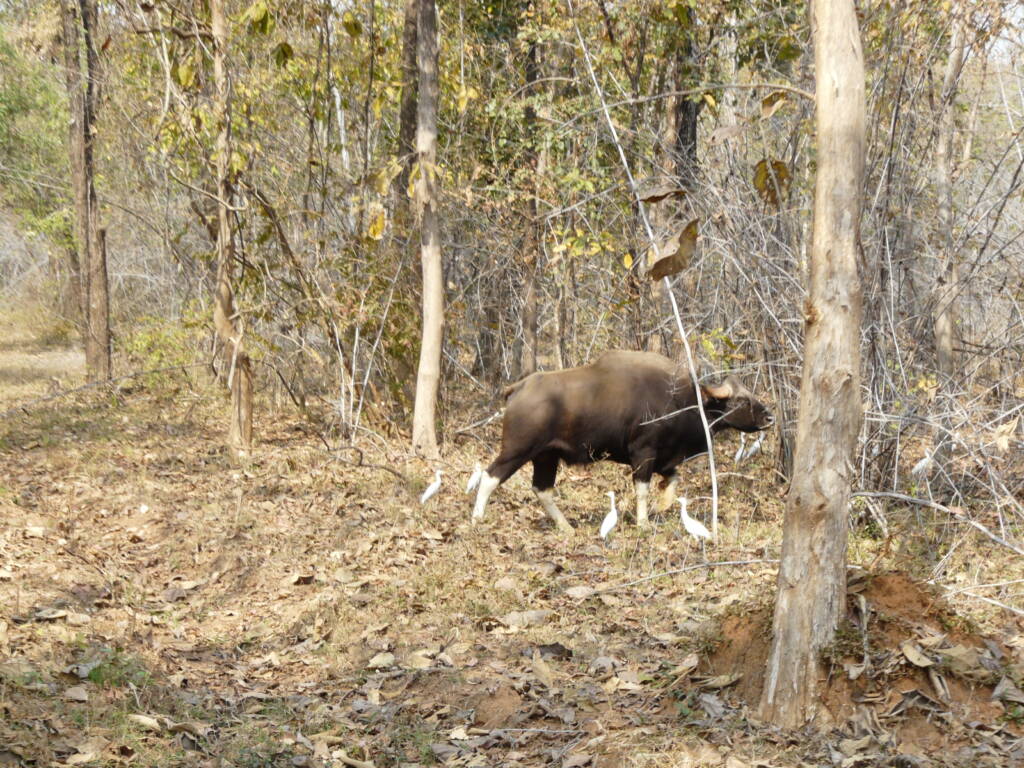
The reserve is a vast landscape of dense teak forests, bamboo thickets, grasslands and serene water bodies that sustain a rich variety of life. Apart from tigers, the park is home to the elusive sloth bear, the graceful nilgai, herds of chital (spotted deer), wild boars, langurs, and hundreds of bird species.
The diversity of wildlife here creates a vibrant ecosystem where every species plays an important role. Predators maintain population balance, herbivores shape vegetation patterns, and birds and insects help sustain the natural cycle of the forest.
For visitors, stepping into Tadoba is like entering a living theatre of nature where countless stories of survival unfold every day.
LIVING AMID THE JUNGLE
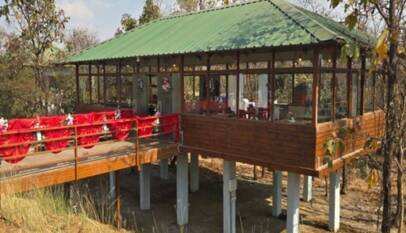
Our stay during this journey was at the peaceful Pugmark Jungle Lodge, located close to the famous Mohurli Gate—one of the main entry points to the core zone of the reserve.
The location of the lodge made the experience particularly special. It seemed to sit right in the middle of a jungle corridor where wildlife often moved between forest patches. The surroundings were quiet yet vibrant, filled with the constant sounds of nature.
Early mornings began with the melodic calls of birds echoing through the forest canopy. The cool breeze carried the scent of trees and moist earth, creating a refreshing atmosphere that city life rarely offers.
As evening approached, the jungle took on an entirely different character. The chirping of crickets grew louder, and distant animal calls echoed through the darkness, reminding us that the forest remained active long after humans retreated indoors.
Being so close to nature created a sense of calm and connection that is difficult to describe but impossible to forget.
Simple Living in the Wilderness
Life at Pugmark Jungle Lodge was refreshingly simple. Unlike luxury resorts that offer extravagant menus and elaborate arrangements, the lodge focused on comfort and authenticity.
Meals were basic yet satisfying—simple Indian dishes such as dal, chawal, roti, vegetables and occasionally local delicacies. What might appear ordinary in a city restaurant felt incredibly comforting in the heart of the forest.
After hours spent exploring the wilderness, the warmth of home-style food became one of the most enjoyable parts of the day.
Guests often gathered around the dining area to share stories of their safari experiences. Conversations revolved around tiger sightings, birdwatching moments and the thrill of spotting rare animals.
In many ways, the simplicity of the lodge helped visitors reconnect with the essence of travel—experiencing nature rather than merely observing it.
The Thrill of the First Jungle Safari

For most visitors, the highlight of a wildlife trip is the jungle safari. My first safari at Tadoba Andhari Tiger Reserve was a mixture of excitement, anticipation and curiosity.
Our open gypsy vehicle slowly moved along dusty forest tracks while the morning sunlight filtered through tall teak and bamboo trees. The jungle seemed full of hidden life. Every rustling leaf and every sudden movement in the bushes hinted at a possible wildlife encounter.
The guide and driver kept a close watch for signs of animals—fresh pugmarks, broken branches or alarm calls from birds and monkeys.
However, alongside the excitement of exploring the forest came a sobering reminder of its harsh realities.
During the safari, our driver’s father, working in the forest, had once been mauled by a tiger deep inside the jungle. The incident had left a lasting emotional scar on the family.
As I sat in that same stretch of wilderness, what I saw left me feeling both humbled and strangely unsettled. The forest is breathtakingly beautiful, but it is also unpredictable and powerful.
The animals that live here are not performers in a tourist attraction—they are wild creatures living by instinct. That moment served as an important reminder that humans are merely visitors in this world, and the jungle commands respect.
The Second Safari: A Moment with Royalty
If the first safari introduced me to the seriousness of jungle life, the second safari revealed its breathtaking beauty.
Our gypsy ventured deeper into the forest, guided by experienced trackers who could read the jungle like an open book. Fresh pugmarks on the dusty trail and alarm calls from birds suggested that a predator might be nearby.
Suddenly, the forest grew unusually silent. The guide signalled the driver to slow down.
And then we saw her.
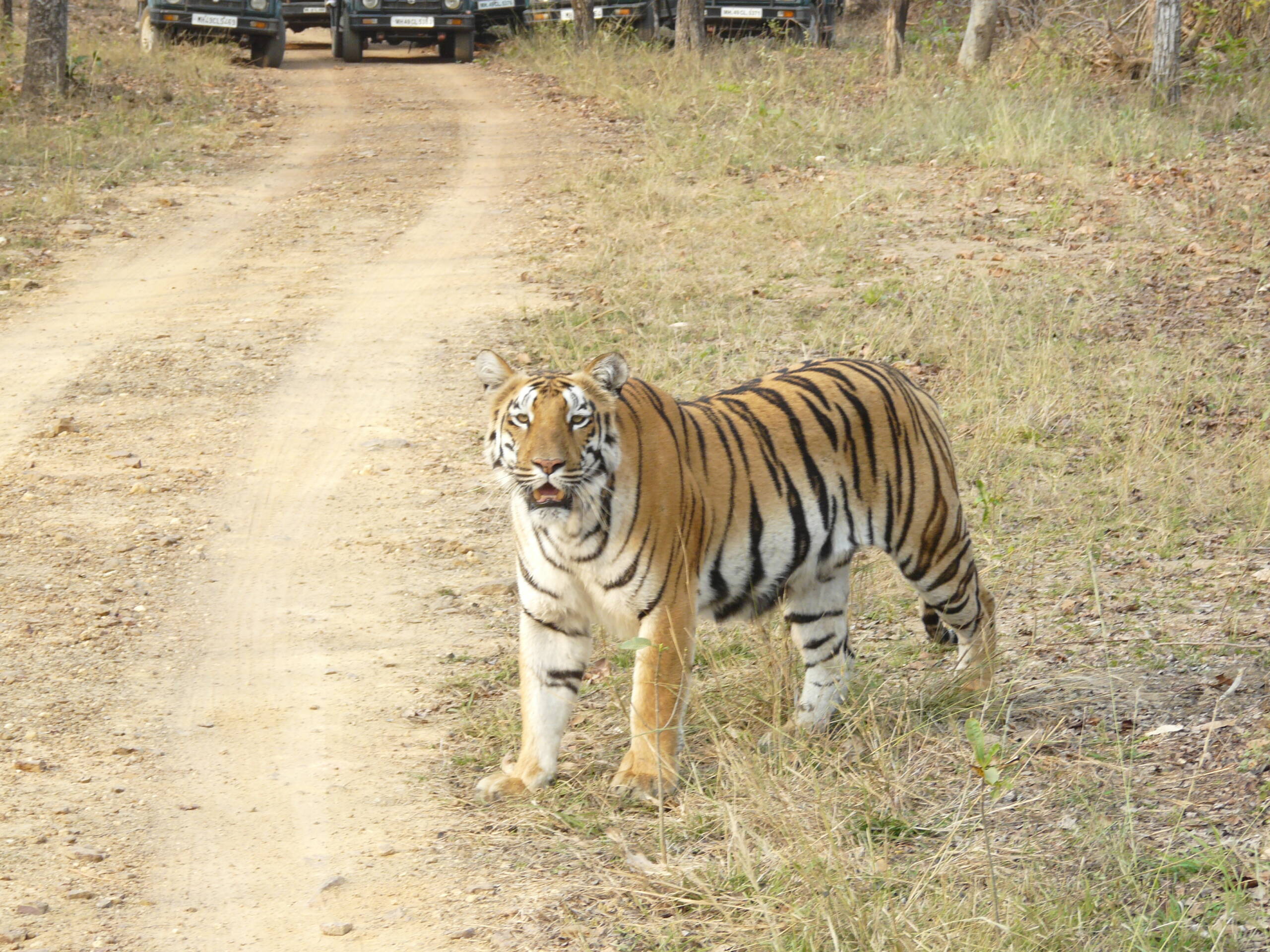
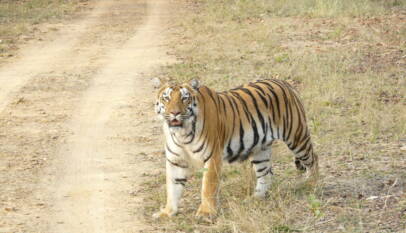
Standing on the forest track ahead of us was a magnificent tigress—an awe-inspiring Bengal tiger known locally as Srivalli. She was not alone. Following her cautiously were her playful cubs.
For a few unforgettable moments, time seemed to stand still. The tigress moved gracefully yet confidently, her amber eyes scanning the surroundings with calm authority. The cubs, curious and energetic, stayed close to their mother.
Watching this intimate moment between a mother tiger and her young in the wild was an extraordinary privilege.
No photograph or documentary can truly capture the emotion of such an encounter. Being in the presence of a tiger in its natural habitat is both thrilling and humbling.
Encounters with Other Residents of the Forest
The safari experience was not limited to tigers alone. The forest offered glimpses of many fascinating animals that contribute to the balance of this ecosystem.
At one point we spotted a lone sloth bear slowly crossing a clearing. With its shaggy fur and distinctive walk, the bear appeared almost comical yet carried an aura of strength.
Later, a tall and graceful nilgai emerged cautiously from the bushes. After observing our vehicle for a brief moment, it quietly disappeared back into the grassland.
We also saw several groups of chital grazing peacefully in the open forest patches. Their white-spotted coats glowed in the sunlight as they moved elegantly through the grass.
Each sighting reminded us that the jungle is not dominated by a single species. Instead, it functions as a complex network where every animal contributes to maintaining ecological balance.
Another Glimpse of the Queen
Just when we believed the safari had already delivered its most exciting moments, the forest surprised us again.
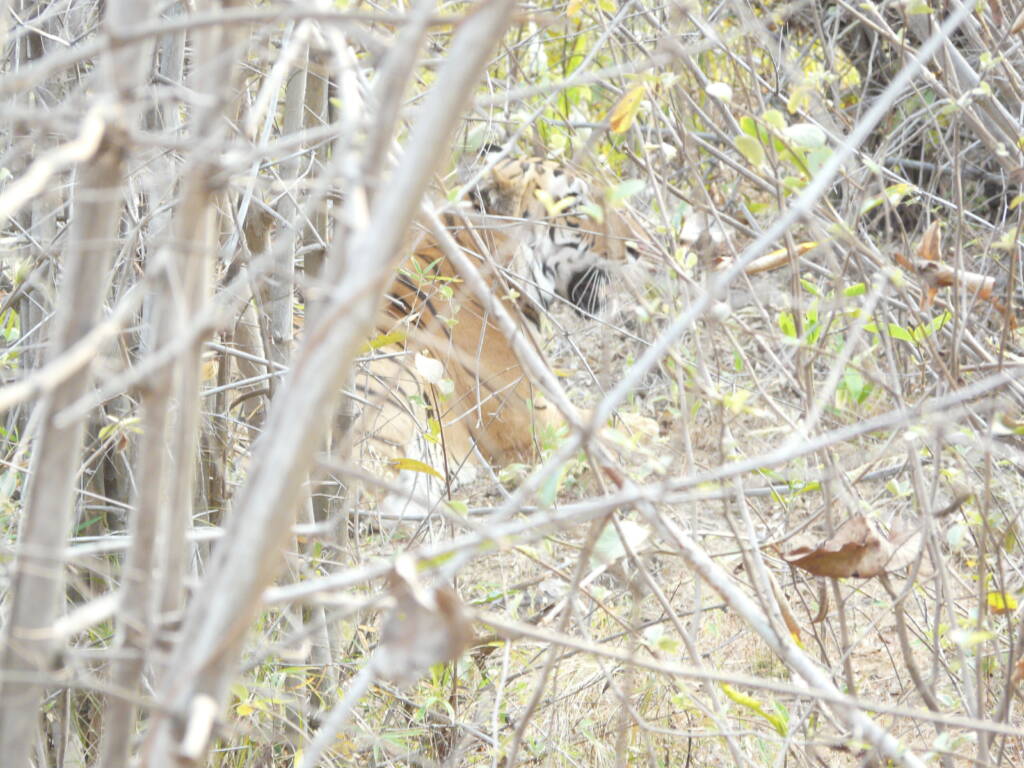
Our guide suddenly pointed toward a distant patch of dense vegetation. There, moving silently through the undergrowth, was another tigress known as Irina.
The sight of yet another majestic Bengal tiger reinforced why Tadoba Andhari Tiger Reserve is regarded as one of the best places in India to observe tigers in the wild.
Unlike the earlier encounter with Srivalli and her cubs, Irina’s appearance was brief and mysterious. She walked silently across the forest floor before vanishing into thick vegetation within seconds.
Yet those few moments were enough to leave a lasting impression.
Lessons from the Jungle
The jungle teaches lessons that no classroom can offer. Watching animals survive in the wild reveals the delicate balance of nature. Predators hunt because they must survive. Herbivores remain constantly alert because their survival depends on awareness. Every species adapts to its environment in order to live another day.
The phrase “survival of the fittest” therefore goes beyond physical strength. It represents adaptability, awareness, intelligence and resilience.
The forest also teaches humility. Humans often believe they dominate the natural world, yet in the depths of the jungle we realise how vulnerable we truly are. Nature reminds us that we are simply one part of a much larger system.
The Importance of Conservation
Wildlife reserves such as Tadoba Andhari Tiger Reserve play a crucial role in protecting biodiversity. They provide safe habitats for endangered species like the Bengal tiger and ensure that these magnificent animals continue to survive in the wild.
Conservation efforts by forest departments, researchers and organizations such as World Wide Fund for Nature help safeguard these ecosystems.
Responsible tourism also plays a vital role. Visitors must respect the forest by following guidelines, avoiding littering, maintaining silence and keeping a safe distance from animals.
Protecting forests today ensures that future generations will also have the opportunity to witness the wonders of the wild.
A Journey to Remember
As our journey came to an end, the memories of the jungle remained vivid in our minds.
The peaceful surroundings of the lodge, the warmth of simple meals, the thrill of safari rides and the unforgettable encounters with wildlife combined to create an extraordinary experience.
The trip to Tadoba Andhari Tiger Reserve was far more than just a holiday.
It was a journey into the heart of nature—a reminder of the beauty, power and fragility of the natural world.
And perhaps the greatest lesson of all was this: in the grand theatre of the jungle, every creature struggles, adapts and survives.
Because in the wild, the ancient rule always prevails—
only the fittest endure.
How to Reach Tadoba Andhari Tiger Reserve
Reaching the reserve is convenient as it is well connected by air, rail and road.
By Air: The nearest airport is Dr. Babasaheb Ambedkar International Airport in Nagpur, about 140 km from the reserve.
By Rail: The closest railway station is Chandrapur railway station, around 45 km away. Another major rail hub is Nagpur railway station.
By Road: The reserve is easily accessible by road from Nagpur, Chandrapur and Wardha.
Popular entry gates include Mohurli Gate, Kolara, Navegaon and Pangdi.
Best Time to Visit
The best time to visit Tadoba Andhari Tiger Reserve is between October and June.
Winter (Nov–Feb): Pleasant weather and comfortable safaris
Summer (Mar–Jun): Best chances of spotting tigers near water sources
Monsoon (Jul–Sep): Park usually closed
A safari at Tadoba is not just a wildlife trip—it is an unforgettable journey into the heart of nature.
Shruti Dutt





India A Dominate Sri Lanka A as Auqib Nabi’s Four-Wicket Haul Secures 170-Run Overall Lead
Galle, June 2026 : India A tightened their grip on the opening unofficial four-day match a…

India A Dominate Sri Lanka A as Auqib Nabi’s Four-Wicket Haul Secures 170-Run Overall Lead
Galle, June 2026 : India A tightened their grip on the opening unofficial four-day …