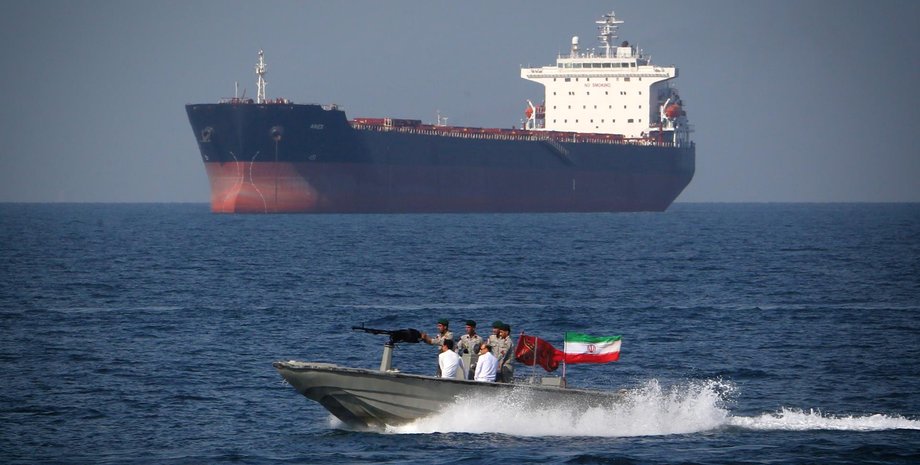
Strait of Hormuz Set to Reopen as US-Iran Ceasefire Takes Effect

Washington, April 2026 : The strategically vital Strait of Hormuz is set to reopen for commercial shipping after Iran agreed to allow safe passage under a ceasefire framework reached with the United States, US Secretary of War Pete Hegseth announced on Wednesday.
Describing the development as a major breakthrough, Hegseth said the agreement restores access to one of the world’s most critical maritime trade routes. “You saw the initial agreement that we struck, which is Iran’s let ships go through… they will be sailing,” he stated, indicating that commercial vessels would soon resume operations through the narrow but crucial waterway.
The reopening follows weeks of intense US-led military operations that, according to American officials, significantly weakened Iran’s naval and defence capabilities. The sustained pressure is believed to have compelled Tehran to accept terms focused on de-escalation and ensuring freedom of navigation.
Despite the agreement, Hegseth made it clear that US forces will maintain a strong presence in the region to ensure compliance. “We’re not going anywhere… we’re going to make sure Iran complies with this ceasefire,” he said, adding, “Stay put, stay ready, stay vigilant.”
The Pentagon has indicated that American troops will continue to closely monitor Iranian military activity and remain prepared to respond swiftly if tensions flare up again. “Our troops are prepared to defend, prepared to go, restart at a moment’s notice,” Hegseth emphasised.
The Strait of Hormuz, which connects the Persian Gulf to global markets, serves as a key artery for international trade, particularly energy shipments. Any disruption in this corridor has immediate consequences for global oil prices and supply chains, making its reopening a significant relief for markets worldwide.
Hegseth also highlighted the role of the US military in securing the waterway during the conflict while calling on other nations to share the responsibility of maintaining its security. “We barely get any of our energy… tiny fraction. It’s time for the rest of the world to step up and ensure that that stays open,” he said.
He credited US naval forces and regional command operations for establishing effective control over the strait, noting that Iran’s capacity to challenge maritime security has been substantially reduced. “Iran doesn’t have the same ability to defend it the way they did before,” he remarked.
However, US officials acknowledged that the situation remains fluid. Iran has indicated that safe passage through the strait will be coordinated with its armed forces, raising questions about how the agreement will be implemented on the ground.
“What we know is that Iran can say a lot of things… commerce will talk,” Hegseth said, suggesting that actual shipping activity would be the true test of the ceasefire’s effectiveness.
The Pentagon also confirmed that it is monitoring any continued missile or drone activity in the region following the ceasefire announcement. Hegseth warned that any violation could undermine the fragile truce. “Iran would be wise… not to shoot any longer,” he said, noting that ceasefires often take time to fully stabilise across dispersed military units.
The reopening of the Strait of Hormuz is being closely watched as a key indicator of whether the broader ceasefire will hold. Given its long-standing role as a flashpoint in US-Iran tensions, the waterway’s status will remain central to regional stability and global economic security in the days ahead.
(The content of this article is sourced from a news agency and has not been edited by the Mavericknews30 team.)



PM congratulates Major Abhilasha Barak on being conferred the UN Military Gender Advocate of the Year Award
Prime Minister Shri Narendra Modi today congratulated Major Abhilasha Barak on being confe…
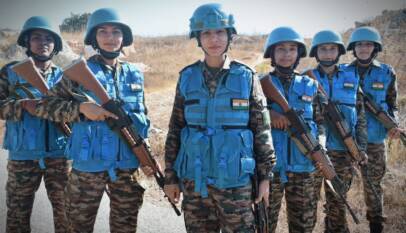
PM congratulates Major Abhilasha Barak on being conferred the UN Military Gender Advocate of the Year Award
Prime Minister Shri Narendra Modi today congratulated Major Abhilasha Barak on being conferred the …