NITI Aayog releases reports on “Ease of Doing Research & Development in India”

NITI Aayog released two reports titled “Ease of Doing Research & Development in India” and the “Survey Report on Ease of Doing R&D in India” on 9th April 2026 in New Delhi, aimed at enabling a more efficient, facilitative, and innovation-driven research ecosystem in the country. The reports are the outcome of an extensive exercise conducted over a period of approximately nine months, involving outreach to 400+ institutional leaders and insights from 850+ distinguished scientists and researchers across the country.
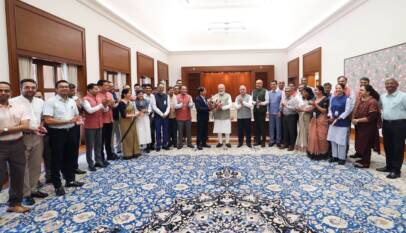
The reports were formally released by Shri Suman Bery, Vice Chairman, NITI Aayog, and the Chief Guest Dr. Jitendra Singh, Minister of State (Independent Charge), Ministry of Science & Technology, in the presence of Dr. V. K. Saraswat, Member, NITI Aayog, along with Secretaries of scientific departments, senior government officials, presidents of science academies, and representatives from academia and industry.
The event commenced with a welcome address and presentation by Prof. Vivek Kumar Singh, Senior Adviser, NITI Aayog, who provided an overview of the report’s objectives, methodology, and key findings. He highlighted that the report identifies challenges across multiple thematic areas and puts forward over actionable recommendations, based on an evidence-driven process including nationwide surveys, stakeholder consultations, and regional consultative meetings.
Prof. Ashutosh Sharma, Former President, Indian National Science Academy (INSA), shared key insights from the survey report, highlighting the importance of strengthening innovation within the research ecosystem. Prof. Vinod Kumar Singh, President, National Academy of Sciences, India (NASI), emphasized the need to support researchers at all levels, particularly early-stage scientists, noting that strong intent across institutions must be complemented by enabling mechanisms. Dr. Shekhar C. Mande, President, INSA, underscored the importance of facilitating private sector participation in research funding and called for greater flexibility in financial norms to encourage such contributions.
Prof. Ajay Kumar Sood, Principal Scientific Adviser to the Government of India, noted that improving the ease of doing R&D is a continuous process and stressed the importance of implementing the report’s recommendations, with the report serving as a dynamic working document. Dr. V. K. Saraswat, Member, NITI Aayog, highlighted the diversity of institutional contexts in which research is conducted across India, while noting a strong consistency in the challenges faced by researchers. He emphasized that these challenges span both internal institutional processes and external ecosystem factors, including funding architectures, policy frameworks, and regulatory systems.
Addressing the gathering, Dr. Jitendra Singh emphasized that the report is grounded in evidence and reflects the realities of the research ecosystem. He noted that research flourishes in an environment free of impediments and highlighted India’s strong human resource base. He also called for greater participation from the private sector, including through CSR initiatives, to support and sustain research and innovation, particularly in emerging areas and startups.
In his address, Shri Suman Bery highlighted that translating research into practical applications remains a key priority. He emphasized the need for institutional structures for mission-mode R&D, including an enhanced participation of the private sector. He further noted that as research increasingly spans multiple domains, the need for flexible and responsive systems becomes more evident, as rigid structures can limit collaboration while adaptable frameworks can open up new avenues of inquiry. He called for taking this report as a guidance document for improving the overall R&D ecosystem of the country.
The reports provide a comprehensive assessment of India’s R&D ecosystem and outline a set of actionable recommendations focused on improving funding mechanisms, institutional governance, regulatory frameworks, and research translation. They underscore the need for a more trust-based, outcome-oriented, and facilitative environment to enable researchers and institutions to perform at their full potential. With the release of these reports, NITI Aayog reaffirms its commitment to strengthening India’s research ecosystem and advancing the country’s vision of becoming a global leader in science, technology, and innovation. The report is being shared with relevant ministries/ departments.



Shivakumar Meets Sonia, Rahul and Priyanka Gandhi Amid Karnataka Cabinet Discontent
New Delhi, June 2026 : Karnataka Chief Minister D.K. Shivakumar on Wednesday met senior Co…
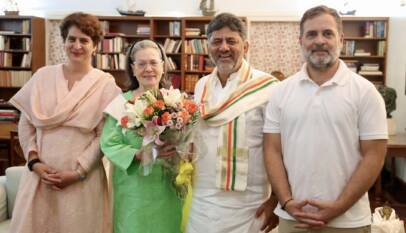
Shivakumar Meets Sonia, Rahul and Priyanka Gandhi Amid Karnataka Cabinet Discontent
New Delhi, June 2026 : Karnataka Chief Minister D.K. Shivakumar on Wednesday met senior …