India’s Civilisational Vision Can Shape a Harmonious Global Order: Hosabale

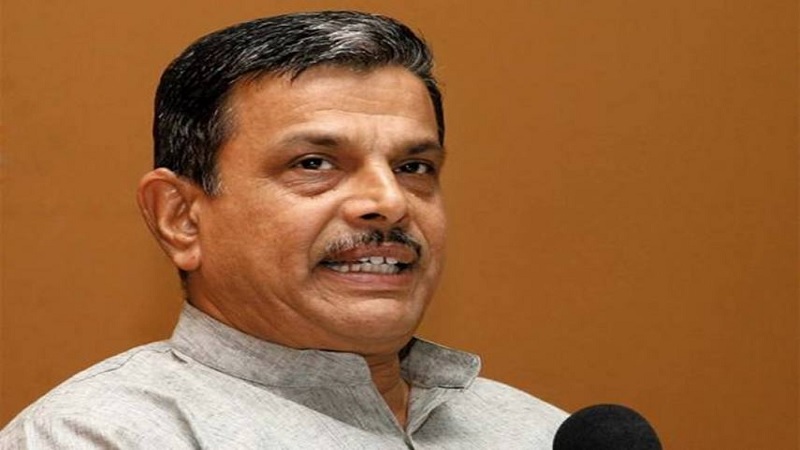
Washington, April 2026 : Dattatreya Hosabale, General Secretary of the Rashtriya Swayamsevak Sangh, articulated a sweeping civilisational vision of India rooted in unity, diversity, and sustainability, asserting that the country is uniquely positioned to contribute to a more balanced and harmonious global order.
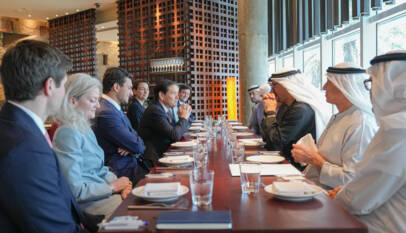
Speaking at an exclusive dinner reception on “India’s Global Vision and Role in the Emerging World” in the Washington area, Hosabale said India’s philosophical traditions offer enduring frameworks to address contemporary global challenges such as social fragmentation, environmental degradation, and rising geopolitical tensions.
“The vision of India is that there is a fundamental oneness in all existence—living and non-living,” he said, underlining that this concept forms the bedrock of India’s worldview. According to him, such a perspective fosters coexistence, mutual respect, and a deeper understanding of interconnectedness.
Hosabale pointed to the contradictions of modern civilisation, noting that rapid material advancement has not been matched by a corresponding growth in values. “We have multiplied our possessions, but not our values. There is more knowledge, but less judgment… more experts, but more problems,” he observed, highlighting the imbalance that defines much of the contemporary world.
In contrast, he said, India’s approach seeks to harmonise material progress with spiritual insight. Emphasising sustainability, Hosabale invoked traditional Indian thought that regards nature as a mother figure. “There is enough for our need, but not for our greed,” he said, linking this philosophy to modern environmental concerns and the need for responsible consumption.
A key element of his address was the role of diversity in shaping a cohesive global society. “Diversity should be celebrated as the beauty of human society,” he said, stressing that cultural differences must coexist within a broader framework of unity rather than becoming sources of conflict.
Expanding on the idea of global harmony, Hosabale said humanity has long explored relationships at multiple levels—between individuals, between humans and nature, and between humans and the divine. Despite these varied paths, he argued, they ultimately converge on a shared truth. “Truth is one, though there are many ways to approach it,” he said.
Framing India’s global role, Hosabale highlighted the civilisational ethos captured in the phrase “Vasudhaiva Kutumbakam”—the world as one family. “When India says the world is one family, it speaks from lived experience,” he said, pointing to India’s long history of accommodating diverse religious and cultural communities.
However, he cautioned that India’s ability to play a meaningful global role depends on its internal strength. “India must be a self-confident and prosperous society,” he said, emphasising the need to integrate modern development with cultural ethos and civilisational values.
Hosabale also underscored India’s historically non-expansionist approach. “India has never invaded or enslaved others,” he said, adding that Indian communities abroad have contributed positively to their host nations while maintaining social harmony.
Foreign policy expert Walter Russell Mead supported this view, stating that a “strong, self-confident, and outward-looking India” could play a transformative role in global geopolitics, particularly in reducing the risk of conflicts in Asia. “The world needs a vibrant and developed India,” he remarked.
Similarly, Walter Andersen, who has studied the RSS for decades, described the organisation as a “stabilising influence” in India, citing its emphasis on patriotism and its ability to adapt to changing societal needs.
Beyond geopolitics, Hosabale highlighted India’s growing soft power, particularly in areas such as wellness and lifestyle. He noted the increasing global interest in practices like yoga, which promote balance, health, and mental well-being.
The event, part of discussions linked to the Hudson Institute’s New India Conference, brought together scholars, policymakers, and community leaders to examine India’s expanding global footprint and its philosophical contributions to international discourse.
Addressing questions on regional issues, Hosabale acknowledged tensions with Pakistan but attributed them to political and historical factors rather than civilisational differences. He emphasised that people-to-people relations across borders remain resilient despite diplomatic challenges.
Clarifying the role of the RSS, he stated that the organisation does not directly shape government policy but aligns with what it perceives as the national interest. “Our focus is on society, not politics,” he said.
Hosabale also stressed the importance of global partnerships built on mutual respect and understanding. “Sustainable cooperation requires mutual trust and recognition of each other’s needs,” he said, warning that the absence of such principles could weaken international relations.
At the societal level, he identified key priorities including social harmony, eco-friendly living, family values, and civic responsibility. These, he argued, are universal principles that transcend national boundaries and are essential for long-term stability.
“A nation must be strong and self-confident to serve humanity,” Hosabale concluded, reiterating that India’s civilisational values position it to contribute meaningfully to addressing global challenges and fostering a more harmonious world order.
Protect Her Tomorrow: Facts Every Family Should Know About Cancer Prevention
Scared about the HPV vaccination for your teenage daughter? Does it cause infertility? Bre…

Protect Her Tomorrow: Facts Every Family Should Know About Cancer Prevention
Scared about the HPV vaccination for your teenage daughter? Does it cause infertility? Breast …