Indian High Commissioner To Bangladesh Summoned For Himanta Biswa Sharma’s Remarks.

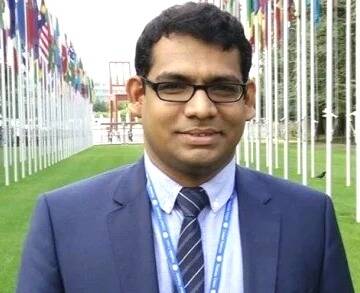
Dhaka; May 2026: Bangladesh yesterday (30th April 2026) has summoned Acting Indian High Commissioner to Bangladesh, Pawan Badhe, to formally protest remarks made by Assam Chief Minister Himanta Biswa Sarma, in a development reported by the Dhaka Tribune. Dhaka described the comments as “inappropriate” and harmful to bilateral relations.
According to officials from Bangladesh’s Ministry of Foreign Affairs, the acting Indian envoy was called to the ministry yesterday, where concerns over the comments were officially conveyed. The development marks a rare instance of diplomatic protest over statements made by a state-level political leader in India. The protest follows a recent interview given by Sarma to an Indian media outlet, in which he spoke about India-Bangladesh relations and their implications for Assam.
In the interview, Sarma reportedly said, “I always pray to God in the morning that the situation that existed during Yunus’s time should remain the same, and that relations should not improve”. He further added, “We like it when India-Bangladesh relations are not good. Because when relations improve, the Indian government also does not want to push back illegal migrants. Therefore, people of Assam prefer a hostile relationship between India and Bangladesh. When India and Bangladesh become friendly and when the BSF and BGB start shaking hands, it becomes dangerous for Assam”.
Foreign ministry sources in Dhaka said the remarks were strongly condemnable, terming them detrimental to the spirit of cooperation and mutual respect that underpins ties between the two neighbouring countries. The comments have raised concerns in Bangladesh over their potential impact on diplomatic relations.
It is noteworthy that on 28th April 2026, the Ministry Of External Affairs have reiterated by an official release that, the relation between India and Bangladesh improved considerably after the Bangladesh Nationalist Party (BNP) assumed office in the neighbouring country. However, the security agencies will have to remain alert as several terrorist outfits are still active in Bangladesh, and elements of such outfits may try to sneak into India to establish their bases.
Official sources further asserted that the relations between the two countries deteriorated during the tenure of Md Yunus as the head of the caretaker government in Bangladesh after Sheikh Hasina was overthrown from power. “Yunus came to power with an agenda. He was totally anti-India, and his stand resulted in the deterioration of the relationship between the two countries”. During the tenure of Md Yunus as the head of the caretaker government, Bangladesh became too close to Pakistan, and several senior Army officers also visited Bangladesh.
The terrorist groups had a free run as a number of arrested terrorist leaders were released from jail. However, after the BNP government under the leadership of Prime Minister Tariq Rahman assumed office, the relationship started improving.
Sources pointed out that an elected government would have to look after the well-being of the people of the country, and Bangladesh cannot survive without the help of India. It is a fact that some anti-India elements are still active in Bangladesh, but the elected government cannot go against India overtly. Moreover, Rahman’s father was involved in the Liberation War of Bangladesh, and he cannot forget India’s role in the liberation of that country.
Sources, however, said that the terrorist groups like Ansar Bangla Team (ABT), JMB, etc., are still active in Bangladesh, though they are not working overtly. Even during the tenure of Sheikh Hasina as the Prime Minister of Bangladesh, elements of terrorist outfits like JMB and ABT managed to sneak into India.
However, their attempts to establish bases were nipped in the bud because of the strong action by the police and security forces. The elements of the terrorist groups usually try to sneak into India through Tripura, Assam and West Bengal and then spread to other parts of the country. They also tried to establish bases in Assam and West Bengal on several occasions but the attempts were foiled by prompt action by the security forces. But there is no guarantee that the terrorists will not make such attempts in future, sources admitted.
Team Maverick.





Priyanka Gandhi Demands Strict Action After Bonded Labour Horror Unearthed in Muzaffarnagar
New Delhi, June 2026 : Congress leader and Lok Sabha MP Priyanka Gandhi Vadra on Wednesday…
Priyanka Gandhi Demands Strict Action After Bonded Labour Horror Unearthed in Muzaffarnagar
New Delhi, June 2026 : Congress leader and Lok Sabha MP Priyanka Gandhi Vadra …