Iranian Defence Forces Will Be The Ultimate Winners In The Ongoing Uneven Battle – IRGC Spokesman.

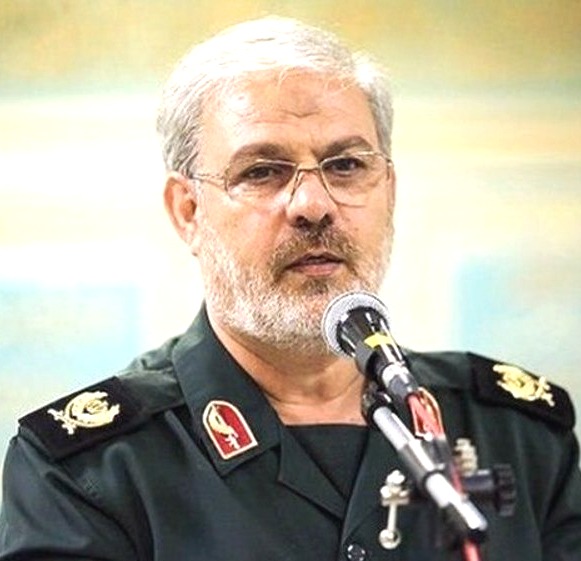
Tehran; May 2026: The spokesman for the Islamic Revolution Guard Corps (IRGC) has declared that despite an ongoing unequal battle against heavily equipped enemies, Iran’s armed forces will emerge as the ultimate victors, driven by the culture of Ashura and an unwavering rejection of humiliation. Brigadier General Hossein Mohabi, the newly-appointed spokesman who replaced martyred Brigadier General Ali Mohammad Naeiei, made the remarks during an interview with IRIB’s News Network today (04th May 2026).
“In the unequal battle we are facing, Iran’s armed forces will be the final victors. They fight with the culture of Ashura and consider surrender a disgrace for themselves”, Mohabi said. “Our model in today’s wars is the model of Ashura, steadfastness in an unequal battle”. The IRGC spokesman acknowledged the vast disparity in military equipment between Iran and its adversaries.
“Our enemies are specifically one country and one regime with enormous equipment. America brought its latest defensive and offensive equipment to the battlefield”, he said, referring to the US-Israeli aggression against Iran that started on February 28. “Our equipment and the number of our forces are very unequal compared to theirs. But our spiritual power enabled us to stand against them”.
Mohabi emphasised that an Iranian fighter either achieves victory or attains martyrdom, a fate seen as bliss. “In this arena, our fighter either wins or is martyred. Martyrdom is happiness for him. In such a situation, our forces do not falter”. The spokesman warned that the enemy seeks to penetrate the minds of Iranian forces through cognitive warfare. “If the enemy infiltrates the mind of our forces through cognitive warfare, it can create doubt and reduce their resilience. But Ashura training prevents this infiltration”, he said.
Mohabi concluded by highlighting the devotion of the country’s fighters. “Our fighters, possessing combat, operational and defensive capabilities as well as religious faith, give their lives so that the people can have security”.
The United States and Israel launched an unprovoked war of aggression against Iran in late February, assassinating the late leader of the Islamic Revolution Ayatollah Seyyed Ali Khamenei and striking nuclear facilities, schools, hospitals and civilian infrastructure. Iran’s armed forces responded with 100 waves of retaliatory strikes under Operation True Promise 4, launching hundreds of ballistic and hypersonic missiles, as well as drones, against American military bases across West Asia and Israeli positions throughout the occupied territories.
A fragile ceasefire brokered by Pakistan has been in place since early April, but the US naval blockade of Iranian ports remains in effect. Iran has repeatedly warned that any new aggression will be met with a decisive response.
Meanwhile, Brigadier General Mohammad Akraminia, another Iranian Army spokesman, detailed the Air Force’s role in the war, which began on February 28 with an unprovoked US-Israeli aggression that included the assassination of Iran’s late Leader, Ayatollah Seyyed Ali Khamenei. The Iranian Army’s Air Force carried out multiple sorties against enemy bases in regional countries, including an anti-Iran group’s base in Erbil, Iraq, as well as targets in Kuwait and Qatar, at the outset of the US-Israeli war.
He noted that a recent report by an American media outlet had examined an operation conducted by F-5 fighter jets, describing it as a rare and in some respects unprecedented success. “That successful operation managed to penetrate various layers of defence that the Americans had designed there and hit the US base”, he said. Air defence downed 170+ aircraft.
The spokesman also praised the performance of Iran’s integrated air defence network, which includes Army and IRGC units operating under the national air defence headquarters. “Our air defence force performed well in the face of enemy threats. According to reports, more than 170 enemy aircraft were hit, including 16 fighter jets”, General Akraminia said. He emphasised that many of the downed drones were highly advanced, with some having capabilities exceeding those of fighter jets and representing significant financial value.
Akraminia stressed that Iran does not consider the war to have ended, despite the current fragile ceasefire brokered by Pakistan. “We do not consider the war to have ended. From the day the fighting stopped, or as some call it, a ceasefire or silence on the battlefield, due to our lack of trust in America and our enemies, we have continued updating our targets, completing our target bank, continuing our training, and benefiting from wartime experiences”, he said, while adding further, “We have produced and upgraded our equipment. For us, the situation remains a war situation”.
While warning the enemies (Israel & United States), the Army spokesman reaffirmed that any new aggression would be met with even more crushing responses. “If the enemy again commits aggression and threatens the security of this land, they will face a more crushing response than before. We have many winning cards that we have not yet used. Relying on experiences from the two past wars, we possess modern combat tools and methods that will enable us to deliver a more decisive and crushing response to the enemy”.
He assured the Iranian nation that the armed forces remain fully prepared for a long-term war. “We are ready to fight in the long term, until the enemy is completely regretful and no longer dares to attack our country”.
The spokesman also asserted the enhanced coordination between the Army and the IRGC during the recent conflict, particularly in the strategic Strait of Hormuz. “In this war, the level of coordination and synergy has increased dramatically. We conducted joint operations with our dear brothers in the IRGC, designed and executed in a way that achieved maximum synergy”, he said.
“In the maritime domain, our brothers in the IRGC are responsible for the security west of the Strait of Hormuz, while the Army’s naval forces control the east of the strait. This coordination exists in all arenas, including aerospace and air defence”.
Iran has not yet decided whether to attend another round of talks, citing contradictory US behavior and bad faith.
Team Maverick.







Israel Rejects Gaza Disarmament Plan, Says IDF Will Stay Until Hamas Fully Disarmed
Jerusalem, July 2026 : Israel has reiterated its strong opposition to the US-backed plan f…

Israel Rejects Gaza Disarmament Plan, Says IDF Will Stay Until Hamas Fully Disarmed
Jerusalem, July 2026 : Israel has reiterated its strong opposition to the US-backed plan …