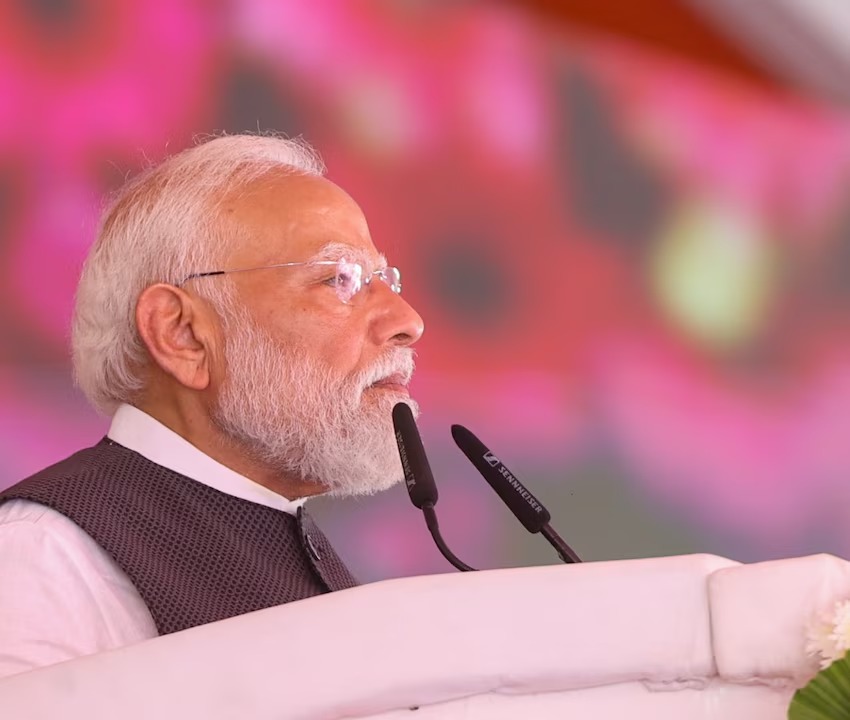
12 Years of Modi Government Marked by Reforms, Welfare Push and Global Assertiveness

New Delhi, May 2026 : Twelve years ago, on May 16, 2014, India witnessed a decisive political shift as voters delivered a clear mandate in favour of the National Democratic Alliance (NDA) led by the Bharatiya Janata Party (BJP) under the leadership of Prime Minister Narendra Modi. The result marked the end of an era dominated by coalition compulsions and ushered in a stable majority government at the Centre after decades.
The 2014 verdict was widely viewed as a response to allegations of corruption, policy paralysis and coalition friction during the Congress-led United Progressive Alliance (UPA) regime. Emerging from humble beginnings and rising through the ranks of public life, Modi took oath as the 14th Prime Minister of India, beginning a political journey that has since reshaped the country’s governance, economy and global positioning.
Speaking at The Hague during his visit to the Netherlands on Saturday, Prime Minister Modi recalled the significance of May 16, 2014. “On this very day in 2014, the results of the Lok Sabha elections were announced. After decades, a stable and full majority government was set to be formed in India,” he said, adding that the trust reposed in him by Indians had kept him continuously motivated.
The Modi government’s first term focused heavily on financial inclusion and economic modernisation. One of its earliest flagship initiatives, the Pradhan Mantri Jan Dhan Yojana (PMJDY), sought to connect millions of poor households with the formal banking system. More than 500 million bank accounts were opened under the programme, laying the foundation for direct welfare delivery.
The government also launched the ambitious “Digital India” initiative aimed at expanding internet access, digital payments and technology-driven governance. Aadhaar-linked Direct Benefit Transfers (DBT) significantly reduced leakages in welfare schemes, while the rise of the Unified Payments Interface (UPI) transformed India into one of the world’s fastest-growing digital economies.
The slogan “Sabka Saath, Sabka Vikas, Sabka Vishwas” became the hallmark of the administration, reflecting its emphasis on inclusive development and welfare-oriented governance.
A major economic milestone came in 2017 with the implementation of the Goods and Services Tax (GST), which replaced multiple indirect taxes with a unified national tax system. The reform was aimed at creating a single market and simplifying tax compliance across the country.
To strengthen manufacturing and entrepreneurship, the government introduced initiatives such as “Make in India” and “Startup India”. Production Linked Incentive (PLI) schemes and relaxed foreign investment norms later encouraged global companies to expand manufacturing operations in India.
On the social welfare front, flagship schemes such as Ayushman Bharat, considered the world’s largest publicly funded health insurance programme, and the Pradhan Mantri Garib Kalyan Anna Yojana became central pillars of the government’s pro-poor agenda. During the Covid-19 pandemic, free foodgrain support was extended to hundreds of millions of citizens.
The Modi government also adopted a more assertive national security posture. The Balakot air strikes in 2019 were viewed as a significant shift towards proactive deterrence against cross-border terrorism.
Infrastructure expansion became another defining feature of the last 12 years. Under the PM Gati Shakti framework, integrated planning was introduced to coordinate transport, logistics and connectivity projects across sectors.
Globally, India adopted a more visible and multipolar foreign policy approach under Modi’s leadership. Strategic partnerships expanded across regions, while India’s growing role in global supply chains and strong engagement with the Indian diaspora enhanced the country’s international profile.
Domestically, the BJP expanded its political footprint beyond traditional strongholds, promoting the concept of “double-engine government” by aligning state and central administrations.
Over the past 12 years, Narendra Modi’s tenure has come to symbolise a period of structural reforms, welfare expansion, strong leadership and India’s rising global influence.


Preserve Maharashtra’s Saint Heritage, Develop Pilgrimage Centres: CM Devendra Fadnavis
Revised Development Plans for Gangakhed, Amravati and Katol Approved; ₹115 Crore Projects …
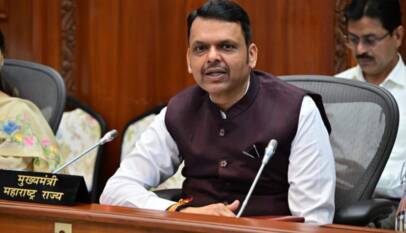
Preserve Maharashtra’s Saint Heritage, Develop Pilgrimage Centres: CM Devendra Fadnavis
Revised Development Plans for Gangakhed, Amravati and Katol Approved; ₹115 Crore Projects Get Green …