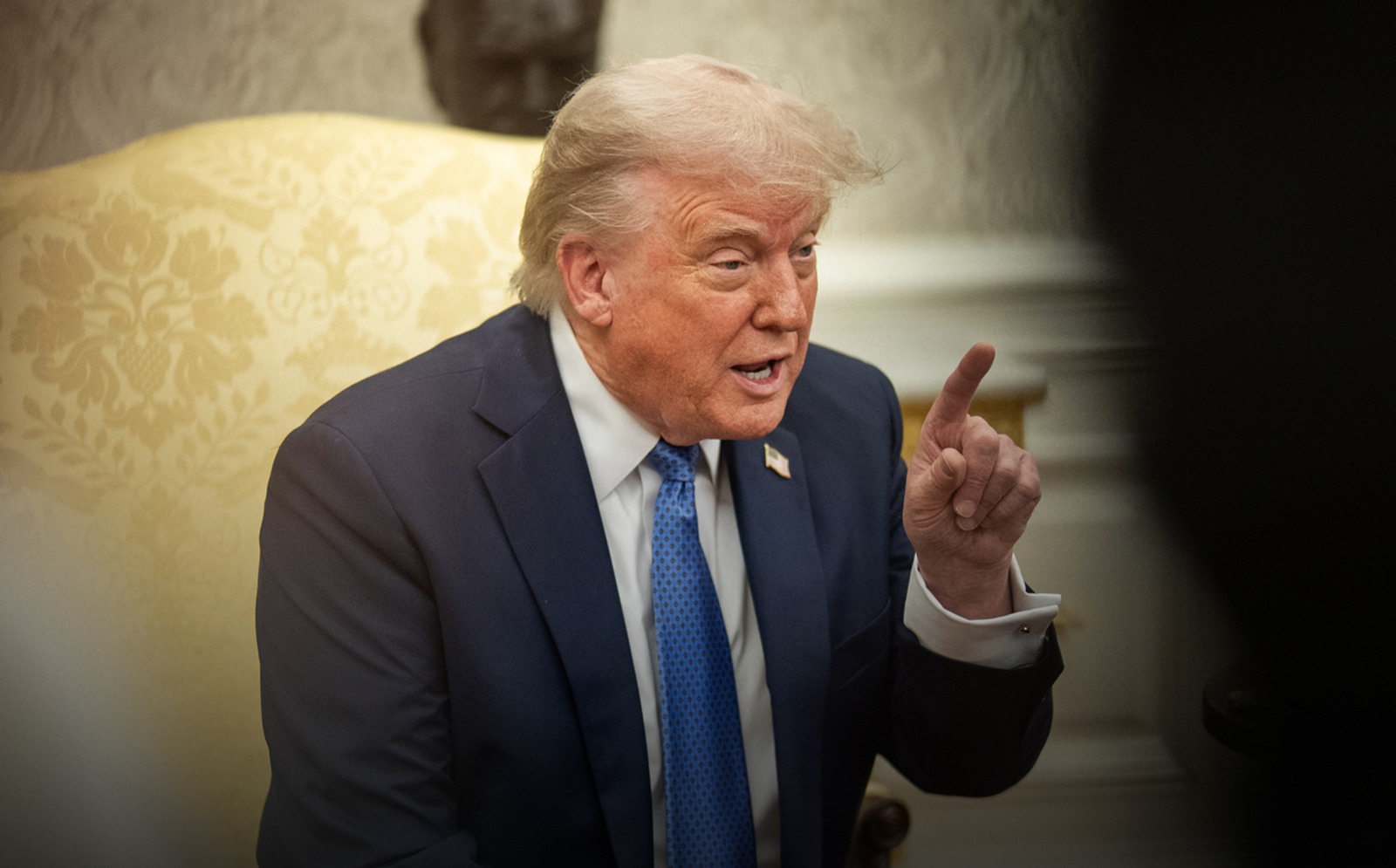
Trump Signs Executive Order to Strengthen US Defence Supply Chains, Reduce Reliance on Foreign Materials

Washington, July 2026: US President Donald Trump has signed a sweeping executive order aimed at strengthening America’s defence industrial base by tightening regulations governing the sourcing of critical materials and components used in military equipment. The move is intended to reduce dependence on foreign suppliers, reinforce domestic manufacturing capabilities and improve the resilience of supply chains supporting the US armed forces.
The executive order seeks to overhaul defence procurement practices by restricting the use of waivers that currently allow contractors to procure certain critical materials from foreign sources. The White House said the initiative is part of a broader strategy to safeguard national security by ensuring that the production of advanced military platforms relies increasingly on domestic industries and trusted allied nations.
Under the new directive, the Secretary of War has been instructed to significantly narrow the circumstances under which waivers can be granted for acquiring covered materials from countries subject to restrictions under US federal law. The administration believes such waivers have allowed excessive dependence on overseas suppliers, potentially exposing critical military programmes to strategic risks.
In cases where waivers are still approved, defence contractors will be required to submit detailed mitigation plans explaining how they intend to transition their supply chains toward compliant domestic or allied sources within a specified timeframe. The objective is to gradually eliminate reliance on suppliers considered vulnerable from a national security perspective.
A key feature of the executive order is the introduction of comprehensive supply chain mapping across the US defence industry. The Department of War has been directed to frame new regulations requiring both prime contractors and subcontractors to trace the origin of critical materials and components from raw resource extraction to the final production of military systems.
According to the White House, this exercise is intended to identify vulnerabilities, supply bottlenecks and potential foreign influence across every tier of the defence manufacturing ecosystem. Officials believe many lower-tier suppliers remain outside the government’s visibility despite playing a crucial role in producing sophisticated weapons and defence technologies.
Speaking during a White House briefing, Senior Counsellor for Trade and Manufacturing Peter Navarro described the initiative as essential for maintaining America’s military superiority.
“The United States possesses the most lethal military in the world, but even the most advanced weapons system is only as strong as the supply chains supporting it,” Navarro said.
He argued that the administration intends to eliminate what he described as excessive reliance on waiver provisions by exposing hidden weaknesses in defence production networks.
“We are ending the waiver system by mapping hidden supply chains, carefully examining lower-tier suppliers, qualifying trusted sources and holding contractors accountable when they fail to disclose critical information,” Navarro said.
The executive order also encourages defence manufacturers to identify and certify new domestic suppliers of critical minerals, rare earth elements, specialised metals and advanced industrial components. Regulatory hurdles that delay the approval of new suppliers are expected to be streamlined to accelerate the development of alternative domestic production capabilities.
Companies found to be relying on suppliers considered unreliable or strategically vulnerable will be expected to qualify replacement sources as quickly as operational and legal requirements permit. Officials said this approach would improve the resilience of military production during periods of geopolitical tension or global supply disruptions.
Navarro stressed that the order should be viewed primarily as a national security initiative rather than a bureaucratic reform.
“This is not paperwork. It is battlefield preparation. If a missile system depends on a foreign-controlled supplier, the Department of War needs to know before any conflict begins,” he said.
Responding to questions regarding China’s role in global supply chains, Navarro acknowledged that Beijing has invested considerable effort in understanding vulnerabilities within American defence manufacturing networks.
“We need to address these vulnerabilities in a world where China has become increasingly willing to weaponise supply chains,” he said.
However, Navarro emphasised that the executive order is not directed solely at China.
“This is not only about China. It is about reducing strategic dependencies on the rest of the world,” he said, adding that the administration’s broader objective is to build resilient domestic manufacturing while continuing to work closely with trusted allies where appropriate.
The White House noted that the latest executive order builds upon a series of defence and industrial policy measures introduced since January 2025. Those initiatives include reforms to defence acquisition procedures, efforts to expand domestic production of critical minerals, modernisation of military procurement systems and agreements aimed at securing reliable supplies of strategically important processed minerals.
Officials said the latest measures are intended to ensure that the US defence sector remains capable of sustaining military readiness even during periods of international crisis, while strengthening America’s long-term industrial and technological competitiveness.
(The content of this article is sourced from a news agency and has not been edited by the Mavericknews30 team.)






Preserve Maharashtra’s Saint Heritage, Develop Pilgrimage Centres: CM Devendra Fadnavis
Revised Development Plans for Gangakhed, Amravati and Katol Approved; ₹115 Crore Projects …
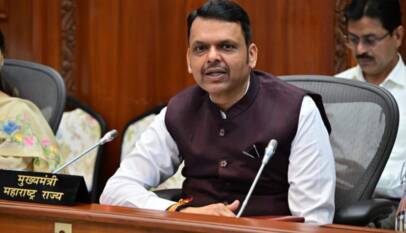
Preserve Maharashtra’s Saint Heritage, Develop Pilgrimage Centres: CM Devendra Fadnavis
Revised Development Plans for Gangakhed, Amravati and Katol Approved; ₹115 Crore Projects Get Green …