Russian Strikes Hit Kyiv as Ukraine Expands Drone Campaign Inside Russia

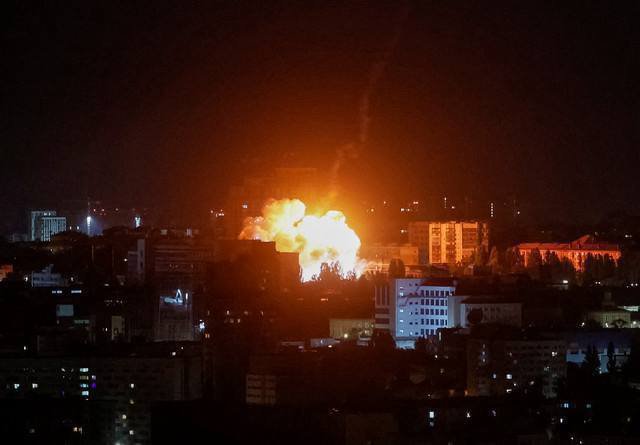
Kyiv, July 2026 : Russia launched another wave of drone and missile strikes on Ukraine’s capital on Saturday, killing at least one person and injuring 13 others, as the conflict entered another intense phase marked by retaliatory attacks on both sides. The latest assault came just a day after Ukraine carried out one of its largest drone operations inside Russia, targeting logistics and e-commerce facilities that Kyiv says support Moscow’s military production.
According to Ukraine’s State Emergency Service, Russian strikes hit six districts of Kyiv, causing widespread destruction. Mayor Vitali Klitschko said an apartment building in the Solomianskyi district suffered significant damage, while a supermarket caught fire. In the Sviatoshynskyi district, a residential house was engulfed in flames. Explosions and damage were also reported at a shopping and entertainment centre in the Dniprovskyi district, an apartment building in the Shevchenkivskyi district, and a non-residential structure elsewhere in the city. Emergency crews worked through the day to extinguish fires and rescue residents from damaged buildings.
Elsewhere in Ukraine, Russian drone strikes claimed another life in the central Dnipropetrovsk region, which borders the frontline. Regional officials reported that residential and civilian infrastructure continued to bear the brunt of the attacks, highlighting the persistent threat facing communities far beyond the active combat zones.
Russia also reported casualties from Ukrainian strikes. Authorities in the Kursk region, which lies close to the Ukrainian border, said one person was killed following a Ukrainian drone attack. Regional Governor Alexander Khinshtein confirmed the fatality and said emergency services were assessing the damage.
The latest exchange follows a major Ukrainian drone offensive that targeted logistics hubs in Russia’s Moscow and Tambov regions. Ukrainian officials claimed the strikes hit warehouses allegedly used to store sanctioned components required for drone manufacturing and navigation equipment. President Volodymyr Zelensky said the attacks were aimed at facilities supporting Russia’s military-industrial network rather than civilian infrastructure.
Russian authorities, however, reported that the strikes caused extensive fires and casualties, with at least eight people killed. Moscow also claimed that air defence systems intercepted more than 370 Ukrainian drones launched toward the capital overnight. Moscow Mayor Sergei Sobyanin stated that between July 11 and July 18, Russian forces had shot down nearly 1,900 Ukrainian drones heading toward the city, underscoring the growing scale of Kyiv’s long-range strike campaign.
Over recent months, Ukraine has significantly expanded its drone operations inside Russian territory. Kyiv describes the campaign as “long-range sanctions,” intended to weaken Russia’s military and industrial capabilities in retaliation for years of missile and drone attacks on Ukrainian cities. Many of the operations have focused on oil refineries, fuel depots, logistics centres and defence-related infrastructure, disrupting supplies and creating pressure on Russia’s economy.
The latest escalation reflects the increasingly technological nature of the conflict, with drones playing a central role in both offensive and defensive operations. Both countries have invested heavily in unmanned aerial systems, making drone warfare one of the defining features of the ongoing conflict.
Meanwhile, Ukraine is also facing unusual domestic political tensions. Thousands of people gathered in several major cities for a third consecutive day to protest the unexpected removal of Defence Minister Mykhailo Fedorov during a recent government reshuffle. Fedorov, widely recognised for driving the digitisation and modernisation of Ukraine’s military and government services, had earned significant public support during the war.
His dismissal surprised many observers, particularly as Ukrainian forces were viewed as making gains on parts of the battlefield. The move has sparked speculation about differences within the country’s military leadership and broader changes in defence strategy.
The political uncertainty has intensified after President Zelensky held back-to-back meetings with senior military commanders, prompting media reports that further leadership changes could be under consideration. Reports suggest that Army Chief Oleksandr Syrskyi may face increased scrutiny amid ongoing debates over military strategy and reforms.
During his tenure, Fedorov reportedly clashed with senior military officials over efforts to accelerate technological transformation within Ukraine’s armed forces. His departure has raised questions about the future direction of defence reforms even as the country continues to battle sustained Russian offensives.
As both Russia and Ukraine intensify cross-border drone attacks while maintaining pressure along the frontlines, the conflict shows little sign of easing. With civilian casualties mounting on both sides and political developments adding another layer of uncertainty, the war continues to evolve into a prolonged struggle involving military, technological and strategic dimensions.
(The content of this article is sourced from a news agency and has not been edited by the Mavericknews30 team.)



Emotional Lionel Scaloni Hints at Uncertain Future After Argentina’s World Cup Final Defeat
New York, July 2026 : Argentina head coach Lionel Scaloni struggled to hold back tears as …
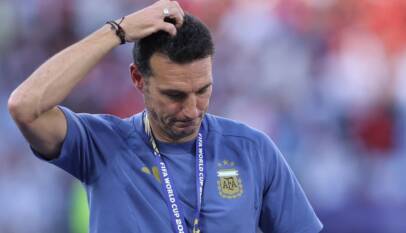
Emotional Lionel Scaloni Hints at Uncertain Future After Argentina’s World Cup Final Defeat
New York, July 2026 : Argentina head coach Lionel Scaloni struggled to hold back …