Spain End Argentina’s Reign with Extra-Time Triumph to Lift FIFA World Cup 2026; Torres Seals Historic Victory

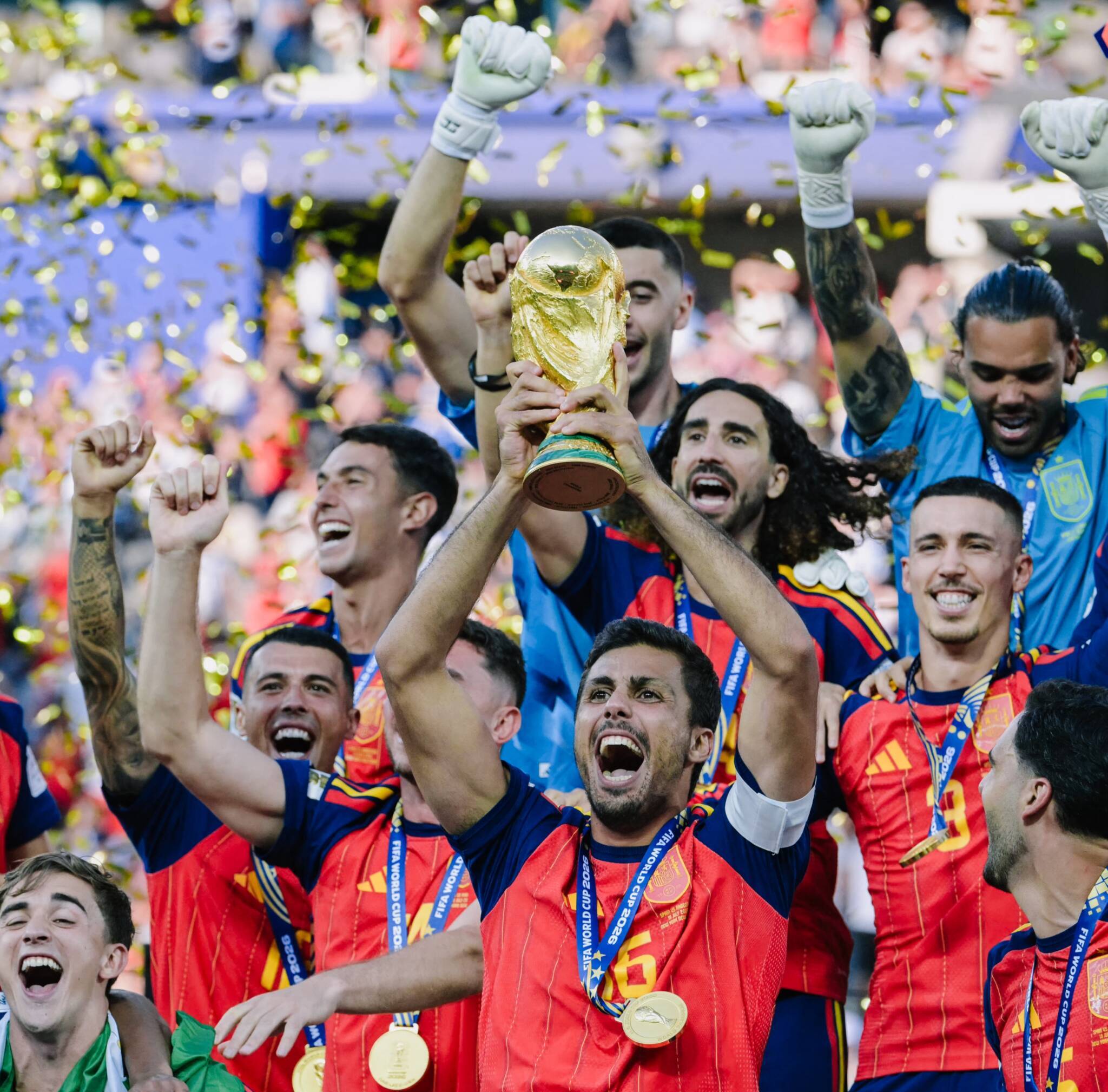
New York, July 2026 : Spain reclaimed football’s biggest prize after a commanding performance earned them a 1-0 extra-time victory over defending champions Argentina in the FIFA World Cup 2026 final at the New York New Jersey Stadium on Monday. Substitute Ferran Torres emerged as the hero, scoring the decisive goal in the 106th minute to hand La Roja their second FIFA World Cup title and their first since their historic triumph in South Africa in 2010.
Although the scoreline remained goalless after 90 minutes, the final was largely dominated by Spain, who controlled possession, dictated the tempo and created numerous scoring opportunities. Argentina, despite boasting Lionel Messi and several experienced stars, struggled to mount meaningful attacks as Spain’s disciplined defence and relentless pressing left the defending champions chasing the game for long periods.
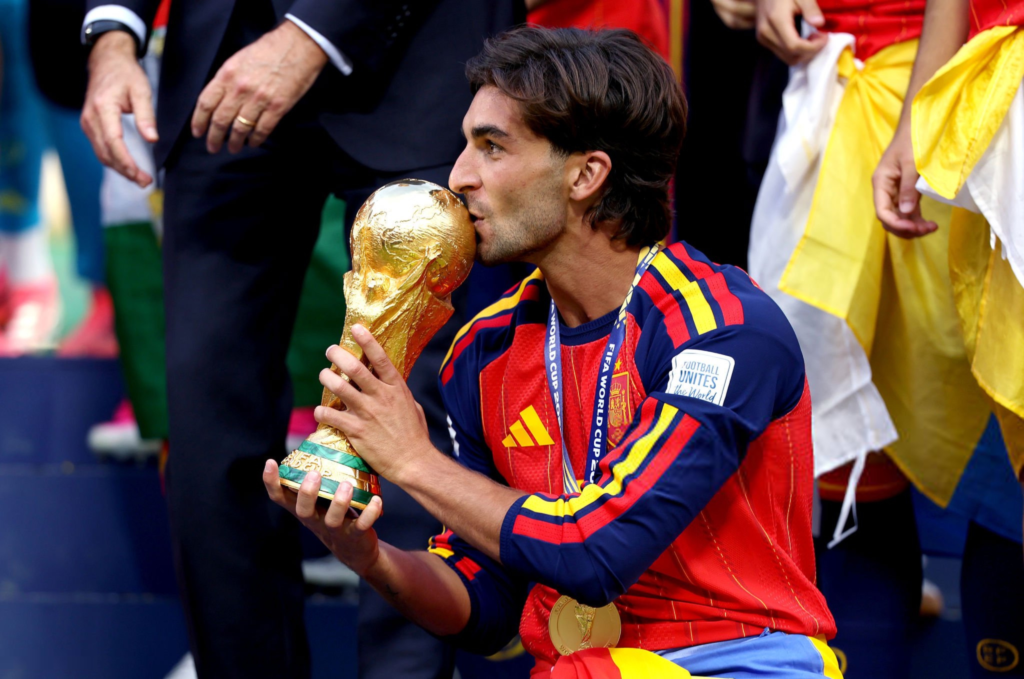
The breakthrough finally arrived midway through extra time. Nico Williams won an aerial duel and headed the ball into the path of substitute Ferran Torres, who struck a powerful left-footed shot beyond goalkeeper Emiliano Martinez to send the Spanish bench into wild celebrations. Spain comfortably protected their slender advantage during the closing stages, ending Argentina’s hopes of defending the trophy they had won in Qatar four years earlier.
The victory extended Spain’s remarkable record in FIFA World Cup finals. Having won their maiden title in 2010 with a 1-0 extra-time victory over the Netherlands, Spain have now won both World Cup finals they have contested, with both triumphs coming after extra time. Their unbeaten record in football’s biggest match remains intact.
For Argentina, the defeat was another painful chapter in World Cup history. The South American giants equalled Germany’s record of losing four World Cup finals. Argentina previously finished runners-up in 1930, 1990 and 2014 before suffering another heartbreaking defeat in 2026. Germany’s four final defeats came in 1966, 1982, 1986 and 2002.
Spain’s tactical discipline produced one of the most dominant defensive displays ever seen in a World Cup final. Argentina failed to register a single shot during the entire 90 minutes of regulation time, becoming the first team in six decades to achieve that unwanted statistic in a World Cup final. Throughout the entire match, Argentina managed only two attempts at goal and failed to register a single shot on target.
The Spanish backline completely neutralised Lionel Messi, denying the Argentine captain the opportunity to influence the match. Goalkeeper Unai Simon enjoyed a relatively comfortable evening as Spain’s defenders consistently intercepted passes, won aerial duels and restricted Argentina’s attacking movement.
Despite the defeat, goalkeeper Emiliano Martinez delivered an outstanding individual performance. The Argentine shot-stopper made 11 saves during the final, becoming the first goalkeeper to record double-digit saves in a World Cup match since Curacao’s Eloy Room made 15 saves against Ecuador earlier in the tournament. Martinez’s heroics kept Argentina alive for much of the contest despite Spain’s relentless pressure.
Argentina’s difficulties increased further late in regulation time when midfielder Enzo Fernandez received a second yellow card and was sent off, forcing Lionel Scaloni’s side to play the entirety of extra time with 10 men. It was Argentina’s first red card of the 2026 World Cup and their first sending-off in the tournament since their quarterfinal clash against Germany in 2006.
Spain’s triumph also highlighted their remarkable consistency throughout the competition. Luis de la Fuente’s side won each of their final seven matches, establishing the longest winning streak by Spain in World Cup history. Even more impressively, Spain conceded only one goal during the entire tournament, setting a new record for the fewest goals conceded by a World Cup-winning team. The previous benchmark had been two goals, jointly held by France (1998), Italy (2006) and Spain themselves in 2010.
Spain also extended their unbeaten run in regulation time to 38 consecutive matches, surpassing Italy’s previous streak of 37 matches recorded between 2018 and 2021. Their combination of disciplined defending, technical excellence and tactical flexibility made them the standout team of the tournament.
The victory further enhanced the reputation of head coach Luis de la Fuente. Already the architect of Spain’s UEFA Nations League triumph in 2023 and UEFA Euro 2024 success, De la Fuente became the first coach in football history to win the FIFA World Cup, UEFA European Championship and UEFA Nations League. He also joined an elite group of managers to have won both the European Championship and the FIFA World Cup, alongside Germany’s Helmut Schon and Spain’s Vicente del Bosque.
The final also produced several historic individual milestones. Lionel Messi, at 39 years and 25 days, became the oldest outfield player ever to appear in a FIFA World Cup final, surpassing Sweden’s Gunnar Gren, who was 37 during the 1958 final. Only Italy goalkeeper Dino Zoff, who lifted the trophy at 40 years and 133 days in 1982, remains older overall among World Cup finalists.
Messi also became only the second player in football history to feature in three FIFA World Cup finals. Having previously led Argentina to the championship matches in 2014 and 2022, he joined Brazilian legend Cafu, who appeared in the 1994, 1998 and 2002 finals. Unlike Cafu, who came off the bench in one of those finals, Messi started all three title-deciding matches.
Spain’s youthful squad also made history. Defender Pau Cubarsi, 19, and teenage sensation Lamine Yamal became only the fourth and fifth teenagers ever to appear in a World Cup final. They joined an exclusive list that includes Pele (1958), Giuseppe Bergomi (1982) and Kylian Mbappe (2018). Like their illustrious predecessors, both teenagers finished on the winning side.
After the match, Argentina coach Lionel Scaloni graciously acknowledged Spain’s superiority and urged his players to accept defeat with dignity.
“We have to place immense value on reaching this stage because it takes an enormous amount of effort,” Scaloni said. “We have always tried to be gracious in victory, and today we must also be gracious in defeat. We lost the match and we accept it. That doesn’t erase everything this team has achieved to reach another World Cup final.”
The Argentine coach praised his players for their commitment throughout the tournament and thanked supporters for standing behind the team.
“To our people, our players and our country, I want to say that we gave absolutely everything. The players left everything on the pitch and that is something to be proud of. We have to get back up because that is football.”
Scaloni also emphasised that finishing runners-up in consecutive World Cups remained a remarkable achievement despite the disappointment of missing out on the title.
“I value this runners-up finish because it is incredibly difficult to reach a World Cup final. Naturally, we wanted to win, but what I feel most is gratitude, along with sadness. When your players give everything they have, it is very difficult to criticise them.”
For Spain, the victory marks the beginning of a new era under Luis de la Fuente. Blending experienced leaders with emerging stars such as Lamine Yamal, Nico Williams and Pau Cubarsi, Spain completed an unbeaten World Cup campaign that will be remembered for its defensive excellence, tactical maturity and relentless consistency.
With a second World Cup crown secured after a 16-year wait, Spain once again stand at the summit of world football, while Argentina’s quest to defend their title ended in heartbreak against a side that proved worthy champions on the sport’s biggest stage.
Team Maverick



Spain Erupts in Celebration After Historic World Cup Triumph, Players Receive Record Bonuses
Madrid, July 2026 : Spain continued to celebrate its historic FIFA World Cup 2026 triumph …
Spain Erupts in Celebration After Historic World Cup Triumph, Players Receive Record Bonuses
Madrid, July 2026 : Spain continued to celebrate its historic FIFA World Cup 2026 …