Dedicated Backward Class Commission to be constituted for OBC reservation in rural local bodies

Government decision taken in compliance with Supreme Court orders; commission to submit report within 6 months
Commission to conduct social and political study for OBC reservation in Panchayat elections
Commission will comprise 5 members, headed by a retired High Court judge
Twelve proposals were presented in the Cabinet meeting, all received approval
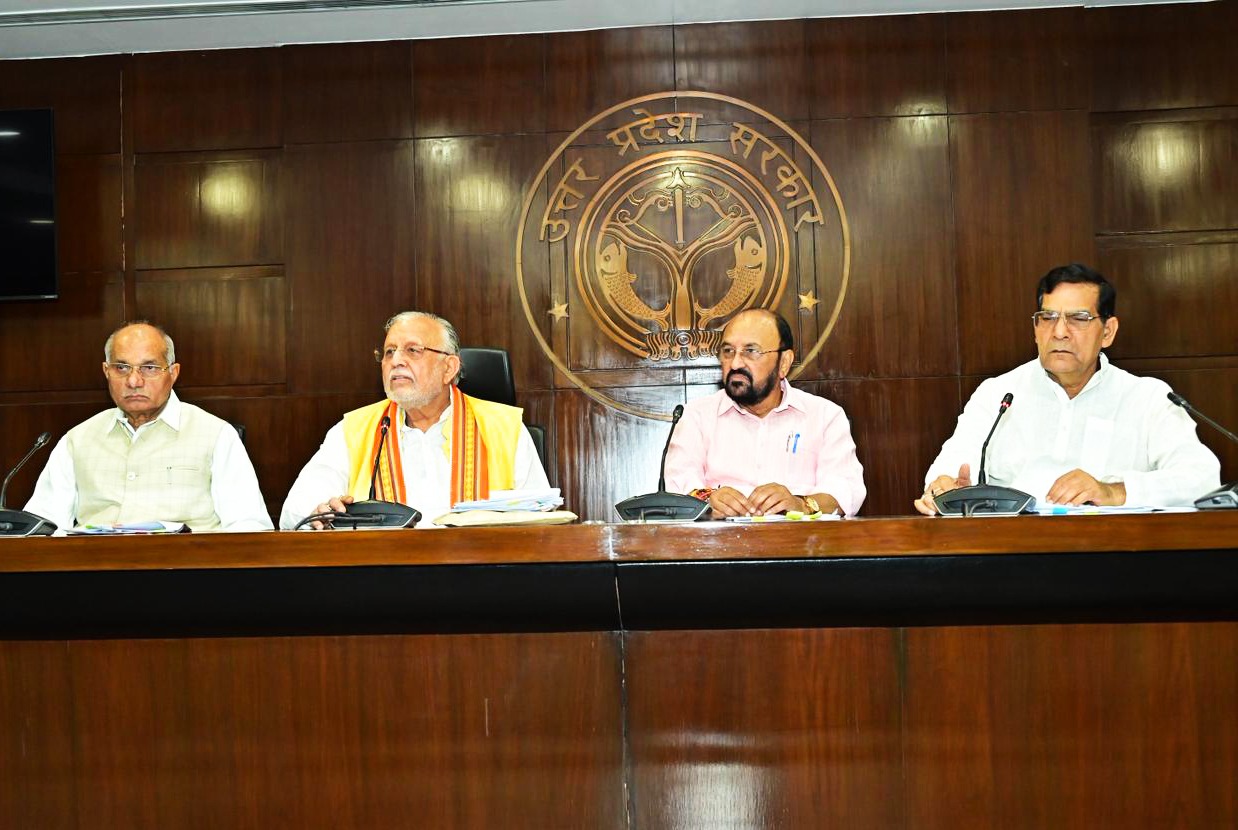
Lucknow, May 2026 : In the Cabinet meeting held at Lok Bhavan under the chairmanship of Chief Minister Yogi Adityanath, approval was granted for the constitution of the “Uttar Pradesh State Local Rural Bodies Dedicated Backward Class Commission” for determining reservation for Other Backward Classes (OBCs) in the state’s three-tier rural local bodies.
The commission will conduct a contemporary and empirical study of the social and political backwardness of backward classes for providing reservation to them in Panchayat elections. A total of 12 proposals were presented in the Cabinet meeting and all were approved.
Providing information about the decisions taken in the Cabinet meeting, Finance Minister Suresh Kumar stated, “In compliance with the orders of the Supreme Court, the state government has approved the formation of the ‘Uttar Pradesh State Local Rural Bodies Dedicated Backward Class Commission’ for providing reservation to Other Backward Classes (OBCs) in the three-tier Panchayat elections.
The commission will conduct a contemporary and empirical study of the status of backward classes in the state, their population, social representation, and participation in Panchayats, and will submit its recommendations for determining proportionate reservation body-wise.
The Finance Minister stated, provisions for reservation in Panchayats already exist under the Uttar Pradesh Panchayat Raj Act, 1947 and the Uttar Pradesh Kshetra Panchayat and Zila Panchayat Act, 1961. Reservation for backward classes shall not exceed 27 percent of the total posts, and if updated population data is not available, figures may be determined through surveys. The Cabinet has approved the constitution of the commission, and its tenure will ordinarily be 6 months.
The commission will study data with the objective of determining reservation for the OBC category in Gram Panchayats, Kshettra Panchayats, and Zila Panchayats across the state and will recommend proportionate reservation body-wise. Based on these recommendations, the reservation system for the upcoming Panchayat elections will be implemented.
According to the Cabinet decision, the commission will consist of a total of 5 members, who will be nominated by the state government. One of the members will be a retired judge of the High Court, who will serve as the Chairperson of the commission. Individuals having knowledge and experience in matters related to backward classes will be included in the commission.
The government clarified that under Article 243-D of the Constitution and the relevant provisions of the concerned Acts, reservation is provided in Panchayats for Scheduled Castes, Scheduled Tribes, and backward classes.
Reservation for backward classes shall not exceed 27 percent of the total posts. Final determination of reservation in Panchayats will be made on the basis of the commission’s report.
State-of-the-art 1010-bed Emergency Centre to be built at Lohia Institute
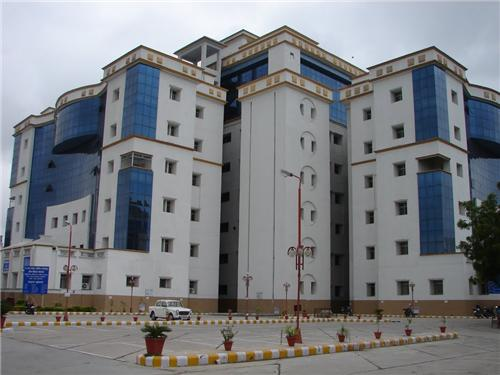
In the Cabinet meeting, approval was granted for the construction project of a 1010-bedded Multi-Speciality Emergency Centre Hospital, a new OPD Block, and a Teaching Block at the new campus of Dr Ram Manohar Lohia Institute of Medical Sciences, located at Shaheed Path, Gomti Nagar Extension Sector-7.
Finance Minister Suresh Kumar Khanna stated, approval of Rs 855 crore 4 lakh 34 thousand has been granted for this ambitious project. Under this major initiative, a state-of-the-art Multi-Speciality Emergency Centre Hospital equipped with advanced facilities will be constructed, in which a total of 1010 beds will be established.
Along with this, keeping in view the increasing number of patients and the need for improved treatment facilities, a new OPD Block will also be built to provide more systematic and modern healthcare services to the people of the state.
Under the project, a new Teaching Block with a capacity of 200 seats will also be developed. This will provide medical students with a modern teaching environment equipped with advanced technology and resources, thereby further improving the quality of medical education.
With the development of this new medical infrastructure, critically ill patients will be able to receive prompt and specialised treatment. At the same time, patients coming from various districts of the state will also benefit from improved healthcare facilities in the state capital.
Tripartite MoU approved for Lucknow Metro phase-1B
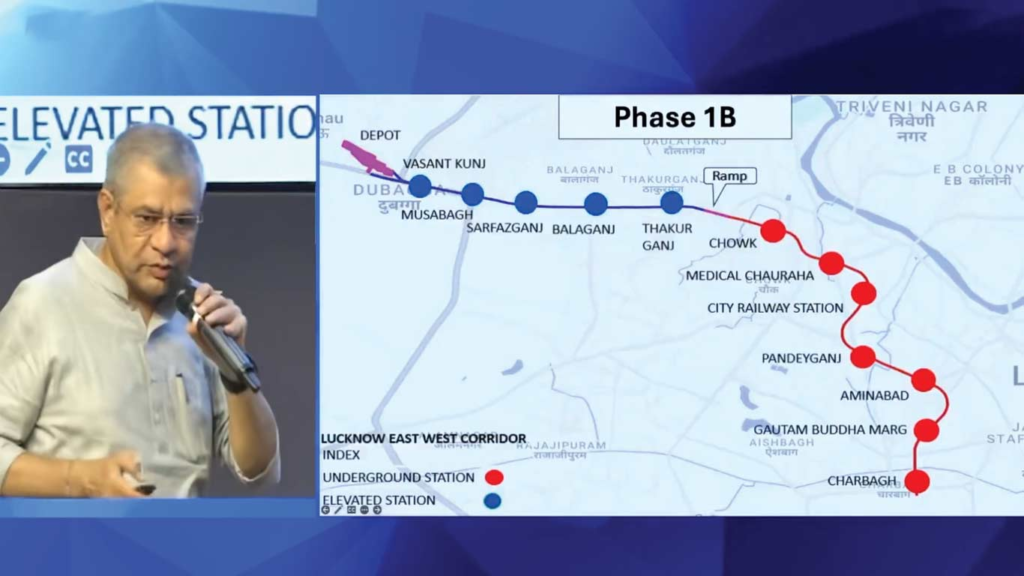
In the Cabinet meeting chaired by Chief Minister Yogi Adityanath, approval was granted for the execution of a tripartite Memorandum of Understanding (MoU) among the Government of India, the Government of Uttar Pradesh, and Uttar Pradesh Metro Rail Corporation Ltd. for the Lucknow Metro Project Phase-1B East-West Corridor (Charbagh to Vasant Kunj).
Providing details of the Cabinet decision, Finance Minister Suresh Kumar Khanna said, the DPR of the project had already been approved by the Cabinet earlier, and now consent has been given for the approved project cost of ₹5801.05 crore. The project will have 50-50 percent participation from the Central Government and the State Government.
The East-West Corridor from Charbagh to Vasant Kunj will further strengthen the transportation system in the capital city Lucknow and provide citizens with modern and convenient public transport facilities.
It is noteworthy that the DPR of the Lucknow Metro Phase-1B East-West Corridor was approved in the Cabinet meeting held on March 5, 2024. Subsequently, the Ministry of Housing and Urban Affairs, Government of India, approved the total project cost of ₹5801.05 crore on September 3, 2025, thereby granting approval to the project.
In the approval letter issued by the Government of India, it was stipulated that for the implementation of the project, a tripartite MoU would be executed among the Central Government, the State Government, and Uttar Pradesh Metro Rail Corporation Limited.
In this sequence, after due examination and amendments by the Law Department, the draft MoU has now been approved by the Yogi Cabinet. According to the Cabinet decision, the role and responsibilities of the State Government in the project have also been clearly defined.
Internship allowance of Veterinary students increased threefold
In the Cabinet meeting chaired by Chief Minister Yogi Adityanath, approval was granted to the proposal to increase the internship allowance of veterinary students studying in the state from ₹4,000 per month to ₹12,000 per month. This decision of the government will provide major financial support to veterinary students in the state and will also boost their morale.

Minister for Dairy Development and Animal Husbandry Dharampal Singh said, “Uttar Pradesh is a state with a vast population, a large livestock population, and an extensive geographical area. Livestock plays an important role in the state’s economy. In such a scenario, the role of veterinary doctors becomes extremely important in the protection of animal health, control and eradication of various animal epidemics, and the promotion of improved breeds.”
According to the Cabinet decision, veterinary students studying at Uttar Pradesh Pandit Deen Dayal Upadhyaya Pashu Chikitsa Vigyan Vishwavidyalaya Evam Go Anusandhan Sansthan, Acharya Narendra Dev University of Agriculture and Technology, and Sardar Vallabhbhai Patel University of Agriculture and Technology will now receive the increased internship allowance.
According to the government, these students were currently being given an internship allowance of ₹4,000 per month, which has now been increased to ₹12,000 per month. This decision will benefit 300 approved students in the 3 universities.
The Animal Husbandry Minister said, “This decision was taken after studying the higher internship allowances being provided in states like Haryana, Karnataka, and Kerala. After implementation of the proposal, the government will bear an additional expenditure burden of approximately ₹4.20 crore, which will be arranged from the non-salary component of the government grants provided to the universities.”
He added, this will boost the morale of students, increase their interest in education and enthusiasm towards work, and also strengthen the principle of equality. Minister Dharampal Singh described it as an important step in line with the ‘principle of equality’.
Approval granted for establishment of Sardar Patel Apex University in Mirzapur
In the Cabinet meeting chaired by Chief Minister Yogi Adityanath, approval was granted to the proposal for issuing a Letter of Intent to the sponsoring institution for the establishment of “Sardar Patel Apex University, Mirzapur” in the private sector under the Uttar Pradesh Private Universities Act, 2019.
Higher Education Minister Yogendra Upadhyay said, Apex Welfare Trust, based in Varanasi and operating large hospitals, is now entering the field of education as well. The Trust had proposed the establishment of Sardar Patel Apex University in Mirzapur, and all formalities related to it have been completed. In this sequence, the Cabinet approved the proposal to issue a Letter of Intent to the institution.
According to the proposal, this private university will be established on approximately 50.45 acres of land in Village Samspur of Chunar Tehsil in Mirzapur district. Along with creating new opportunities for higher education in the rural area, the university will also accelerate regional development.
Minister Yogendra Upadhyay said, under the leadership of the Chief Minister, higher education in the state has expanded rapidly and its quality has also improved significantly. From the British era till the year 2017, there were only 14 government universities in the state, whereas after 2017, eight new government universities have been established so far.
Similarly, the number of private universities, which remained stagnant at 29 for a long time, has now increased to 52. The Minister also informed that Letters of Intent have already been issued to 8 institutions.



China Open: Lakshya, Sindhu and Ayush Shetty Advance to Second Round After Gritty Wins
Changzhou (China), July 2026 : India’s top badminton stars Lakshya Sen, P.V. Sindhu …

China Open: Lakshya, Sindhu and Ayush Shetty Advance to Second Round After Gritty Wins
Changzhou (China), July 2026 : India’s top badminton stars Lakshya Sen, P.V. Sindhu and …