Rubio Hints at Major Diplomatic Breakthrough With Iran, Says Progress Made on Strait of Hormuz Talks

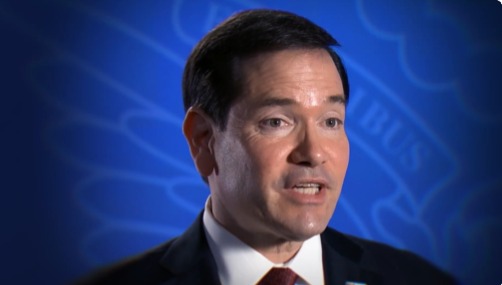
New Delhi, May 2026: US Secretary of State Marco Rubio on Sunday signalled a possible diplomatic breakthrough in ongoing negotiations involving the United States and Iran, saying that “significant progress” had been made in recent discussions and hinting that the world could soon receive “good news” regarding the strategically critical Strait of Hormuz.
Speaking during a joint press conference alongside India’s External Affairs Minister S. Jaishankar in New Delhi, Rubio said intensive diplomatic engagements over the past 48 hours had moved negotiations in a positive direction, although final agreements were yet to be concluded.
Rubio’s remarks come amid heightened global attention on tensions involving Iran, regional maritime security and the future of Tehran’s nuclear programme, all of which carry major implications for global energy markets, international shipping and geopolitical stability.
“I do think perhaps there is the possibility that over the next few hours the world will get some good news, at least with regards to the straits and with regards to a process that can ultimately leave us where the president wants us to be — and that is a world that no longer has to be in fear or worry about an Iranian nuclear weapon,” Rubio said.
While declining to disclose the exact details under negotiation, Rubio indicated that meaningful diplomatic movement had occurred in recent days and suggested that further announcements could follow shortly.
“There is some good news on that front, but not final news on that front. Perhaps a little later today we will have more to say. Some progress has been made. I do not want to downplay that, but I also want to make clear that we still have work to do,” he added.
The US Secretary of State reiterated President Donald Trump’s long-standing position that Iran must never be allowed to obtain nuclear weapons.
According to Rubio, preventing Tehran from developing nuclear weapons remains the central objective of the current diplomatic process.
“The ultimate goal is that Iran can never have a nuclear weapon. President Trump has been absolutely clear about that. Iran will never possess a nuclear weapon as long as Donald Trump is president of the United States,” Rubio stated firmly.
The comments come at a time when Washington and several Gulf nations are reportedly engaged in intense backchannel diplomacy aimed at easing regional tensions and preventing further escalation in West Asia.
A major focus of Rubio’s remarks was the Strait of Hormuz, one of the world’s most important maritime chokepoints through which nearly one-fifth of global oil shipments pass every day.
Any disruption in the strait has the potential to trigger sharp increases in global energy prices and affect economies heavily dependent on imported crude oil, including India.
Rubio stressed that the Strait of Hormuz is an international waterway and warned against any attempts to disrupt commercial shipping routes.
“This is an international waterway. They do not own it. What is happening now is essentially the threat of disrupting commercial vessels using an international shipping route, and that is illegal under international law,” he said.
He warned that allowing such actions to become normalised would create a dangerous precedent that could destabilise maritime trade routes in other parts of the world as well.
“If the international community accepts this behaviour as normal, it creates an unacceptable status quo and sets a dangerous example that could eventually be repeated elsewhere,” Rubio cautioned.
The US Secretary of State revealed that Washington and its regional allies have been working on a broad diplomatic framework aimed at ensuring completely unrestricted navigation through the Strait of Hormuz.
According to Rubio, the proposed arrangement seeks to guarantee open access to the waterway without tolls, blockades or threats to commercial vessels.
“We have made progress over the last 48 hours working closely with our partners in the Gulf region on an outline that could ultimately leave us not just with completely open straits, but open straits without tolls, while also addressing some of the underlying concerns tied to Iran’s past nuclear ambitions,” he explained.
Rubio noted that while the outline of a possible understanding had begun to emerge, any final arrangement would require Iran’s full acceptance and long-term compliance.
He added that issues connected to Iran’s nuclear infrastructure were highly technical in nature and would require further negotiations over a prolonged period.
“When you are dealing with nuclear programmes, these are extremely technical issues. Any future agreement would require careful negotiation and detailed implementation mechanisms,” he said.
Rubio repeatedly emphasised that the United States prefers resolving the crisis through diplomacy rather than military intervention.
He said President Trump’s priority has always been to achieve a peaceful and lasting solution through negotiations, while making it clear that Washington remains prepared to act if diplomacy fails.
“The president’s preference is always diplomacy. He would much rather have the Department of State solve this problem than have the Department of War solve it. But the problem is going to be solved one way or another,” Rubio remarked.
The Secretary of State also strongly defended Trump’s approach toward Iran, arguing that no previous US administration had acted more decisively against Tehran’s nuclear ambitions.
Rubio dismissed criticism from sections of American political discourse suggesting that Washington could eventually compromise too much in negotiations with Iran.
“Many presidents have said that Iran cannot have a nuclear weapon. But President Trump is the only one who has actually taken real action on this issue,” Rubio said.
“There should be absolutely no doubt about President Trump’s commitment to ensuring that Iran never acquires nuclear weapons,” he added.
Rubio further rejected claims that any potential diplomatic agreement would leave Iran in a stronger strategic position.
“The idea that President Trump would agree to any arrangement that ultimately strengthens Iran’s nuclear ambitions is absurd. That is simply not going to happen,” he asserted.
Despite his strong rhetoric, Rubio repeatedly highlighted that diplomacy remains the preferred path forward.
“Our goal is still to address these challenges through diplomacy, and we believe genuine progress is being made toward that objective,” he said.
Rubio’s remarks are likely to be closely watched by governments and global markets alike, especially because of the central importance of the Strait of Hormuz to global energy supplies.
India, which imports a major portion of its crude oil requirements from the Gulf region, has consistently monitored developments in the Strait of Hormuz with deep concern. Any easing of tensions involving Iran could potentially bring relief to global oil markets and reduce fears of disruptions to shipping routes and energy supply chains.
The developments also highlight the increasingly complex diplomatic landscape in West Asia, where negotiations involving Iran, Gulf nations and global powers continue to shape the region’s security environment.
While Rubio stopped short of announcing a final agreement, his remarks strongly suggested that intense diplomatic activity is underway behind the scenes and that a significant development could emerge in the near future.
(The content of this article is sourced from a news agency and has not been edited by the Mavericknews30 team.)


Chandrababu Naidu Reviews Preparations for PM Modi’s August 1 Inauguration of Bhogapuram International Airport
Amaravati, July 2026 : Andhra Pradesh Chief Minister N. Chandrababu Naidu on Monday conduc…

Chandrababu Naidu Reviews Preparations for PM Modi’s August 1 Inauguration of Bhogapuram International Airport
Amaravati, July 2026 : Andhra Pradesh Chief Minister N. Chandrababu Naidu on Monday conducted …