US Air Force F-16CM Viper Shows How Single Combat Sortie Can Support Multiple Missions Across The Middle East.

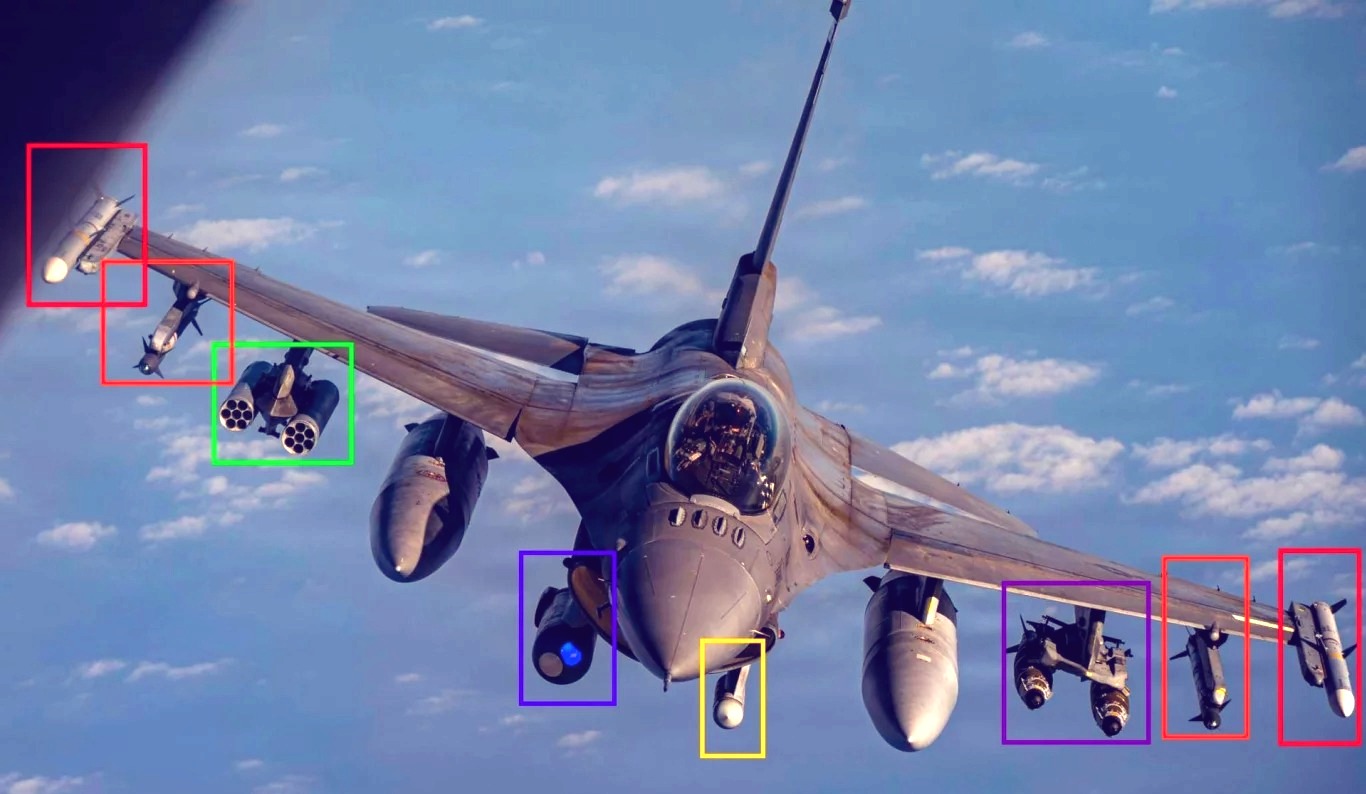
Washington DC; May 2026: Although the official caption identifies it only as an F-16 Fighting Falcon, the visible configuration supports a more precise assessment: the aircraft is most likely an F-16CM Viper, a modernised US Air Force variant linked to the Block 50/52 multirole and Wild Weasel mission sets. Its combat load appears to combine air-to-air missiles, precision-guided air-to-ground weapons, rocket launchers likely associated with counter-drone missions, a LITENING Advanced Targeting Pod, a HARM Targeting System pod, and external fuel tanks in a single mission package. This configuration highlights how the US Air Force continues to use the Viper as a flexible combat platform able to conduct defensive counter-air, precision strike, counter-UAS, armed overwatch and SEAD-support missions across a demanding operational region.
The first element of analysis concerns the aircraft itself, as the visible configuration provides a more precise assessment than the generic official description. The aircraft appears to be an F-16CM rather than a standard F-16, notably due to the apparent presence of a HARM Targeting System (HTS) pod mounted on the intake station. This configuration is characteristic of US Air Force F-16CJ/CM Block 50/52 aircraft assigned to suppression of enemy air defence (SEAD) missions. The detail is operationally significant because it places the aircraft within the lineage of the US Air Force’s Wild Weasel mission set, a specialised role focused on the detection, identification and neutralisation of hostile air-defence radar systems.
The US Air Force describes the HTS as a system for F-16CJ Block 50/52 aircraft and calls it the cornerstone of the SEAD mission, providing pilots with situational awareness on the type and location of surface-to-air defence radars and passing targeting solutions to the HARM missile. Even without an AGM-88 HARM visible in this particular photograph, the pod gives the Viper an electronic order-of-battle function: it can detect, classify, localise and share threat-emitter data, supporting SEAD, DEAD, strike escort and route sanitization tasks for a wider combat package.
This is why the better wording is not simply “F-16 Fighting Falcon”, but “F-16CM Viper configured for multirole security operations with SEAD-support capability”, a formulation that more accurately reflects the aircraft’s visible mission architecture while remaining cautious because the official caption does not confirm the exact subvariant.
The air-to-air missile fit is another key indicator of the aircraft’s multirole posture. The aircraft appears to carry a pair of AIM-120-series AMRAAM beyond-visual-range missiles and two AIM-9-series Sidewinder short-range missiles on its outer stations. This combination gives the Viper a layered counter-air envelope: the AIM-120 provides beyond-visual-range engagement capability against aircraft, cruise missiles or other airborne threats, while the AIM-9 family covers the short-range infrared-guided fight and close-in self-defence.
The US Air Force identifies the AIM-120 as an all-weather, beyond-visual-range missile compatible with the F-16, while the AIM-9 is described as a supersonic, heat-seeking missile carried by fighter aircraft. In operational terms, this means the photographed aircraft was not merely a strike platform carrying bombs; it was a self-protecting multirole combat aircraft able to maintain defensive counter-air presence, escort other assets, respond to airborne threats and retain precision-strike options within the same sortie.
The precision-strike load under the wing adds another layer to this mission profile, with the aircraft appearing to carry two Laser JDAM-class weapons on a Smart Multiple Carriage Rack, most likely a BRU-57/A-type rack. This is an important indicator of modern F-16 weapons employment, because the BRU-57/A is fielded on the F-16 and doubles the number of smart weapons that can be carried on a single station, while supporting 500-pound and 1,000-pound JDAM-class weapons.
The JDAM family uses an inertial navigation and GPS guidance tail kit to turn unguided bombs into adverse-weather precision munitions, while the laser-enhanced variant adds the ability to prosecute moving or relocatable targets when designated by the aircraft’s own targeting pod or by another laser designator. In CENTCOM-style security operations, that gives the F-16CM the ability to strike command nodes, launchers, radar support vehicles, storage sites, small compounds, hardened field positions or mobile targets while limiting weapons expenditure, preserving station time and maintaining a credible precision-response option throughout the mission.
The fourth feature is the LITENING Advanced Targeting Pod, visible under the forward fuselage area. This pod is central to the aircraft’s multirole profile because it turns the F-16 into a sensor-shooter and not only a missile carrier. The US Air Force states that LITENING is integrated on F-16 Blocks 25-52 and provides day, night and under-weather attack capability through FLIR, CCD-TV imagery, laser designation, laser ranging, laser spot tracking and video downlink.
In this loadout, the pod can support Laser JDAM terminal guidance, assist in positive identification, generate coordinates for GPS-guided munitions, cue APKWS-type rockets if loaded, and provide real-time tactical intelligence to other aircraft or ground controllers. In practical terms, it allows the pilot to shift from combat air patrol to dynamic targeting or armed overwatch without requiring a different aircraft type.
The presence of two LAU-131/A or LAU-131 A/A-type seven-round rocket launchers mounted on a triple ejector rack under the opposite wing represents one of the most operationally significant aspects of this configuration. In the image, the launchers appear empty, potentially indicating that the aircraft was photographed after weapon expenditure, during a transit or aerial refuelling phase, or while operating with the launchers retained to preserve rapid mission reconfiguration capability. The standard LAU-131/A is a seven-round rocket launcher widely used by the US Air Force, while the extended-length LAU-131 A/A variant is optimised for compatibility with the AGR-20A APKWS II laser-guided rocket system and can carry 07 numbers of 2.75-inch (70 mm) rockets.
This detail is particularly notable because the F-16 has increasingly been linked to the use of APKWS-guided rockets in low-cost counter-air and counter-UAS roles. The concept offers a more economically sustainable solution for engaging drones, one-way attack UAVs, cruise missile-type targets, and other lower-cost aerial threats compared to relying exclusively on AIM-120 or AIM-9 air-to-air missiles.
Air Combat Command previously confirmed that an F-16 successfully destroyed a subscale drone with an AGR-20A APKWS rocket during a 2019 test conducted as a proof of concept for cruise missile defence and defensive counter-air operations. More recently, Shaw Air Force Base described an F-16 configuration equipped with six LAU-131 launchers carrying up to 42 APKWS rockets alongside AIM-120 AMRAAM and AIM-9 Sidewinder missiles for high-volume counter-UAS and air defence missions.
Fuel and endurance complete the operational picture, with the 02 numbers 370-gallon external fuel tanks visible under the wings and the KC-135 Stratotanker context of the DVIDS gallery pointing to a sortie designed for persistence rather than a short local mission.
The US Air Force describes the KC-135 as the core aerial refuelling capability of the service, enhancing global reach and supporting US, allied and partner aircraft. In the CENTCOM area of responsibility, that tanker connection is operationally decisive: it allows F-16s to remain on combat air patrol, escort high-value assets, respond to pop-up drone or missile threats, support troops or partner forces, and hold strike options at range without being tied to a narrow fuel timeline. The image therefore honours not only the fighter pilot in the cockpit, but also the tanker crew, boom operator, maintainers, weapons loaders, mission planners and air operations centre personnel who make sustained American airpower possible across one of the world’s most demanding operational regions.
The most important operational interpretation is that this F-16CM appears configured for a hybrid security mission rather than a single-purpose strike profile. With AIM-120 AMRAAMs and AIM-9 Sidewinders, it can support defensive counter-air, self-escort, combat air patrol and airspace-control tasks. With apparent Laser JDAMs and a LITENING Advanced Targeting Pod, it can conduct precision strike, armed reconnaissance, dynamic targeting and close air support with the ability to identify, track and engage targets under demanding rules of engagement. With the HARM Targeting System, it can contribute to SEAD and DEAD operations by detecting radar emitters, building an electronic order of battle and distributing threat data across a wider combat package.
With LAU-131-class launchers, it may also reflect the growing requirement to defeat drones, one-way attack UAVs and low-cost aerial threats without relying exclusively on expensive air-to-air missiles. With external tanks and KC-135 support, it can remain on station long enough to move between these mission sets during the same sortie. This is the core of modern US Air Force tactical aviation: one aircraft, one pilot, one combat load and multiple mission pathways available in real time.
This photograph is more than a routine aerial refuelling image. It shows the US Air Force employing the F-16CM Viper as a disciplined, adaptable and combat-relevant multirole platform in one of the world’s most demanding operational regions. The aircraft’s configuration reflects the operational lessons of recent air campaigns, where fighters must be prepared to intercept drones, deter hostile aircraft, escort strike packages, support forces on the ground, identify mobile targets, monitor radar threats and remain airborne for extended periods under tanker support.
The loadout visible in the image released by The Defence Visual Information Distribution Service illustrates why the F-16CM remains a respected instrument of American airpower: it brings together precision, endurance, survivability, electronic awareness and weapons flexibility in a single combat aircraft. In the hands of US Air Force pilots, maintainers, weapons crews and tanker crews, the Viper continues to represent a credible expression of US air superiority, regional security commitment and expeditionary professionalism.
Team Maverick.






Israel Rejects Gaza Disarmament Plan, Says IDF Will Stay Until Hamas Fully Disarmed
Jerusalem, July 2026 : Israel has reiterated its strong opposition to the US-backed plan f…

Israel Rejects Gaza Disarmament Plan, Says IDF Will Stay Until Hamas Fully Disarmed
Jerusalem, July 2026 : Israel has reiterated its strong opposition to the US-backed plan …