Rubio Holds High-Level Talks with UAE Leadership on Iran Understanding and Gulf Security

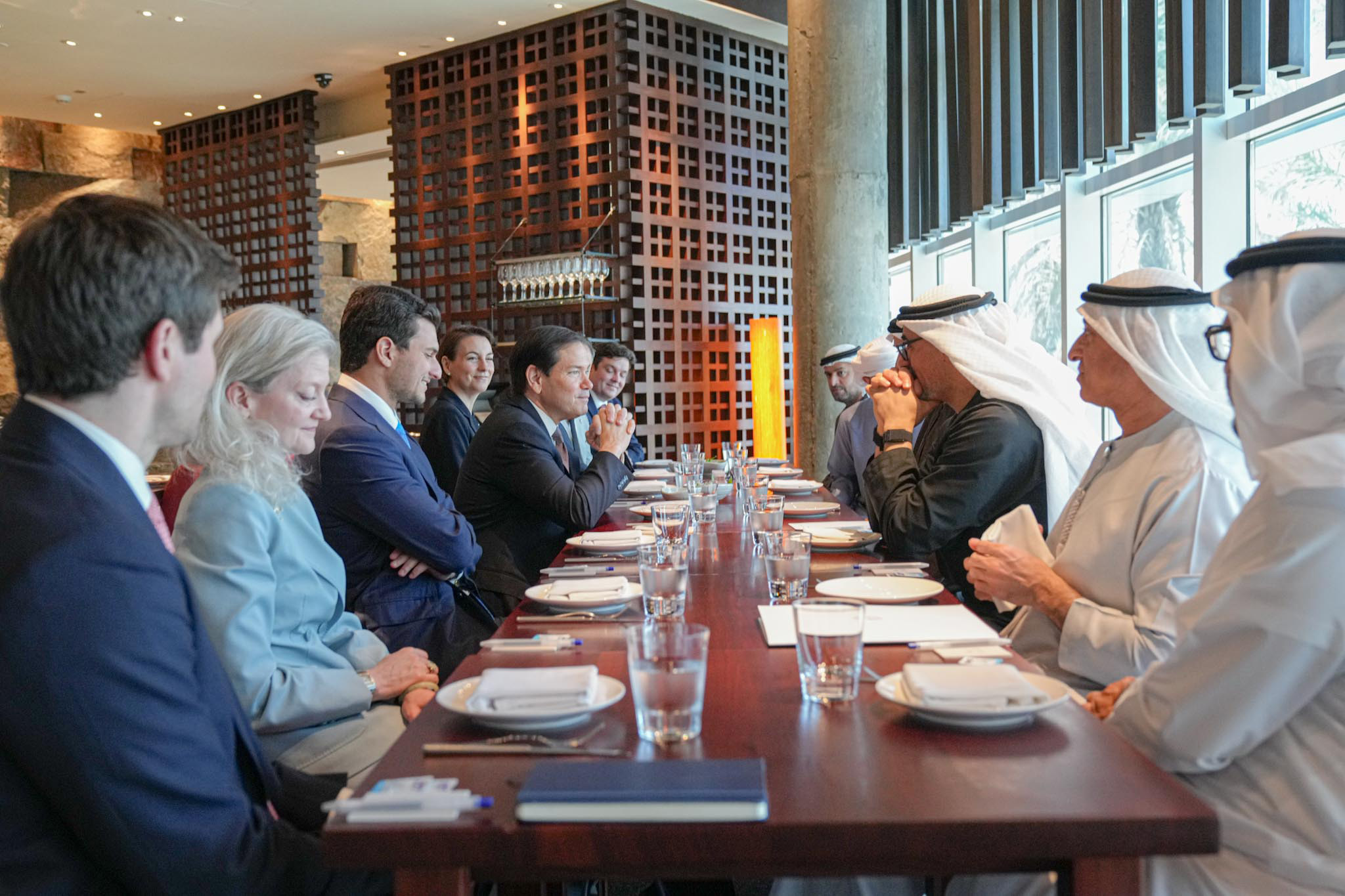
Abu Dhabi/Washington, June 2026 : US Secretary of State Marco Rubio held high-level discussions with UAE President Sheikh Mohamed bin Zayed Al Nahyan and senior Emirati officials in Abu Dhabi on Wednesday, as Washington stepped up diplomatic engagement across the Gulf to advance President Donald Trump’s recently announced memorandum of understanding with Iran and strengthen regional security cooperation.
The meeting formed a key part of Rubio’s three-day tour of the Gulf region, which includes visits to the United Arab Emirates, Kuwait, and Bahrain from June 23 to 25. The trip is focused on addressing regional security concerns, ensuring the safe movement of maritime traffic through the strategically vital Strait of Hormuz, and promoting long-term stability across the Gulf.
According to the US State Department, Rubio and Sheikh Mohamed discussed the implementation of President Trump’s memorandum of understanding with Iran, efforts to safeguard unrestricted and secure transit through the Strait of Hormuz, and broader initiatives aimed at maintaining peace and stability in the region.
The discussions also underscored the growing strategic partnership between the United States and the UAE, particularly in the areas of defence, trade, and economic cooperation. Both sides reviewed the strong bilateral relationship and explored avenues for deepening collaboration across multiple sectors.
In a statement released after the meeting, State Department spokesperson Tommy Pigott said Rubio reaffirmed Washington’s commitment to the UAE’s security and praised the country’s leadership during recent regional tensions.
“The Secretary thanked the UAE for its leadership and unparalleled support, commended its resilience in the face of recent regional challenges, and reaffirmed the United States’ commitment to the security and stability of the Emirates,” the statement said.
The visit highlights the critical role Gulf allies continue to play in Washington’s broader Middle East strategy. The United States is seeking support from regional partners as it works to implement the newly announced understanding with Iran while ensuring that one of the world’s busiest maritime trade corridors remains open and secure.
The Strait of Hormuz, through which a significant portion of global oil and energy supplies pass, remains a central focus of US diplomatic efforts amid ongoing regional security concerns.
Earlier, the State Department had stated that Rubio’s Gulf tour would address several regional priorities, including the Iran memorandum, maritime security, and strengthening cooperation with Gulf partners.
The Gulf Cooperation Council (GCC), comprising Bahrain, Kuwait, Oman, Qatar, Saudi Arabia, and the UAE, remains a key strategic partner for the United States. The bloc plays a vital role in regional political coordination, economic cooperation, and collective security efforts.
Rubio’s meetings are expected to reinforce US-Gulf ties at a time when regional stability, energy security, and maritime freedom remain central issues on the international agenda.
(The content of this article is sourced from a news agency and has not been edited by the Mavericknews30 team.)






Protect Her Tomorrow: Facts Every Family Should Know About Cancer Prevention
Scared about the HPV vaccination for your teenage daughter? Does it cause infertility? Bre…

Protect Her Tomorrow: Facts Every Family Should Know About Cancer Prevention
Scared about the HPV vaccination for your teenage daughter? Does it cause infertility? Breast …