Germany Inks Fresh Deal With TKMS For MEKO A-200 Frigate, While Cancelling Navantia’s F-126 Frigate Orders.

Germany; June 2026: Germany’s Ministry of Defence has decided to cancel the program for 06 F126 frigates, a project valued at around €10–12.8 billion and considered to be the Navy’s largest program since World War II. The contract, initially awarded in 2020 to a consortium led by Damen, suffered critical delays, software problems, and cost overruns that could have pushed the final cost above €18 billion, leading to its definitive abandonment.
The decision has had an immediate impact on German industry: Rheinmetall, which aspired to become the prime contractor through Naval Vessels Lürssen, has seen a landmark contract vanish, and its stock has plummeted by nearly 18% in a single day, wiping out billions of euros in market capitalization in a sector already anticipating a record investment cycle. Germany’s about-face calls into question the predictability of its major naval programs and fuels the debate about Europe’s ability to execute complex projects on time and within budget, amidst rearmament, with strong NATO commitments, and following the collapse of the FCAS program, in which Germany was also involved.
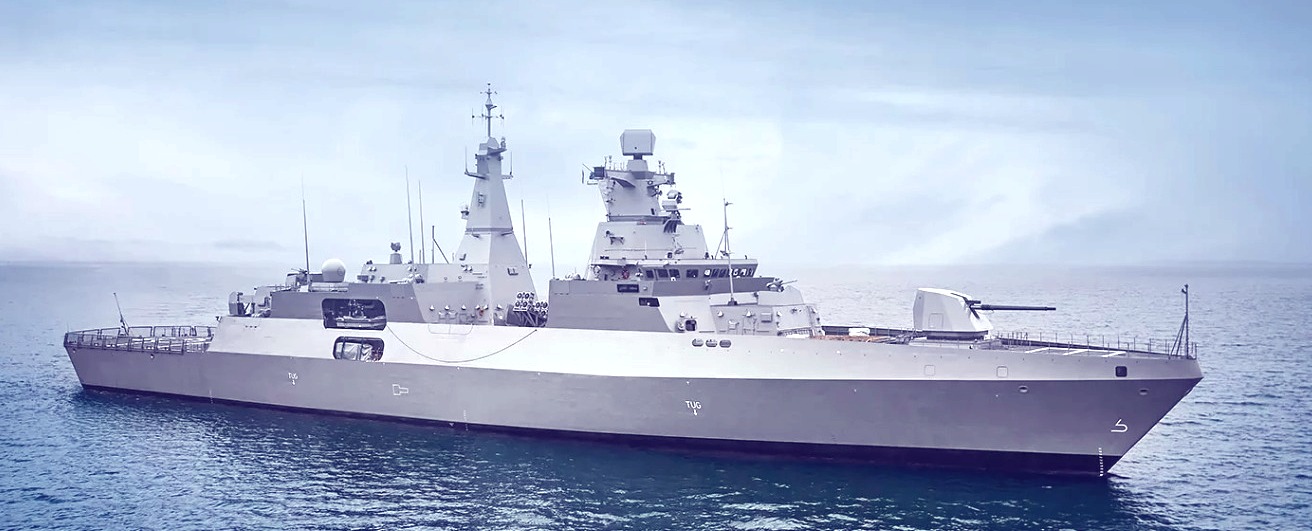
Alternatively, Germany has opted for a package of MEKO A-200 frigates from TKMS, prioritising anti-submarine warfare capabilities and delivery within a timeframe compatible with its North Atlantic obligations. The plan initially calls for 04 units at approximately €6.3 billion, with an option for additional 04 that would raise the investment to over €11 billion, forming a new backbone for the Kriegsmarine’s anti-submarine warfare capabilities.
This move consolidates TKMS’s position as a key partner for the German government in naval matters, just as the Bundestag had authorised preliminary agreements for the shipyard to begin industrial preparations ahead of the construction contract signing. Faced with the uncertainty surrounding other programs, the MEKO option appears to Germany as a ‘pragmatic’ solution: smaller vessels than the F126 mega-frigate, but capable of rapidly closing the gap in surveillance and anti-submarine warfare in an environment of growing Russian submarine threat.
In parallel with this reorientation, TKMS and Navantia signed a strategic agreement that opens the door to producing German shipyard designs in Spain, with a particular focus on submarines and potentially other combat vessels. The memorandum of understanding envisions exploring forms of industrial cooperation, technology transfer, and production in Spanish shipyards, leveraging Navantia’s experience in national programs such as the F-110 and S-80 submarines.
Although the agreement is not formally linked to the F126 crisis, it comes at a time when TKMS needs to expand its industrial base and supplier network to absorb new programs and commitments, both within Germany and with export customers. For Navantia, the alliance opens a preferential channel to German technologies in strategic segments, especially the submarine market, and allows it to position itself as a key partner in the European value chain for highly complex naval systems.
The cancellation of the F126 frigates highlights the structural risks of major European naval programs, that has been analysed in March 2026: dependence on multinational consortia, critical software integration, and political sensitivity to delays and cost overruns. Germany’s retreat not only affects Rheinmetall, a key player in the German supply chain, but also forces a rethinking of alliances and a diversification of capabilities within the EU, at a time of accelerated rearmament following Ukraine and other conflicts.
Last March, in the context of an analysis of the problems plaguing major international frigate construction programs, the F126 program (the new class of anti-submarine frigates originally commissioned from the Dutch firm Damen Naval) was intended to be the cornerstone of the German Navy’s plan to replace the aging Brandenburg-class frigates starting in 2028. However, years after the contract was signed, and despite the first keel being laid in 2024, no vessel is close to entering service, and the project is plagued by “persistent problems with the integration of information technologies and software”, according to the sources cited.
Germany decided to replace Damen as the prime contractor and negotiate industrial leadership with Naval Vessels Lürssen (NVL), by then part of Rheinmetall, in an attempt to salvage the program without declaring it a failure. Meanwhile, the 04 Type 123 Brandenburg frigates are now over 30 years old, and the German Navy risks being left without an anti-submarine backbone just as NATO is demanding a greater presence in the Baltic and the North Atlantic.
Faced with this impasse, the German Ministry of Defence opted for a pragmatic solution. As several European media outlets reported months ago, Germany was already considering purchasing four MEKO A-200 frigates from Thyssenkrupp Marine Systems (TKMS), based on a mature and widely exported design, as an interim remedy to the F126 delays. These units will be acquired as off-the-shelf platforms, with an emphasis on anti-submarine warfare and multi-purpose capabilities, and deliveries are planned to begin in late 2029, precisely to fill the gap that will open when the Brandenburg-class frigates are decommissioned.
The ministry itself admitted at the time that it was a ‘two-pronged strategy’: continuing the F-126 program, but simultaneously ensuring operational capability with the MEKO frigates to meet NATO ASW requirements on time, although the F-126 program was ultimately canceled. An analysis by Forecast International summarised it as a shift towards certainty of schedule and available hulls, even at the cost of temporarily foregoing the performance of a more ambitious but still immature design. Behind this lies a lesson learned: the immediate priority is no longer having the perfect frigate, but rather having sufficient and operational ships when the strategic situation demands it.
Team Maverick.






India Marks Largest-Ever Participation at North America’s Summer Fancy Food Show 2026 with Inauguration of India Pavilion
Indian Mango Showcase Highlights Six Premium Export Varieties at India Pavilion Basmati Cu…

India Marks Largest-Ever Participation at North America’s Summer Fancy Food Show 2026 with Inauguration of India Pavilion
Indian Mango Showcase Highlights Six Premium Export Varieties at India Pavilion Basmati Culinary Showcase …