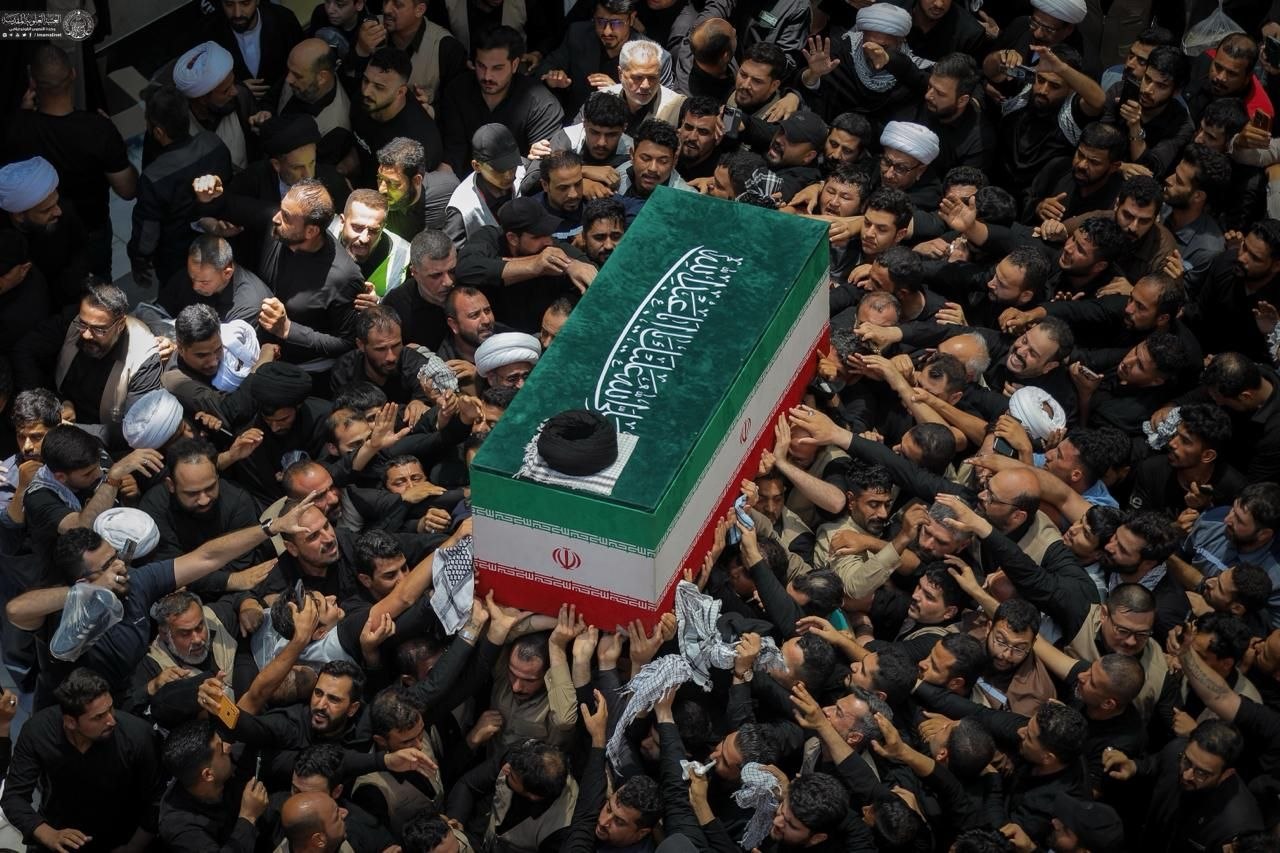
Millions Bid Farewell to Ayatollah Khamenei as Iran’s Seven-Day Funeral Ends Amid Renewed Regional Conflict

Tehran, July 2026 : Iran on Thursday concluded an extraordinary seven-day state funeral for Supreme Leader Ayatollah Seyyed Ali Khamenei, whose death in a February 28 US-Israeli strike triggered one of the largest public mourning ceremonies in the country’s history. The funeral procession, which stretched across Iran and neighbouring Iraq, drew millions of mourners and underscored both the spiritual and political significance of the late leader’s legacy.
The funeral journey carried the coffins of Ayatollah Khamenei and members of his immediate family, who were killed in the same strike, through some of the holiest cities in Shia Islam. Beginning in Tehran, the procession moved through Qom before crossing into Iraq, where massive crowds gathered in the revered cities of Najaf and Karbala. The final leg concluded in Mashhad, Khamenei’s birthplace, where he was laid to rest in a ceremony marked by solemn prayers and emotional tributes.
Iranian authorities estimated that more than 15 million people participated in the week-long mourning ceremonies, making it one of the largest public gatherings ever witnessed in the Islamic Republic. Millions lined the streets, filled mosques and crowded major shrines, paying tribute to the leader who guided Iran for nearly 37 years.
State media described the overwhelming turnout as a powerful display of national unity and solidarity across the region. Large numbers of mourners also travelled to the Iraqi holy cities, highlighting Khamenei’s influence among Shia communities beyond Iran’s borders.
Authorities implemented extensive security measures throughout the funeral period to manage the unprecedented crowds. Roads were closed across major cities, flights were restricted, and thousands of security personnel were deployed to ensure the smooth conduct of the ceremonies.
With his burial in Mashhad, Khamenei became only the second ruler in Iranian history to be interred in the city after Nader Shah, the 18th-century Persian ruler who was buried there in 1747. The choice of Mashhad, home to the revered Imam Reza shrine, added profound religious symbolism to the final farewell.
While the funeral remained the dominant focus across Iran throughout the week, it unfolded against the backdrop of rapidly escalating tensions in the Middle East. Even as millions mourned, military exchanges between Iran and the United States intensified, raising fears of a broader regional conflict.
Early Thursday, the United States launched another wave of airstrikes targeting approximately 90 locations across Iran. According to US military officials, the strikes focused on air defence systems, missile installations, drone storage facilities, naval assets, surveillance infrastructure and logistics sites linked to Iran’s military capabilities. Washington said the operation was aimed at reducing Tehran’s ability to threaten commercial shipping through the strategically vital Strait of Hormuz.
Iran responded by launching missiles and drones toward several US-allied nations in the Gulf region, including Bahrain, Kuwait, Qatar and Jordan. Air defence systems in the affected countries intercepted most of the incoming projectiles before they reached their intended targets. However, Kuwaiti authorities reported that falling debris from intercepted missiles caused material damage and left one person injured.
Iran’s Health Ministry stated that the latest US strikes killed at least 14 people and injured another 78, most of whom were reportedly members of the country’s armed forces. Iranian officials also accused the United States of conducting strikes near the Bushehr nuclear power plant, the nation’s only operational nuclear facility, though US Central Command did not confirm attacking the site.
The renewed military confrontation has heightened concerns that the fragile ceasefire announced last month may be on the verge of collapse. US President Donald Trump accused Iran of violating the truce by targeting commercial vessels in the Strait of Hormuz and warned that Washington would respond with greater force if similar incidents continued.
Iran rejected the allegations, insisting it would retaliate against any military action directed at the country. Parliament Speaker Mohammad Bagher Qalibaf reiterated Tehran’s position, declaring that any attack on Iran would be met with a decisive response. Meanwhile, Foreign Minister Abbas Araghchi held consultations with regional counterparts from Saudi Arabia, Turkey and Oman in an effort to prevent further escalation.
Despite the latest exchange of hostilities, diplomatic channels remain open. International mediators are expected to resume negotiations following the conclusion of Khamenei’s funeral, with discussions likely to focus on preserving the ceasefire, ensuring freedom of navigation through the Strait of Hormuz, reducing regional tensions and addressing concerns surrounding Iran’s nuclear programme.
The conclusion of Ayatollah Khamenei’s funeral marks the end of an era in Iranian politics. Yet as the nation mourns its longest-serving Supreme Leader, the country faces an uncertain future shaped by leadership transition, regional instability and growing international pressure.
(The content of this article is sourced from a news agency and has not been edited by the Mavericknews30 team.)

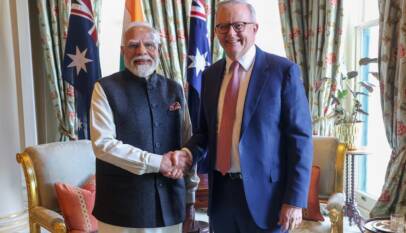
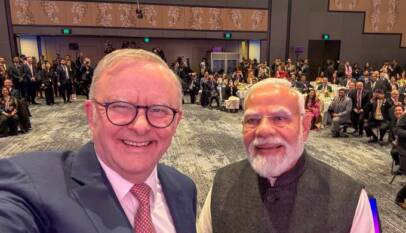




PM Modi, Australian Opposition Leader Angus Taylor Reaffirm Bipartisan Commitment to Stronger India-Australia Ties
Melbourne, July 2026 : Prime Minister Narendra Modi on Friday met Australian Opposition Le…
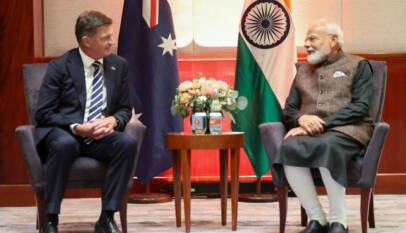
PM Modi, Australian Opposition Leader Angus Taylor Reaffirm Bipartisan Commitment to Stronger India-Australia Ties
Melbourne, July 2026 : Prime Minister Narendra Modi on Friday met Australian Opposition Leader …