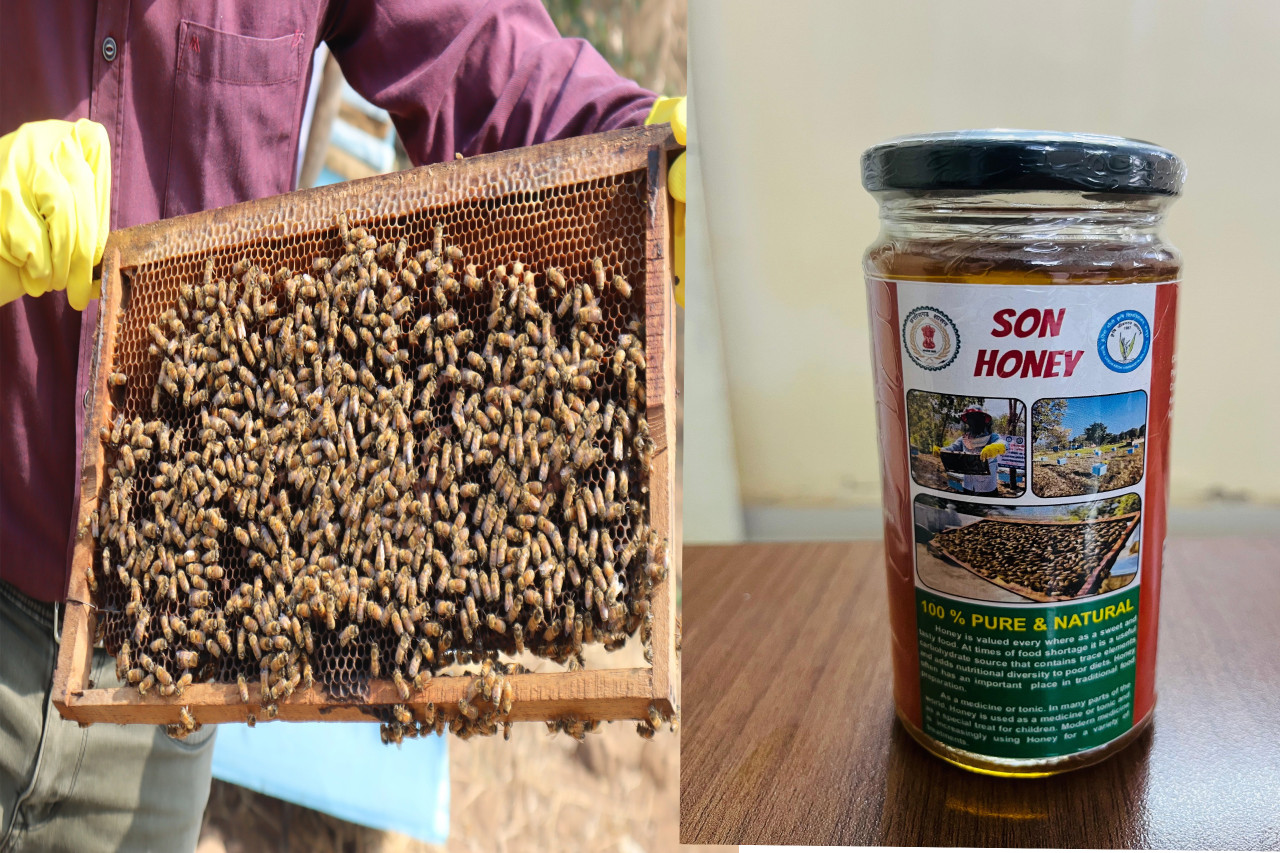
“Sonahani” Honey Brings a Sweet Revolution in Korea District

Raipur : Korea district in the Sarguja division, already known for its natural beauty and organic farming, is now gaining fame for its pure, natural, and organic honey brand “Sonahani.” This has been made possible through a collaborative initiative of the district administration, the Krishi Vigyan Kendra (Agricultural Science Centre), and local farmers. The adoption of modern beekeeping techniques, Italian bees, and an unpolluted environment has laid the foundation for this sweet revolution.
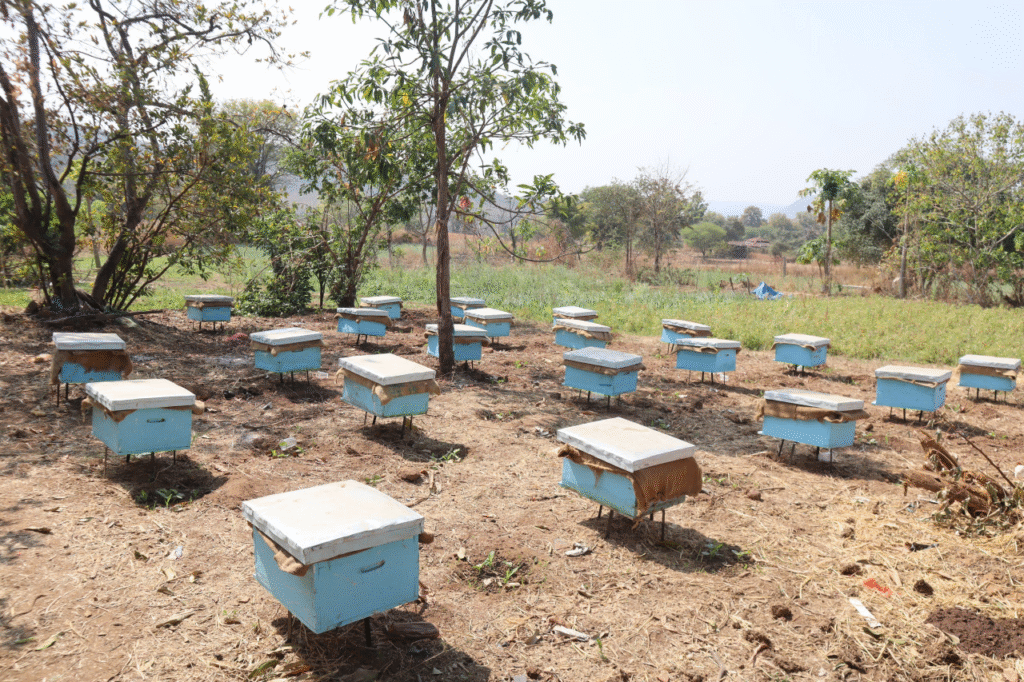
This project began in December 2024 under the visionary leadership of District Collector Smt. Chandan Tripathi. She facilitated the training of 20 selected farmers by sending them to the Integrated Beekeeping Development Centre in Kurukshetra, Haryana, where they received specialized seven-day training. The selection of these farmers was based on a survey conducted by the Krishi Vigyan Kendra, considering floral availability, the extent of organic farming, and farmer interest in various villages. Each farmer was provided with 25 bee boxes populated with Italian bees brought from Jharkhand.
Sonahani: A Symbol of Purity
Italian bees are known not only for higher productivity but also for the superior quality of honey. Each box yields 30 to 50 kg of honey annually. Compared to major commercial brands, Sonahani honey is entirely organic, free from adulteration, artificial colors, or added sugars. The taste and color of the honey vary based on the flower source—light-colored honey from citrus blooms and darker amber hues from forest flowers.
Korea’s Climate: A Natural Advantage
Korea district’s pollution-free climate and floral diversity make it ideal for beekeeping. According to Senior Scientist Shri Kamlesh Singh of the Krishi Vigyan Kendra, the best season for beekeeping is from October to March.
Empowered Farmers with Technology and Training
Farmers have been equipped with honey extractors, and provided with free seeds of mustard, coriander, and niger plants to support pollination. Local Self-Help Groups handle the packaging, creating livelihood opportunities for women. A 300g jar of Sonahani honey is priced at ₹175.
Forest Honey: Rich in Nutrition
Sonahani honey isn’t just sourced from traditional flowers but also from medicinal trees like mahua, palash, arjuna, neem, and harra-beheda, making it rich in minerals and antioxidants.
Between December 2024 and January 2025, the farmers earned around ₹30,000 from sales at local markets and the Bihan fair. This income was shared equally among them. The initiative is supported by the District Mineral Foundation Trust, aiming to strengthen farmer livelihoods.
Collector Smt. Chandan Tripathi believes that this initiative will not only make farmers self-reliant but will also position Korea district as a leader in pure honey production. “Sonahani will become a symbol of purity and pride for the district,” she said.
A Changing Picture Fueled by Hard Work, Nature, and Technology
Undoubtedly, Sonahani is more than just honey—it’s a story of confidence, innovation, and transformation for Korea’s farmers. In the years to come, this initiative is expected to spread its sweetness not just locally, but across the nation.








Delivery Of Second Indigenous Diving Support Vessel – ‘Nipun’
‘Nipun’ the second Diving Support Vessel (DSV), built by Hindustan Shipyard Limited&n…

Delivery Of Second Indigenous Diving Support Vessel – ‘Nipun’
‘Nipun’ the second Diving Support Vessel (DSV), built by Hindustan Shipyard Limited was delivered to the …