Yogi govt’s push for self-reliance in pulses and oilseeds shows tangible results

Lucknow : The Yogi Adityanath government’s mission to make Uttar Pradesh self-sufficient in pulses and oilseeds production is now delivering tangible results. Backed by the focused efforts of both the state and the central Narendra Modi government, the state has seen a significant rise in the production and cultivation area of these essential crops. This progress paves the way for price stability in the years ahead, ensuring that rising costs neither push pulses out of the common man’s plate nor reduce the availability of edible oil in the kitchen.
Data from the past eight years shows the impact. According to government records, pulse production increased by nearly two and a half times, from 23.95 lakh metric tonnes in 2016–17 to 35.18 lakh metric tonnes in 2024–25. Oilseed production rose by around one and a half times, from 12.40 lakh metric tonnes to 29.20 lakh metric tonnes in the same period.
If the current growth trajectory continues, Uttar Pradesh will achieve complete self-reliance in pulses and oilseeds in the coming years. With a balance between demand and supply, the state could significantly reduce its import dependence, insulating itself from global price shocks affecting domestic markets.
This achievement is not incidental—it results from Chief Minister Yogi Adityanath’s involvement and the strategic approach adopted by the Agriculture Department under his guidance. Early in his second term, CM Yogi emphasized the importance of increasing pulses and oilseed production during a departmental review. Targets were set, and a multi-pronged implementation strategy was launched.
Key elements of the government’s approach include free distribution of quality seeds (such as urad, moong, arhar, gram, peas, and masur). Demonstration farms at progressive farmers’ fields to showcase modern techniques. Awareness programs via Kisan Pathshalas, agri fairs, and seasonal seminars with expert guidance. Wide-scale distribution of 46.33 lakh minikits by 2017–18, subsidized seed distribution through local seed marketing units, and training of farmers in disease-resistant varieties, intercropping, border sowing, and use of drip/sprinkler irrigation on uneven land.
Special emphasis is placed on fast-growing crops like moong, lentils, peas, and urad as intercrops with sugarcane and other crops. In the oilseed segment, sesame, groundnut, mustard, and linseed are promoted with targeted interventions and mini kits distributed based on local agro-climatic conditions.
Progressive farmers’ demonstrations and awareness campaigns at Kisan Pathshalas and major seasonal fairs have played vital roles in familiarizing farmers with modern practices, from soil preparation and sowing to harvesting and storage.
The government aims to expand the area under pulses to 28.84 lakh hectares and oilseeds to 22.63 lakh hectares by 2026–27.
Currently, Uttar Pradesh produces only 30–35% of its edible oil requirement and 40–45% of its pulses demand. Any disruption in domestic production creates a ripple effect, leading to increased international prices, especially from exporting nations.
As India, home to a massive consumer base, places bulk orders, prices often surge globally, impacting states like Uttar Pradesh more severely.
This cycle of volatility, often splashed across media headlines, can be effectively broken by achieving self-reliance. With sustained efforts and strategic execution, the Yogi government is well on turning this vision into reality.

PM Modi, Australian Opposition Leader Angus Taylor Reaffirm Bipartisan Commitment to Stronger India-Australia Ties
Melbourne, July 2026 : Prime Minister Narendra Modi on Friday met Australian Opposition Le…
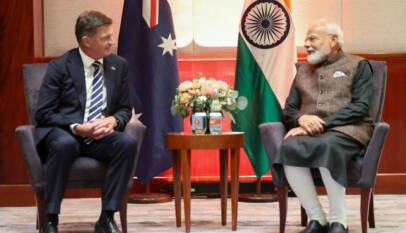
PM Modi, Australian Opposition Leader Angus Taylor Reaffirm Bipartisan Commitment to Stronger India-Australia Ties
Melbourne, July 2026 : Prime Minister Narendra Modi on Friday met Australian Opposition Leader …