Under CM Bhajanlal Sharma’s Leadership, ‘Vande Ganga’ Water Conservation Campaign Sets New Record

Over 25.3 Million Citizens Participate in Massive Statewide Drive to Transform Rajasthan into a Water-Secure State
Jaipur – Launched under the leadership of Chief Minister Bhajanlal Sharma, the ‘Vande Ganga’ Water Conservation Jan Abhiyan has set new benchmarks in water conservation and management across Rajasthan. With overwhelming public participation, the campaign has significantly improved the condition and visibility of water sources throughout the state. Through a comprehensive strategy and widespread implementation, the campaign has emerged as an environmental model with promising long-term outcomes.
Rajasthan, India’s largest state, has long grappled with scarce water resources due to its challenging geography, uneven rainfall, and limited surface water. Recognizing these issues, CM Sharma initiated the Vande Ganga campaign from June 5 to June 20 to focus on rejuvenating traditional water bodies and raising awareness among the masses. The campaign was uniquely people-centric, integrating community rituals such as worship of water bodies to build emotional and cultural connections around water conservation.
CM Leads by Example: Visits Key Regions to Participate in Campaign
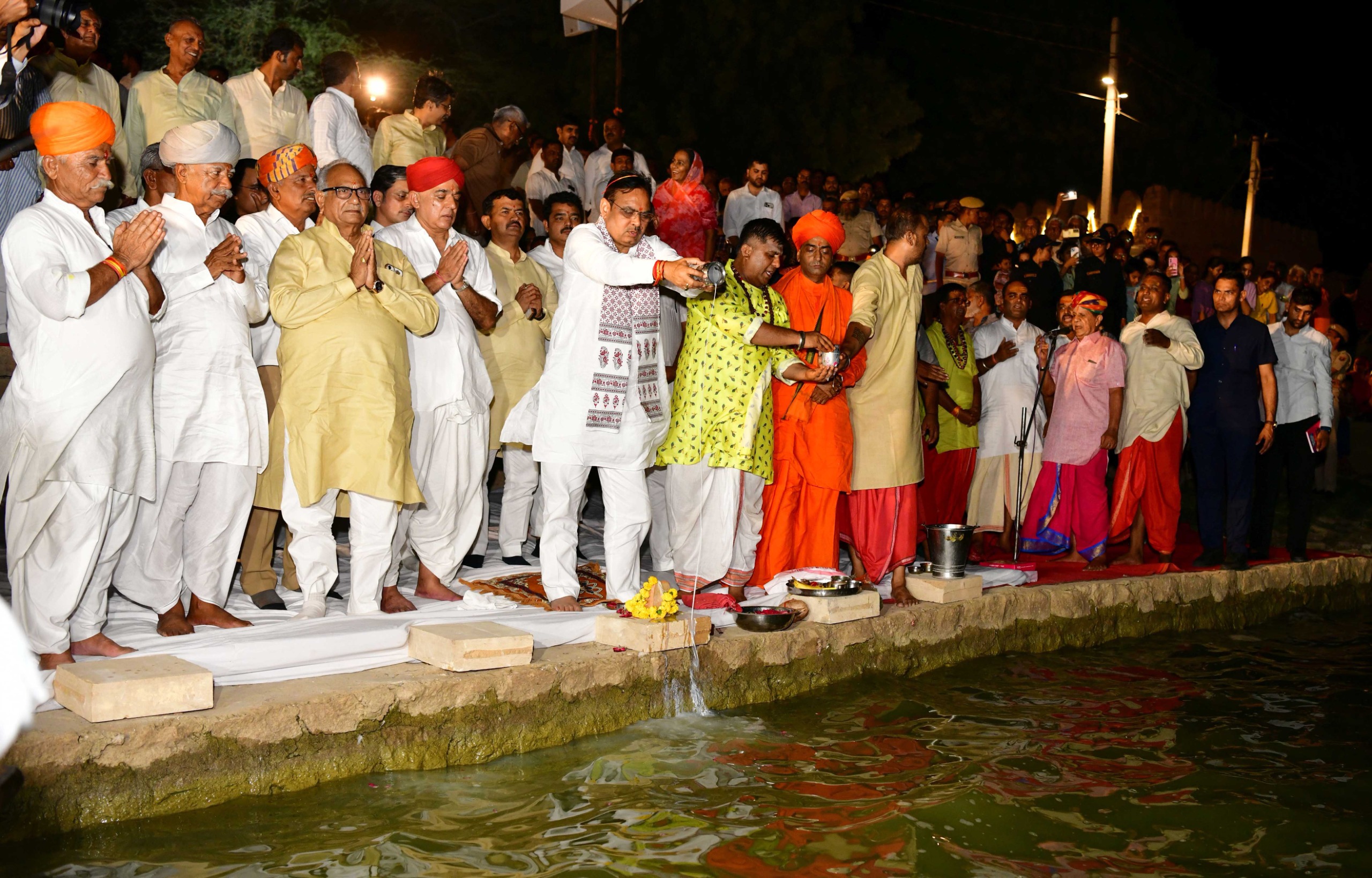
The campaign began on Ganga Dussehra and World Environment Day (June 5), with CM Sharma participating in cleaning work at Ramgarh Dam in Jaipur, offering a symbolic chunri at Chambal River in Bundi, and lighting lamps at Sujanganga Canal in Bharatpur. He continued to personally monitor and participate in the campaign by visiting Pushkar (June 9) for the worship of the sacred lake, performing rituals at Jawaja Talab in Beawar, conducting an Aarti at Rajsamand Lake (June 18), and offering prayers at Silu Ghat in Jalore. The campaign concluded with a grand Ganga Aarti and lake worship at Gadisar Lake in Jaisalmer on June 20.
370,000+ Events, 25.3 Million Participants
Thanks to the CM’s efforts, the campaign evolved into a mass movement. As of June 20, over 370,000 programs had been organized under the campaign, with active participation from more than 25.3 million citizens, including 13.2 million women. Activities included the cleaning of 42,200 water sources and 73,900+ offices, schools, and hospitals. Over 18,900 completed projects were reviewed and inaugurated, while 5,900 new works were launched. Citizens voluntarily contributed labor at over 102,000 locations.
To amplify outreach and awareness, the campaign featured 13,600 village assemblies, 6,800 morning rallies, 9,800 Kalash Yatras, and 6,000 chaupals (village meetings). Additionally, 3,200 recharge shafts were constructed under the ‘Karmabhoomi Se Matribhumi’ initiative, supported by CSR and private donors.
Collective Efforts Accelerate Campaign’s Impact
The campaign’s execution was based on a coordinated action plan involving various government departments, NGOs, industrial groups, and local communities. Joint efforts led to the cleaning of rivers and ponds, creation of water conservation structures, and the revival of traditional reservoirs like stepwells, ponds, and wells. The campaign also aligned with other flagship state programs such as Mukhyamantri Jal Swavlamban Yojana, Hariyalo Rajasthan, and Karmabhoomi Se Matribhumi, creating a lasting environmental and social impact.
Historic Projects Launched for Long-Term Water Security
Under the leadership of PM Narendra Modi and CM Bhajanlal Sharma, the state government has undertaken historic initiatives during its 1.5-year tenure to ensure water security. The Ramjal Setu Link Project (modified Parvati-Kalisindh-Chambal project) aims to provide irrigation and drinking water to 17 districts. The Yamuna Water Agreement for the Shekhawati region is being implemented, and the Indira Gandhi Canal Project is being strengthened to ensure ample supply for Ganganagar, Hanumangarh, Barmer, and Jalore. Additionally, the Dewas Project is underway to meet the water needs of Southern Rajasthan.
These initiatives reflect the government’s unwavering commitment to ensuring adequate water supply from villages and hamlets to towns, making water availability a top priority for the state.



Amarnath Yatra Crosses Four Lakh Pilgrims as Devotees Continue Sacred Journey
Srinagar, July 2026 : The annual Shri Amarnath Ji Yatra achieved a significant milestone o…
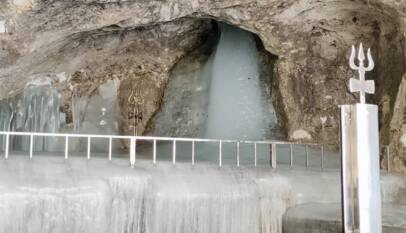
Amarnath Yatra Crosses Four Lakh Pilgrims as Devotees Continue Sacred Journey
Srinagar, July 2026 : The annual Shri Amarnath Ji Yatra achieved a significant milestone …