Netanyahu Nominates Trump for Nobel as Leaders Push Gaza Relocation Talks and Iran Dialogue

Amid protests and tense negotiations, Trump and Netanyahu meet to discuss Gaza ceasefire, Iran talks, and controversial Palestinian relocation plans
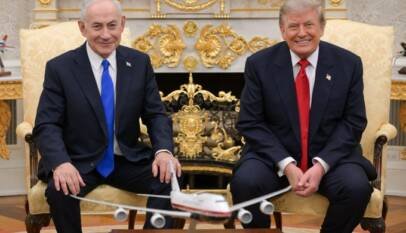
In a meeting marked by diplomacy, controversy, and symbolism, Israeli Prime Minister Benjamin Netanyahu on Monday presented U.S. President Donald Trump with a formal letter nominating him for the Nobel Peace Prize. The gesture, which took place at the White House, came during a critical juncture in Middle East politics, as both leaders sought to push forward a ceasefire deal in Gaza, open new dialogue with Iran, and revive discussions on relocating Palestinians from Gaza to neighboring countries.
The nomination, though largely symbolic, underscores the strengthening political alignment between the two leaders, particularly in the context of Trump’s vocal support for Israel and his recent backing of Israeli military actions against Iranian targets. Netanyahu, speaking to the press alongside Trump, explained that Israel and the U.S. were in talks with other nations willing to host Palestinians from Gaza, framing the idea as a humanitarian opportunity for “a better future.”
“If people want to stay, they can stay, but if they want to leave, they should be able to leave,” Netanyahu stated, hinting at ongoing behind-the-scenes efforts to relocate residents of Gaza. Trump added that regional countries were cooperating in the effort, expressing confidence that “something good will happen.”
This plan to move Palestinians from Gaza has generated intense backlash. Critics, including human rights organizations, have condemned it as a form of ethnic cleansing, while many Palestinians have vowed to remain in their homes regardless of external pressure. Trump’s earlier idea of turning Gaza into a tourist-friendly “Riviera of the Middle East” was similarly dismissed by Gazans and advocacy groups.
The leaders’ meeting occurred against the backdrop of indirect negotiations between Israel and Hamas in Qatar, aimed at reaching a U.S.-brokered ceasefire and hostage-exchange agreement. Netanyahu’s visit to Washington was strategically timed, following Trump’s prediction that a ceasefire deal could be within reach. Netanyahu confirmed that Israeli negotiators in Doha were pushing hard for progress.
Meanwhile, the shadow of Iran loomed large over the discussions. Trump confirmed that talks with Iranian representatives were being scheduled in the coming days, claiming, “They took a big drubbing,” referencing the recent U.S.-backed airstrikes on Iranian nuclear sites. The strikes, conducted two weeks prior, were in response to escalating tensions and marked a rare direct U.S. military intervention in support of Israel.
Trump’s Middle East envoy, Steve Witkoff, is expected to travel to Doha this week to support the ongoing negotiations. Witkoff also met with Netanyahu earlier on Monday, along with Secretary of State Marco Rubio. Discussions reportedly focused on the phased release of hostages, Israeli troop withdrawals, and humanitarian aid access to Gaza.
Despite the diplomatic flurry, protests outside the White House painted a contrasting picture. Hundreds of demonstrators, many waving Palestinian flags and chanting slogans like “Stop Arming Israel” and “Say No to Genocide,” condemned both Netanyahu’s visit and U.S. policy in the region. Protesters also called for Netanyahu’s arrest, citing the International Criminal Court’s arrest warrant for alleged war crimes in Gaza.
Inside the White House, however, the mood was markedly different. The leaders and their advisers shared a private dinner in the Blue Room, avoiding the traditional Oval Office setting. During the evening, Netanyahu handed over the Nobel nomination letter, which Trump reportedly received with visible satisfaction. It was the third such meeting between the two since Trump resumed office in January.
Netanyahu is expected to continue his U.S. visit with a meeting at the Capitol on Tuesday, where he will consult with congressional leaders. According to Israeli officials, a broader strategic goal is to use recent events, including the Iran confrontation, to normalize relations with additional Middle Eastern nations, including Saudi Arabia, Syria, and Lebanon.
Trump, for his part, stated he would eventually like to lift sanctions on Iran, should dialogue prove fruitful. “I would love to be able to, at the right time, take those sanctions off,” he said, acknowledging Iranian President Masoud Pezeshkian’s remarks that Tehran was open to resolving differences through diplomacy.
While hopes for a Gaza ceasefire rise, sticking points remain. Palestinian sources told Reuters that Israel’s reluctance to allow free and safe entry of humanitarian aid into Gaza continues to be a major hurdle. Israel contends it is facilitating food shipments while working to prevent their diversion by militant groups.
For the people of Gaza, the prospect of peace remains elusive. Abu Suleiman Qadoum, a displaced Gazan, pleaded through media channels for negotiators to deliver a resolution. “I ask God almighty that the negotiating delegation or the mediators pressure with all their strength to solve this issue, because it has totally become unbearable.”
The war in Gaza began in October 2023 after Hamas launched a deadly cross-border attack into southern Israel, killing 1,200 and taking 251 hostages. In response, Israel launched an extensive military campaign that has so far claimed more than 57,000 Palestinian lives, according to the Gaza health ministry. Most of Gaza’s population has been displaced, with UN estimates warning that nearly half a million people face famine in the coming months.
Amid growing war fatigue within Israel, public support for a ceasefire has been growing. While some of Netanyahu’s right-wing coalition partners oppose halting military operations, the government is under increasing pressure to accept a truce if favorable terms are reached.
As Monday’s meeting wrapped up, the symbolism of the Nobel nomination lingered. For Netanyahu, it was a nod of appreciation to a key ally. For Trump, it was a timely boost as he positions himself as a global statesman ahead of another heated election cycle. But for Palestinians watching from a devastated Gaza Strip, the road to peace continues to look long and uncertain.






Netanyahu Meets Trump at White House for Eighth Bilateral Talks Amid Regional Tensions
Jerusalem/Washington, July 2026 : Israeli Prime Minister Benjamin Netanyahu arrived at the…
Netanyahu Meets Trump at White House for Eighth Bilateral Talks Amid Regional Tensions
Jerusalem/Washington, July 2026 : Israeli Prime Minister Benjamin Netanyahu arrived at the White House …