Bastar’s Transformation – A New Dawn of Hope and Development

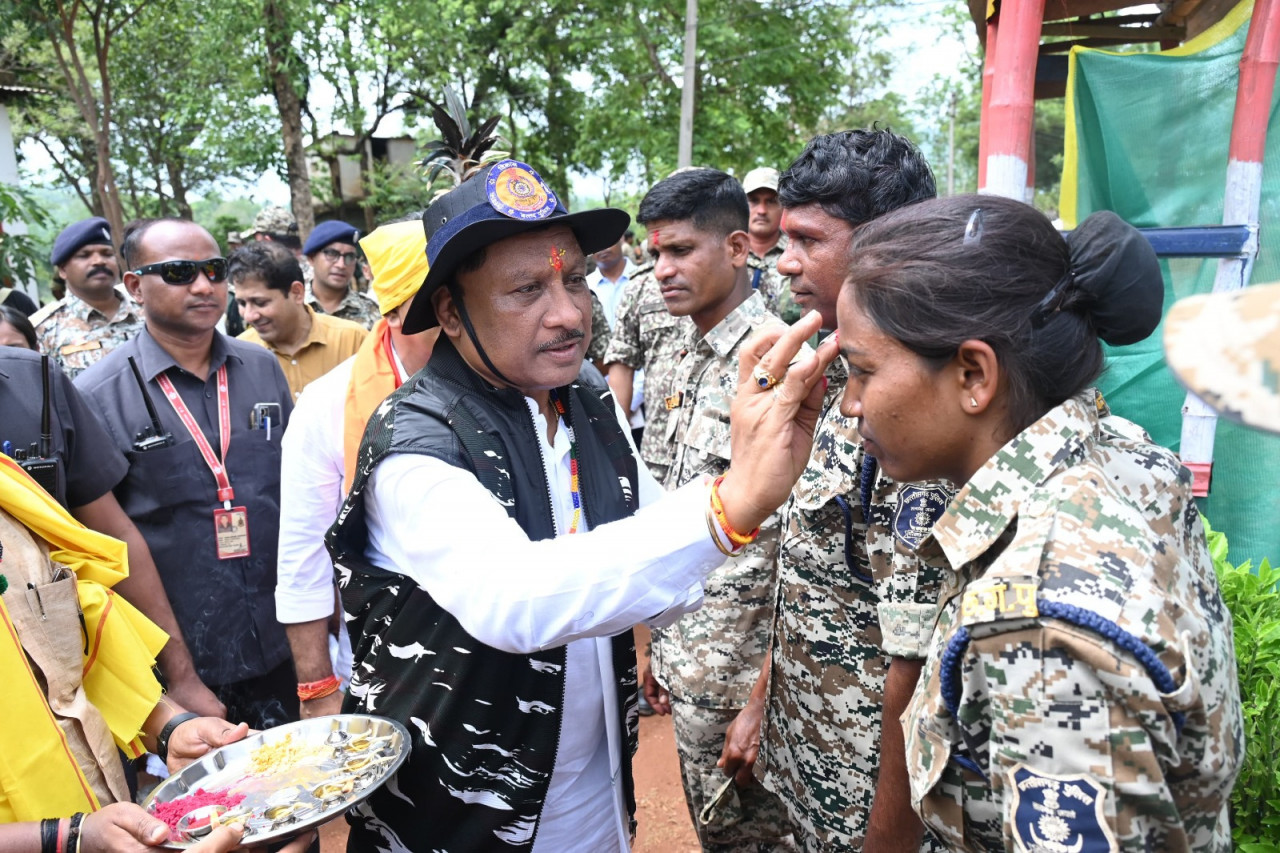
Raipur, Aug 2025 : Once known as a stronghold of Naxalism in India, Bastar is now writing a new chapter of development, trust, and change. With the strong political will of the Chhattisgarh government and joint efforts of security forces, peace is being restored, and development is spreading rapidly.
Under the leadership of Chief Minister Shri Vishnu Deo Sai, the government has launched a decisive campaign over the past 18 months that has brought Naxalism to its last breath. In this period, 435 Naxals were killed in encounters, 1,432 surrendered, and 1,457 were arrested. Security forces succeeded in neutralizing Basavaraju, the General Secretary of the Maoist Central Committee and the ideological center of Maoism. The killing of 31 Naxals in Karreguda, Bijapur, is seen as the final nail in the coffin of Maoist terror.
For those surrendering, the state has implemented the country’s most progressive rehabilitation policy — including a stipend of ₹10,000 per month for three years, skill development training, self-employment opportunities, cash rewards, and allocation of agricultural or urban land. The government aims to make Chhattisgarh Naxal-free by March 2026, turning Bastar into a land of peace and progress. “In Bastar, the sound of books, roads, and progress is replacing the sound of guns,” says the Chief Minister. “Our goal is to make Bastar a leader in the path of development.”
Unprecedented progress has been made in building infrastructure in Naxal-affected areas. For the first time since independence, a school is being built in Rekawaya village of Abujhmad — once home to Maoist-run schools. Around 50 schools that were shut due to violence have reopened with new buildings. As security camps open, education and health facilities are reaching people faster. Electrification has reached remote villages, including Puvirti — the ancestral village of Maoist leader Hidma. In Chilkapalli, Bijapur, an electric bulb was lit for the first time in 77 years on January 26, 2025.
Road construction in Bastar has also seen major progress — 49 roads totaling 275 kilometers and 11 bridges in Maoist-hit areas are complete. The widening of Keshkal Valley, a new 4-lane bypass, and a bridge over the Indravati River have improved connectivity. Approval has been granted for a 140-kilometer new railway line from Rawghat to Jagdalpur. Work on doubling the KK line is progressing swiftly. The survey for the 160-kilometer Kothagudem (Telangana)–Kirandul–Dantewada railway line is in its final stage, with 138 kilometers falling in Chhattisgarh. Additionally, 607 mobile towers have been activated, with 349 upgraded to 4G.
To deliver government benefits to remote villages, the Niyad Nella Naar (“Your Good Village”) scheme has been launched. Within a 10-kilometer radius of 54 security camps, more than 327 villages are now getting roads, electricity, schools, health centers, ration and Aadhaar cards, farmer credit cards, PM Awas Yojana houses, mobile towers, and forest rights titles. This scheme has led to over 81,000 Aadhaar cards, 42,000 Ayushman cards, and 98,000 ration cards being issued, along with benefits from PM-Kisan and Ujjwala Yojana. Trust has grown so much that, in many villages, panchayat elections, flag-hoisting, and government program implementation are taking place for the first time.
Work has begun on the ambitious Bodhghat project on the Indravati River. The CM has met with Prime Minister Shri Narendra Modi, requesting it be declared a national project. With an estimated cost of ₹50,000 crore, it will expand irrigation to 8 lakh hectares and generate 200 MW of electricity. A proposal also exists to link the Indravati River with the Mahanadi to further boost irrigation.
Economically, new opportunities are emerging. The standard bag rate for tendu leaves has been raised from ₹4,000 to ₹5,500, directly benefiting 1.3 million families. The Charan Paduka scheme has been revived for tendu leaf collectors. Under the CM Skill Development Scheme, 90,273 youths have been trained and 39,137 employed. The New Industrial Policy 2024–30 includes a special package for Bastar, offering 45% capital grant to MSMEs and 40% wage subsidy for five years to industries employing surrendered Naxals. A new industrial area is being developed at Niyanar to support industries linked to the Nagarnar Steel Plant.
Culturally and socially, Bastar is creating a new identity. Where gunfire once echoed, events like “Bastar Olympics” and “Bastar Pandum” now thrive. Over 1.65 lakh participants joined the Bastar Olympics, and 47,000 artists showcased tribal culture at Bastar Pandum. Traditional tribal healers — Baiga, Gunia, and Sirha — now receive an annual honorarium of ₹5,000.
To strengthen security and democracy, 3,202 posts have been created in the Bastar Fighters force, providing jobs to local youth and ensuring protection for unguarded villages. Agencies like NIA and SIA are dismantling Maoist supply and funding networks.
With these efforts, Bastar is now seeing a new light of hope, peace, and prosperity. As CM Vishnu Deo Sai puts it, “Bastar’s development is the foundation of the new Chhattisgarh. Our dream is for every child here to study, every youth to move ahead, and every village to join the mainstream of development.” Bastar is telling a new story — one that once spoke of fear and violence, and today speaks of hope and a new dawn of development.

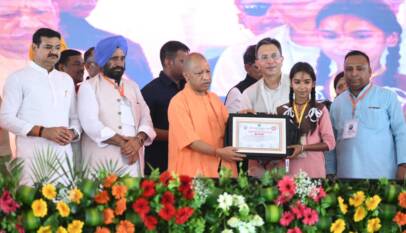


CM Yogi directs action on 2,200 proposals: Budget to be released by July 15, projects to be launched on the ground from August 15
CM takes a tough stand during PWD review, warns of action over delays in pending projects …
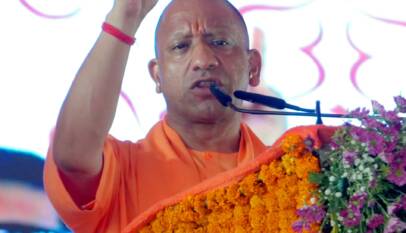
CM Yogi directs action on 2,200 proposals: Budget to be released by July 15, projects to be launched on the ground from August 15
CM takes a tough stand during PWD review, warns of action over delays in …