Israeli Strike in Qatar Shakes Gulf Security, Threatens Ceasefire Talks with Hamas

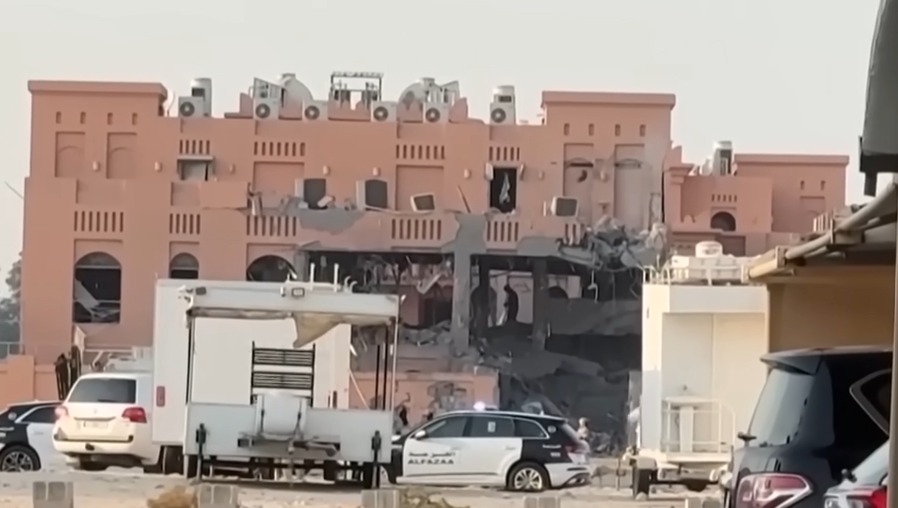
Israel carried out an unprecedented airstrike on Hamas leaders in Qatar’s capital, Doha, targeting exiled political figures amid US-backed ceasefire negotiations. The attack, which failed to eliminate senior leaders, has raised serious questions about Gulf security, US reliability, and the future of Arab-Israeli normalization efforts. Analysts warn the strike may destabilize regional diplomacy and accelerate Gulf states’ pursuit of diversified security partnerships.
On September 10, the tiny, gas-rich Gulf state of Qatar, home to the largest US military base in the Middle East, came under an unexpected Israeli aerial attack. Qatar has long hosted American forces, evacuated tens of thousands of US citizens from Afghanistan, and was designated a “major non-NATO ally.” It even gifted a USD 400 million jumbo jet to former President Donald Trump for Air Force One use. Yet none of these ties shielded the peninsula in the Persian Gulf from Israel’s Tuesday strike, which targeted a meeting of Hamas’ exiled political leadership in Doha.
Plumes of smoke and debris rose over Doha, a city known for air-conditioned World Cup stadiums and luxury malls. The attack struck at the heart of US-mediated negotiations aimed at ending the ongoing Israel-Hamas war, which erupted after Hamas’ October 7, 2023, attack on southern Israel. Since then, the Israeli military has regularly targeted Hamas leaders outside Gaza, with previous strikes hitting Tehran and Beirut. But Qatar’s capital, home to the US-backed political office of Hamas, had long been considered off-limits.
Israeli strikes on Qatari soil represent a significant escalation, analysts say. “This is a broader shock for the international order, raising questions about sovereignty and the free rein being given to Israel,” said Sanam Vakil, director of the Middle East and North Africa Program at Chatham House. “The reliability of the United States in the Middle East will be questioned.”
Qatar has historically faced criticism for hosting Hamas, which has been designated a terrorist organization by the US and Israel. However, its role as mediator was supported by Washington, which helped Hamas establish its Doha office in 2012 to maintain indirect channels of communication. Qatar’s ability to host such groups, including the Taliban, has helped the country punch above its weight in global conflict mediation.
Qatari officials had long assumed that US protection—including its designation as a major non-NATO ally and the presence of the Al Udeid Air Base, the regional headquarters for US Central Command—would deter any Israeli strike. Tuesday’s attack shattered that assumption. Despite US interceptor batteries and radar systems monitoring the skies, Israeli bombs hit central Doha.
The US stated that Israel provided prior notice of the strike. However, Qatari Foreign Ministry spokesman Majed al-Ansari said Doha only received notification as the bombs were falling, highlighting a serious breach of trust. The incident has rattled Gulf Arab states, traditionally wary of Qatar’s Islamist sympathies, but now showing unity in condemning Israel. “The security of the Arab Gulf states is indivisible, and we stand heart and soul with the sisterly Qatar, condemning the treacherous Israeli attack,” said Anwar Gargash, a diplomatic adviser to UAE rulers.
The strike has intensified regional anxieties about the reliability of the US as a security partner. Despite maintaining a substantial military presence in the Gulf, Washington’s perceived inconsistency has encouraged countries like Saudi Arabia and the UAE to pursue diversified international relationships, including stronger ties with China and Russia. “They don’t want to rely solely on the US for security; they want ties with a range of global actors,” said Will Todman, senior fellow at the Center for Strategic and International Studies. “(Israel’s) strikes will accelerate that trend.”
Gulf states, with their small militaries and oil-dependent economies, now see Israel’s assertive military actions as a more immediate concern than Iran. While countries like Saudi Arabia and the UAE have traditionally viewed political Islam and groups like Hamas as threats, they prefer regional stability over prolonged conflict. “The Gulf states are not secretly happy about the strikes on Hamas,” said Vakil. “They see Israel’s continued military activities as destabilising for the region. Traditionally, Iran was the most serious threat, but now—with Iran weakened but not defeated—it’s Israel they are worried about.”
The strike could also derail Israel’s ambitions to expand the Abraham Accords, which normalized relations between Israel and four Arab nations, including the UAE and Bahrain, in 2020. Prior to the Israel-Hamas war, Saudi Arabia had shown signs of potentially joining the accord to counterbalance Iran. But Israel’s aggressive operations, particularly in Gaza, have reignited Saudi insistence on Palestinian statehood as a precondition for normalization. Analysts say Tuesday’s strike diminishes any remaining hopes of expanding Arab-Israeli diplomatic ties. “For all intents and purposes, normalisation is dead for Gulf Arab states today,” said Dina Esfandiary, lead Middle East analyst at Bloomberg Economics. “How do you normalise with the country that’s attacking one of your brothers?”
Doha has been a critical hub for delicate negotiations aimed at ending the Israel-Hamas war and securing the release of dozens of Israeli hostages still held in Gaza. Reports indicate that Hamas leaders targeted in the strike were meeting to discuss a US ceasefire proposal, which called for the immediate release of 48 Israeli hostages, 20 of whom are believed alive.
Israeli Prime Minister Benjamin Netanyahu, influenced by far-right allies, has resisted calls for a ceasefire and is planning a new ground offensive to seize Gaza City. This escalation threatens both the remaining hostages and an already catastrophic humanitarian situation in Gaza.
Qatari Prime Minister Shaikh Mohammed bin Abdulrahman Al Thani expressed doubts about continuing ceasefire negotiations after the strike. Even without eliminating top Hamas figures, the attack confirmed the worst fears of Gulf Arab states: that Israel may act with impunity, potentially destabilizing their region despite US security guarantees. “The attack was a message not just to Hamas but to the region,” Vakil said. “Military pressure will continue, with Washington seeing Israeli dominance as effective.”
The fallout from Israel’s strike in Qatar is likely to have long-term regional implications. It raises fundamental questions about the balance between military operations and diplomatic engagement in conflict resolution. Gulf states, despite past tensions with Qatar, have signaled solidarity, emphasizing that any threat to one of their own is a threat to the security of the region as a whole. Analysts predict this could accelerate the Gulf’s efforts to diversify alliances and reduce reliance on the US, while prompting broader reconsideration of Israel’s strategic approach in the region.
Ultimately, the attack highlights a complex calculus: Israel seeks to pressure Hamas, but its actions risk alienating key Arab allies and undermining the diplomatic channels that could end the war. As Doha continues to mediate between conflicting parties, the strike serves as a stark reminder that in the Middle East, military actions can ripple far beyond their immediate targets, reshaping alliances, trust, and the fragile architecture of regional peace.





Parliament Paralysed for Second Day as Opposition Protests Over NEET Leak, Student Crackdown
New Delhi, July 2026 : Parliament remained deadlocked for the second consecutive day of th…
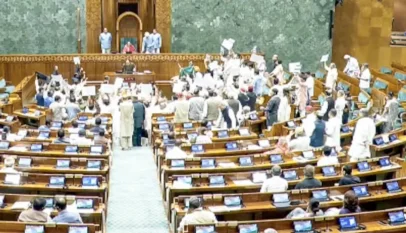
Parliament Paralysed for Second Day as Opposition Protests Over NEET Leak, Student Crackdown
New Delhi, July 2026 : Parliament remained deadlocked for the second consecutive day of …