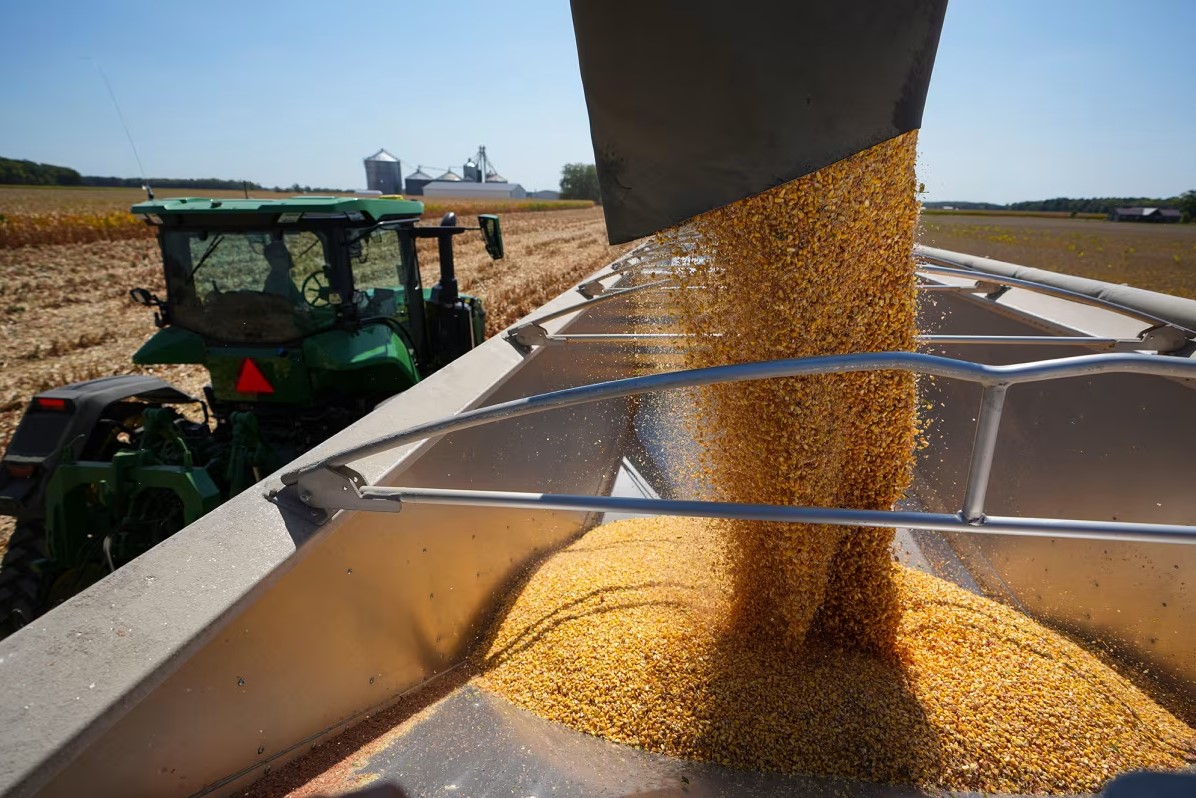
Donald Trump considers massive bailout of $10 billion for American farmers affected by his trade war.

Oct 2025 : Surging costs and foreign retaliation from tariffs have hurt the US agriculture industry, alongside immigration-related labour shortages and plummeting commodity prices. Farm production expenses are estimated to reach $467.4 billion in 2025, according to the Agriculture Department, up $12 billion from last year. American farmers are having a tough year, as farm bankruptcies rose in the first half of the year to the highest level since 2021, according to US courts data.
Trump’s policies have further deepened the crisis, from the deportation of the industry’s key migrant workforce to renewed trade tensions between the United States and China. And for traditional American crops, such as soybeans, the situation has grown particularly precarious. “There’s no doubt that the farm economy is in a significant challenge right now, especially our row croppers”, Agriculture Secretary Brooke Rollins told reporters on Tuesday. “So not just soybeans, although I think they’re probably the top of the list, but corn, wheat, sorghum, cotton, are amongst others”.
Indeed, the US soybean industry has epitomised the economic plight of the agricultural sector in the first year of Trump’s second term. The President however has authenticated these problems, White House officials told Reporters, and has increased pressure on his administration to address them urgently.
Over the past few weeks, the White House has held a series of interagency meetings with the Departments of Agriculture and Treasury as they attempt to finalise a relief package for US farmers, the sources said. Discussions over the best way to aid the agriculture industry are ongoing, the officials said, but they have finally concluded on two options:
First; is to provide farmers a percentage of the income the United States is receiving from the administration’s tariffs on goods being imported into the country. “We’ve made so much money on Tariffs, that we are going to take a small portion of that money, and help our Farmers. I WILL NEVER LET OUR FARMERS DOWN!”, Trump wrote on social media this week.
Second; tapping into a “Slush Fund”, as the officials at the Department of Agriculture has described it.
The fund, known as Emergency Commodity Assistance Program (ECAP), in March to similarly provide assistance to farmers. USDA at the time issued $10 billion in direct payments to eligible agricultural producers of eligible commodities for the 2024 crop year.
However, in between the Donald Trump administration has also discussed implementing a combination of the two, depending on where they can most quickly pull the funds from, one White House official said. The current range of aid they are looking to offer ranges from $10 billion to $14 billion. The final figure will depend on how much farmers need and the amount of tariff revenue coming in, as reiterated by the official’s.
Trump himself has been taking the stride to ensure that American farmers, many of whom the Trump administration credit for helping the president win the November 2024 election, are protected. But the other reason they are making the agriculture industry such a priority, officials say, is because the Trump administration views protecting farmers as a national security issue. “We need to grow our own food. We can’t rely on imports from other countries, that poses a problem for national security. And right now, the government is subsidizing a lot of that process”, one Trump administration official argued.
An issue complicating the Trump administration’s goals revolve around soybeans, which eventually is America’s largest export oriented agricultural output, valued at more than $24 billion in 2024, according to USDA data. Last year, about half of those exports went to China, but since May, that’s dropped down to zero as a result of an effective embargo China has placed on US soybeans in retaliation for Trump’s tariffs on the country. China has implemented 20% tariffs on US soybeans, making the crop from other countries significantly more attractive.
That wasn’t a strategic development for the American soybean farmers, with the harvest season in full swing and produces reaching buoyant levels. The sarcasm demonstrates to be prolong, as China has ramped up its reliance on South America, while inadvertently aiding the US Treasury’s financial lifeline provided to Argentina in recent weeks.
Last week, the Trump administration said it would arrange a $20 billion lifeline to Argentina’s central bank, which would exchange US dollars for pesos to help stabilise Argentina’s financial market. Argentina also temporarily scrapped export taxes on grains to help stabilise the peso, but China didn’t waste any time. The country has purchased “at least 10 cargoes of Argentine soybeans”, according to official reports. Brazil has also helped meet China’s demand for soybeans, with both countries announcing a pact in July to deepen agricultural trade ties.
As a result, America’s trembled soybean industry is calling on the Trump administration to finish its trade negotiations with China. “US soybean farmers have been clear for months: the administration needs to secure a trade deal with China. China is the world’s largest soybean customer and typically our top export market”, American Soybean Association President Caleb Ragland said last week in a statement.
On Wednesday, Trump blamed China for the pain soybean farmers are facing, arguing Beijing is refusing to buy soybeans for negotiating purposes amid the two countries’ tariff dispute. He added that he plans to make soybeans “a major topic of discussion” when he meets face-to-face with China’s President Xi Jinping in South Korea next month.
Part of the reason Trump has given the issue so much attention, White House officials say, is because Agricultural Secretary Brooke Rollins has forced the issue with not only the president, but also one of his closest advisers: Treasury Secretary Scott Bessent.
Team Maverick





Solar Defence Showcases Indigenous ‘Bhargavastra’ Counter-Swarm Drone System to Indian Army
New Delhi, July 2026 : Solar Defence and Aerospace Ltd. (SDAL) on Friday showcased its ind…

Solar Defence Showcases Indigenous ‘Bhargavastra’ Counter-Swarm Drone System to Indian Army
New Delhi, July 2026 : Solar Defence and Aerospace Ltd. (SDAL) on Friday showcased …