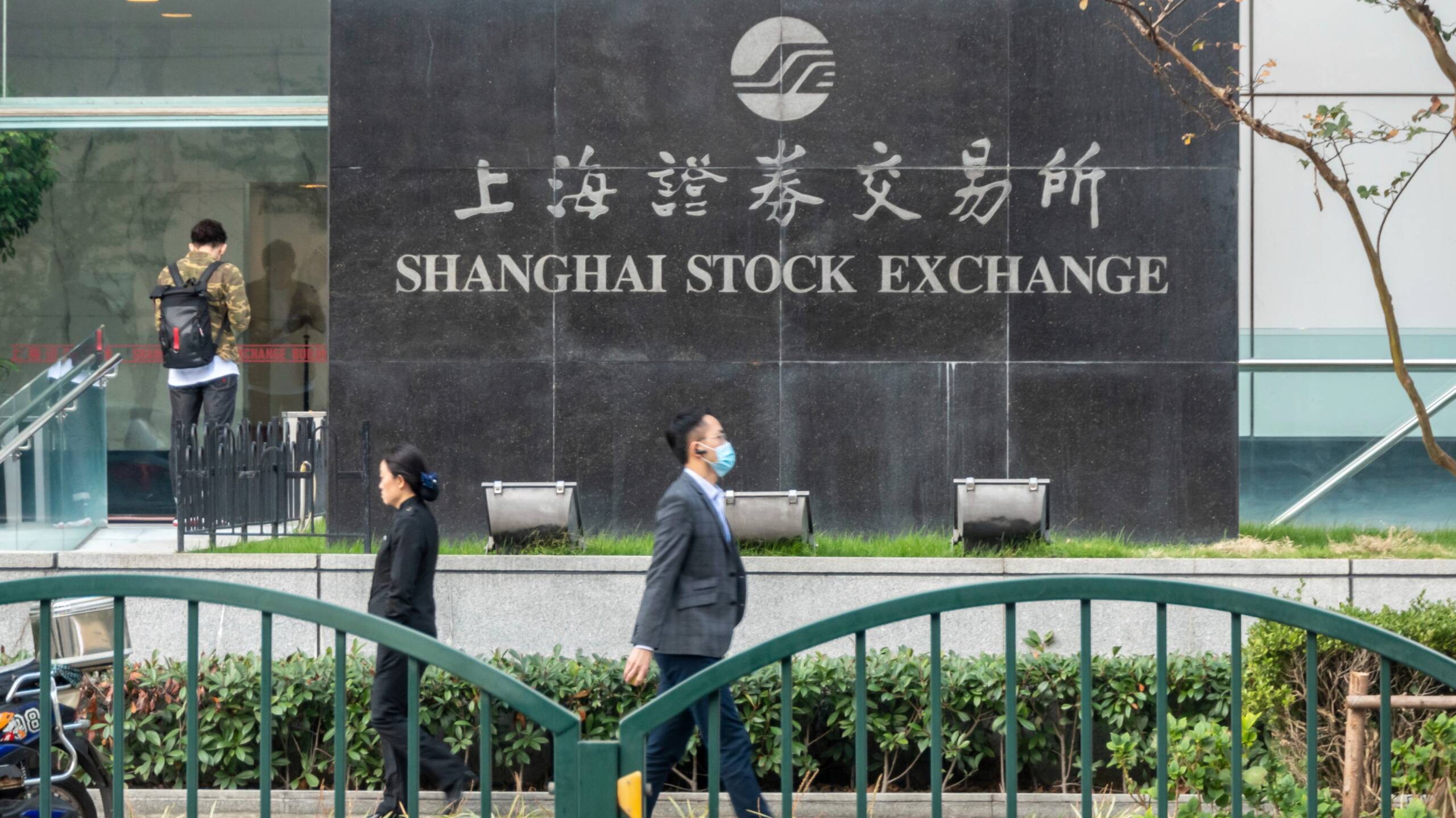
Chinese Stocks Hit Decade High as Trump–Xi Summit Sparks Hopes of Trade Truce

Shanghai/Seoul, Oct 2025 : Chinese shares climbed to their highest level in a decade on Thursday as U.S. President Donald Trump and Chinese President Xi Jinping began a high-stakes summit in South Korea, sparking cautious optimism of a potential truce in the prolonged trade war between the world’s two largest economies.
Investors cheered early signs of a thaw in U.S.–China relations after months of escalating tariffs and export restrictions, though many remained wary that the outcome might fall short of expectations.
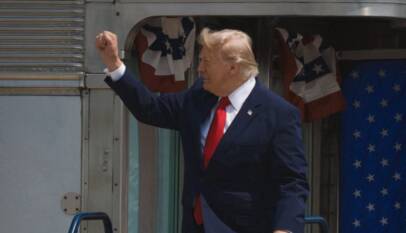
“We’re going to have a very successful meeting,” Trump said as he shook hands with Xi ahead of the closed-door talks in Busan. “We might even sign a trade deal today,” he added. Xi, speaking through a translator, said he was ready to “continue working with President Trump to build a solid foundation for China–U.S. relations.”
The upbeat tone helped drive the benchmark Shanghai Composite Index (.SSEC) up as much as 0.2% to 4,025.70 in morning trading — its highest level since 2015 — before paring gains slightly later in the day. The rally was led by banking (.CSI399986), insurance (.CSI399809), and liquor (.CSI399997) stocks as traders bet on a de-escalation in trade tensions and renewed capital inflows into Chinese equities.
In Hong Kong, the Hang Seng Index (.HSI) climbed 0.6% after reopening from a one-day holiday, supported by property developers and technology names.
Trump’s meeting with Xi marks their first face-to-face encounter since he returned to office in January, and the first substantive discussion since the breakdown of trade talks in 2019. The talks, held at Naraemaru, a reception hall inside a South Korean Air Force base, come on the sidelines of Trump’s trip across Asia, which also included the Asia-Pacific Economic Cooperation (APEC) summit in Gyeongju earlier in the week.
The stakes are high for both leaders. Chinese markets have enjoyed a powerful rally this year, buoyed by stronger-than-expected exports, progress in artificial intelligence and semiconductor development, and investor hopes of policy stability. The Shanghai Composite has surged nearly 20% year-to-date, while the Hang Seng has gained over 30%, ranking among the world’s best-performing major markets.
“Markets head into the Trump–Xi meeting cautiously optimistic, buoyed by recent signals of goodwill from both sides,” said Gary Tan, portfolio manager at Allspring Global Investments in Singapore. “A constructive tone will help sustain risk appetite, even if another temporary truce and limited progress on deeper structural issues remain the most likely outcome,” he said, adding that his firm remains “selectively positioned” in Chinese assets.
According to analysts, investors are likely to look beyond broad diplomatic statements and focus instead on the fine print of any agreement that might follow.
A partial rollback of tariffs or an agreement to delay new trade barriers could prolong the rally, but anything less could trigger a swift correction, said Tracy Lin, an equity strategist at Nomura. “Markets have already priced in a fair amount of optimism,” she said. “Without tangible progress, today’s gains may prove fleeting.”
Despite U.S. tariffs, Chinese exports have remained resilient, aided by growing demand in other parts of Asia and Europe. Foreign investors have also found confidence in China’s steady rollout of high-tech manufacturing policies and breakthroughs in pharmaceutical innovation.
According to HSBC, Asian and global emerging-market funds boosted their exposure to mainland China in September to near five-year highs, reflecting renewed conviction in the market’s rebound potential.
Still, some analysts warn that optimism could be premature, given the fragile nature of past negotiations. Previous rounds of U.S.–China trade talks — including the brief “phase-one” deal in 2019 — delivered limited relief before collapsing into renewed tariff escalations.
This month, tensions flared again after Trump announced new 100% levies on Chinese exports bound for the U.S., alongside export restrictions on critical software effective November 1. Beijing responded by tightening controls on rare earth shipments, essential for high-tech and defense industries.
Trump told reporters on Wednesday he might reduce existing tariffs on Chinese goods in exchange for Beijing’s commitment to curb exports of fentanyl precursor chemicals, a key issue in U.S. domestic politics. The Wall Street Journal reported that the U.S. could halve current 20% tariffs on select Chinese imports if the agreement is finalized.
“Both Washington and Beijing have strong incentives to pause the spiral of escalation,” analysts at Alpine Macro said in a note. “A limited, face-saving deal with symbolic gestures and modest concessions appears the most probable outcome.”
Yet, economists caution that even partial tariff relief may do little to revive struggling Chinese exporters or reverse sluggish consumer demand at home.
“The two sides remain deeply divided on core issues such as technology controls, market access, and export restrictions,” analysts at the Bank of East Asia wrote. “These fundamental differences make it difficult to reach a comprehensive consensus in the near term.”
For now, global markets are taking comfort in the sight of two rival leaders returning to the negotiating table. Whether Thursday’s talks in Busan deliver more than another temporary truce may determine whether China’s rally can extend its momentum — or meet another familiar disappointment.





Team Special Olympics Bharat Accorded Grand Send-Off Ahead of Special Olympics Unified Football World Cup 2026
Faridabad July 2026 : Team Special Olympics Bharat was accorded a warm send-off at Manav R…

Team Special Olympics Bharat Accorded Grand Send-Off Ahead of Special Olympics Unified Football World Cup 2026
Faridabad July 2026 : Team Special Olympics Bharat was accorded a warm send-off at …