Japanese Stance on Taiwan and the Australian Position.

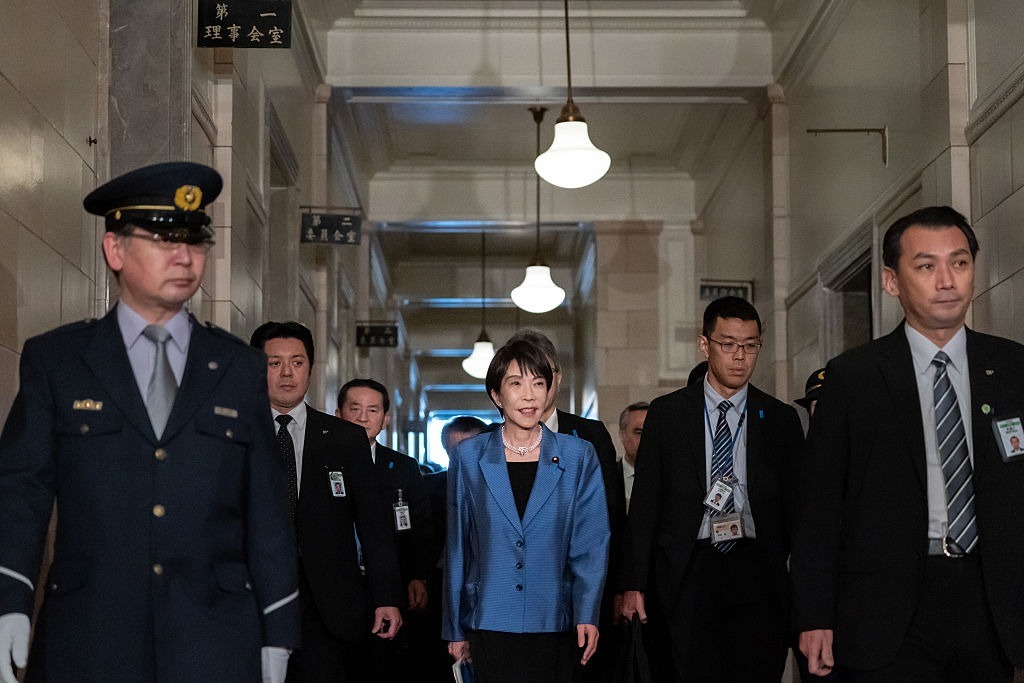
On 07th November, 2025, newly elected Japanese Prime Minister had declared that Chinese attack on Taiwan may pose a ‘survival-threatening situation’ for Japan, potentially triggering the deployment of Japan’s military in collective self-defence with the United States. This marked a departure from decades of deliberate ambiguity in Japanese policy. It also represented a strategic clarification, aligning Japan more closely with the posture that the US has sought from its allies as tensions in the Taiwan Strait have continued to rise.
A Taiwan contingency has long been seen as a scenario in which Australia may well restrict itself to a supporting role, mainly through logistics, intelligence and rear-area support. If Tokyo is signalling that it may act early or decisively, Australia will need to ensure that its planning is synchronised with Japanese and US decision cycles. This also affects Australia’s expectations of regional coalition behaviour.
A more assertive Japan may encourage other countries, such as the Philippines or South Korea, to adopt firmer positions on cross-strait issues. For Australia, Japan’s shift supports a more coherent collective deterrence posture. It also reduces uncertainty over how many states would be willing to publicly align with the US in a military crisis. For the first time, Australia must factor in a Japan that is signalling readiness to act, not just to support. This forces a rethink of Australia’s planning assumptions across defence, diplomacy and alliance management.
Japan’s new Taiwan doctrine may be the beginning of a general reassessment of the risks of ambiguity by East Asian democracies. Others may calculate, as Japan evidently has, that it’s better not to let China to persuade itself that they would not act if it tried to recover Taiwan forcibly.
For Australia, Takaichi’s statement confirms that deterrence in the Indo-Pacific is no longer defined solely by the US’s actions. Tokyo’s willingness to frame a Taiwan conflict as a direct threat to national survival indicates that the regional security architecture is becoming more distributed. This may benefit Australia by strengthening collective deterrence and making it harder for China to isolate individual states. Now Australia will need to deepen cooperation with Japan in areas such as undersea warfare, maritime domain awareness, cyber resilience and intelligence sharing. It will also need to integrate Japanese planning assumptions into its own force structure and readiness assessments.
While responding to PM Takaichi’s Taiwan statement, China’s foreign ministry spokesperson Lin Jian told a press conference that Takaichi’s remarks represented a “crude interference” in China’s internal affairs and dealt a “heavy blow” to bilateral relations.
China claims democratically-governed Taiwan as its own and has not ruled out using force to take control of the island. Taiwan’s government rejects Beijing’s claims and says only its people can decide the island’s future.
“Should Japan dare to intervene militarily in the Taiwan Strait situation, it will constitute an act of aggression, and China will strike back decisively“, Lin said.
Japan’s decision marks a turning point in the regional environment. For Australia, it is not only a signal of Japan’s evolving role but a reminder that the Indo-Pacific is entering a period where clarity may become more stabilising than ambiguity.
Team Maverick


TN CM Vijay Likely to Launch New Ration Card Distribution on Birthday
Chennai, June 2026 : Tamil Nadu Chief Minister C. Joseph Vijay is expected to launch the d…

TN CM Vijay Likely to Launch New Ration Card Distribution on Birthday
Chennai, June 2026 : Tamil Nadu Chief Minister C. Joseph Vijay is expected to …