RBI Steps Up Liquidity Support with Fresh OMO Purchase Ahead of December Auction

New Delhi, Dec 2025 : The Reserve Bank of India (RBI) on Friday announced that it will conduct the second round of Open Market Operation (OMO) purchases, involving government securities worth Rs 50,000 crore, on December 18, reinforcing its commitment to ensuring adequate liquidity in the banking system amid evolving market conditions.
According to the central bank, the auction will be conducted through its E-Kuber core banking platform between 9:30 a.m. and 10:30 a.m. on the scheduled date. The results of the auction will be published on the same day, while successful bidders will be required to ensure the availability of the purchased securities in their Subsidiary General Ledger (SGL) accounts by 12 p.m. on December 19.
The RBI stated that the OMO purchase will include several widely traded benchmark government securities across maturities. These include 6.75 per cent GS 2029, 6.10 per cent GS 2031, 6.54 per cent GS 2032, 7.18 per cent GS 2033, 6.33 per cent GS 2035, 7.23 per cent GS 2039, and 7.09 per cent GS 2054. The selection reflects the central bank’s intent to influence liquidity conditions across the yield curve rather than focusing on a single maturity bucket.
OMO purchases are a key monetary policy tool used by the RBI to inject durable liquidity into the financial system. By purchasing government securities from the market, the central bank releases funds into the banking ecosystem, thereby supporting credit flow and helping maintain orderly market conditions.
The December 18 auction follows the RBI’s earlier OMO purchase conducted on Wednesday, when it bought government bonds worth Rs 50,000 crore. Together, the two operations form part of the central bank’s broader liquidity injection plan announced during last week’s monetary policy review.
Under this plan, the RBI committed to injecting Rs 1 lakh crore through government securities purchases, in addition to $5 billion (or its equivalent) via a foreign exchange swap facility. These measures are aimed at offsetting liquidity pressures that have emerged in recent weeks.
Market participants note that liquidity conditions tightened after the RBI actively sold US dollars in the foreign exchange market to prevent excessive volatility and a sharp depreciation of the rupee. Such dollar sales typically absorb rupee liquidity from the system, which can push up short-term interest rates if left unaddressed.
Speaking on Friday, RBI Governor Sanjay Malhotra reiterated that the central bank would ensure sufficient liquidity in the system without rigidly targeting a specific surplus level, such as 1 per cent of net demand and time liabilities (NDTL).
“Monetary transmission is happening, and we will provide sufficient liquidity to support it,” Malhotra said, emphasising flexibility rather than adherence to a fixed numerical benchmark.
He explained that the current liquidity surplus fluctuates, generally ranging between 0.6 per cent and 1 per cent of NDTL, and occasionally exceeding that range. According to the Governor, the precise number is less important than ensuring that banks have enough reserves to operate smoothly and transmit policy signals effectively.
“The exact level—whether 0.5, 0.6 or 1 per cent—should not matter. What is important is that banks have enough liquidity to function without friction,” he added.
Analysts believe the RBI’s calibrated approach reflects its attempt to strike a balance between supporting economic growth and maintaining financial stability. With credit demand picking up and global financial conditions remaining uncertain, the central bank appears keen to avoid abrupt liquidity shocks that could disrupt markets.
The latest OMO announcement was welcomed by bond market participants, who expect it to provide support to government securities prices and help contain upward pressure on yields. Economists also see the move as consistent with the RBI’s growth-supportive stance, particularly at a time when inflation remains benign.
As the December auction approaches, attention will remain focused on how effectively the RBI’s liquidity measures offset the impact of forex interventions and whether additional tools may be deployed in the coming months to sustain orderly market conditions.






Iran, US Pause Hostilities for Second Night as Diplomatic Efforts Gather Momentum
Tehran, July 2026 : Iran and the United States avoided launching fresh military strikes fo…
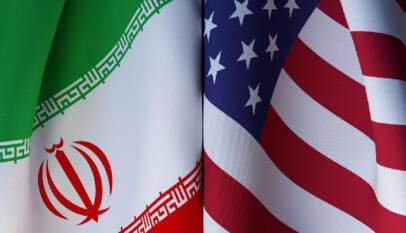
Iran, US Pause Hostilities for Second Night as Diplomatic Efforts Gather Momentum
Tehran, July 2026 : Iran and the United States avoided launching fresh military strikes …