Iran Practicing Extreme Ultra Jizyah Even For Muslims.

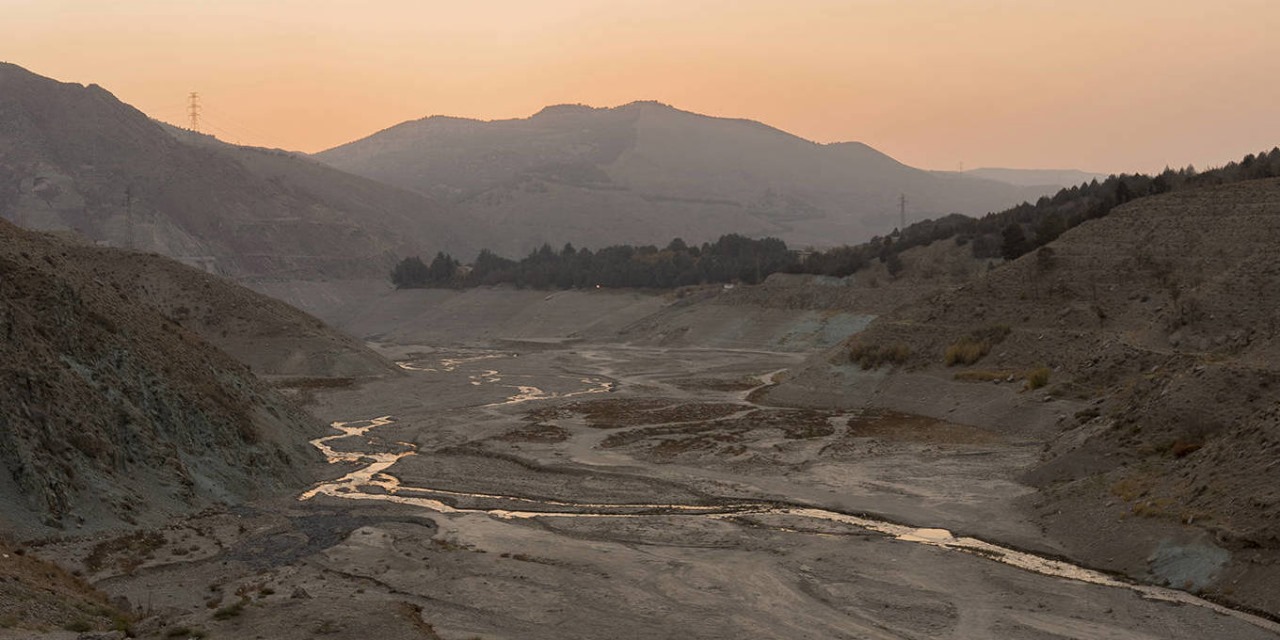
December 2025: The Iranian capital Tehran is counting down to a “Day Zero” when it will simply run out of water. Nor is it alone. Most of Iran is hurtling toward “Waterruptcy”, when demand would permanently exceed the natural supply. Iranian President Masoud Pezeshkian is now talking about moving the capital and mandating the evacuation of the population which is nearly 10 million.
The crisis reflects several factors:
- The immediate cause is a severe six-year drought. Even in the rainy season, Iran has received almost no rain.
- Water intensive agriculture and subsidization of water and energy have overdrawn the country’s aquifers and depleted its groundwater supplies.
- Concentration of economic activity and employment in major urban centres, particularly Tehran, which has further strained water resources.
- Loss of groundwater has been so severe that parts of the Tehran plateau are sinking. Even if the rains do return, less will be stored as groundwater than in the past, because the physical space for it has contracted.
- Since the sinking which is now underway is not uniformly distributed, the entire water and sewage system of Tehran is falling apart.
- Gas is leaking into the open air from broken underground channels.
Most of the Iranian leaders aware of these precarious anti-human situation have always contemplated any path breaking ideologies and methodologies which could mitigate the ‘Waterruptcy’. Instead, the regime allocated resources to its nuclear program, foreign proxies like Hamas, the Houthis, and Hezbollah, and military production, keeping the armed forces well-equipped, while manufacturing drones for the Russians enforcing them against the war with Ukraine.
Iran’s flailing response to a nationally destabilising water crisis is a severe warning to the rest of the world. As more societies push up against planetary boundaries, they will confront threats to their very survival, and responses that once seemed drastic or utopian will begin to look like common sense.
The most important revelation comes from an adept study; Where, in today’s world, do all our antagonisms and struggles for survival converge? Is there a singular point that embodies our universal predicament? It is not Gaza, Ukraine, Sudan, or the scam centres in the north of Myanmar, but it is Tehran itself.
Worse, now that the crisis has come to a head, the Iranian Revolutionary Guard Corps (IRGC) has created a “Water Mafia” whereby lakes and rivers that have survived for thousands of years are being drained to supply water to whoever can afford it. The average household in Tehran is spending 10% of its income on water, and many people are going without baths and other basic hygiene while the regime directly profits from the crisis. In addition, the government has adopted new strategy envisions wherein surplus water from willing neighbours are to be purchased, and expanding imports of water-intensive goods to conserve domestic resources, which is known as “virtual water” transfer.
The concept of “virtual water”, refers to outsourcing water consumption by importing crops or products that require large amounts of water to produce, marks a significant departure from the Islamic republic’s long-standing emphasis on agricultural self-sufficiency. Most of Iran’s neighbours, including Afghanistan, Iraq, and Pakistan’s border regions, are themselves struggling with drought and water scarcity. Armenia, to Iran’s northwest, has relatively more abundant water resources.
A very old proverb which reiterates that “A Book Should Not Be Always Judged By Its Cover” embraces Iran’s ultra-radical extremisms. Considering the mass sufferings, the West wants to set the stage for another Israeli – American attack, but this time under the guise of yet another humanitarian intervention; Israeli Prime Minister Benjamin Netanyahu has already cynically exploited the situation, telling Iranians that if they rise up against the regime, Israel will send specialists to address the water shortages.
The Iranian regime has adopted the dubious strategy of spraying large amounts of chemical salts into the atmosphere known as “Cloud Seeding”. But rather than reliably inducing rain, such “cloud seeding” threatens to kill off vegetation and make breathing more difficult. People are increasingly staying home, and Iranian society is beginning to unravel.
As for the plan to move the capital, Pezeshkian’s statements have been rather ambiguous. Is he talking about the bulk of the population, or just the government administration? If it is the second option, what will happen to the millions of people left behind? If it is the first, the effort would take years and impose an unsustainable financial burden on the state, all without solving the fundamental problem.
Not surprisingly, tens of thousands of people in Tehran have begun to panic. Highways north of the city are jammed with cars trying to make their way to the Caspian Sea region, where there may still be enough water. But what would happen if these thousands of evacuees became millions? Turkey is the obvious first destination, followed by Europe. But what about the wealthy Arab states in the Gulf region? Why aren’t Iran’s immediate neighbours expected to provide more help?
Although the water crisis follows from a specific mix of natural causes and policy errors, Iran is not alone. Neighbouring Afghanistan, for example, is pursuing large-scale irrigation projects to route water toward Kabul, which is also heading for Waterruptcy. Such projects are not without controversy, because they can have implications for water supplies elsewhere, including across borders. That is why Egypt, whose survival depends on the Nile River, objects so strenuously to Ethiopian dam projects.
Team Maverick.
Solar Defence Showcases Indigenous ‘Bhargavastra’ Counter-Swarm Drone System to Indian Army
New Delhi, July 2026 : Solar Defence and Aerospace Ltd. (SDAL) on Friday showcased its ind…
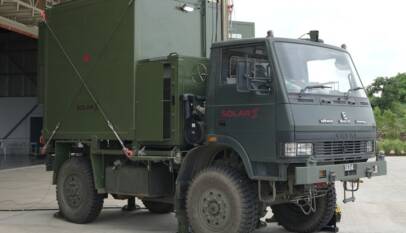
Solar Defence Showcases Indigenous ‘Bhargavastra’ Counter-Swarm Drone System to Indian Army
New Delhi, July 2026 : Solar Defence and Aerospace Ltd. (SDAL) on Friday showcased …