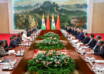
European Union And Mercosur Are On The Verge Of Establishing World’s Largest Free Trade Zone.

January 2026: European Union (EU) member states voted on Friday – 09th January 2026, to approve a trade deal with South America’s Mercosur trade bloc, which will create one of the world’s largest free trade areas when the two sides formally sign the agreement in the coming days. The deal which has been under negotiation since 1999, have passed over objections from several member states, including France, that raised concerns over how lowering trade barriers with Mercosur nations will affect domestic agriculture.
What impact will this deal have on European competitiveness and South American export markets? And what details remain to be ironed out as the deal moves onto the European Parliament for final approval?
Negotiations between the EU and Mercosur were essentially on hold after, the basic agreement, which was finalised in 2019, was met with serious opposition by key EU member states. During 2024 and 2025, the European Commission and Mercosur negotiated an “additional instrument” with protections on labour, human rights, and environmental issues. With Trump’s tariffs in effect by summer 2025, pressure mounted for the EU to diversify its trading partners. Last year, the EU has finalised a new trade agreement with Indonesia and updated an existing agreement with Mexico. The bloc also made significant progress on an EU-India trade deal.
Nevertheless, the Mercosur deal still faced near-fatal opposition until it received two final pushes:
First, the European Commission proposed safeguards to protect agricultural interests from import surges.
Second, the new US National Security Strategy made clear for the EU that trade relations with Latin America were a geopolitical imperative.
Nevertheless, Italian Prime Minister Giorgia Meloni refused to provide her country’s needed vote until the European Commission promised additional agricultural support in the next EU budget. With Italy’s support today, and in the wake of a US operation in Venezuela that left Europe on edge about Greenland, the EU-Mercosur agreement finally made it over the finish line. The EU–Mercosur trade deal comes at a moment of growing pressure to diversify export markets and trade partners amid heightened geopolitical uncertainty, particularly in light of US tensions with China and the imposition of US tariffs. For Mercosur, this urgency has been especially acute for Brazil, the bloc’s largest economy, which has faced an additional 40% US tariff on top of baseline duties and whose number one trading partner is China.
The European Commission has sought to expand the EU’s network of trade relations to compensate for pressures from US tariffs, aggressive challenges from China, and the need to secure access to critical materials. Whether that diversification strategy is credible hinged in no small part on this trade deal—not just on the substance of market access and comparative advantages but also on the geopolitical feasibility of such a major agreement. The shifts in US trade policy under Trump, the challenges to the global trading system that Europe’s export-oriented economies depend on, and the demonstration of China’s stranglehold on critical resources clearly accelerated the decades long negotiations between the EU and Mercosur, which first opened in 1999 and were only finalized in 2024.
Last-minute additions were made by the EU in 2025 to provide more protections for European farmers. European Commission President Ursula von der Leyen hoped to sign the deal in Brasília in December 2025 after the initial safeguards were agreed upon in September, but Italy threw an unexpected wrench in those plans until further guarantees were made to protect domestic producers. Dramatic protests by farmers in Brussels in December solidified the momentum against signing the deal before Christmas.
On Wednesday, the Italy vetted safeguards were agreed upon by the EU’s agricultural minister and Rome lifted its veto. This paved the way for the European Council to vote in favor of the deal today by qualified majority, despite France voting against it, amid fresh farmer protests in Paris and increased political pressure on French President Emmanuel Macron, and for von der Leyen to officially sign the deal with Mercosur leaders in Paraguay as soon as January 12th.
Europe have toiled hard to reach consensus on how to assuage doubts from European farmers about any negative impacts on their livelihoods. The additional measures added to the deal include:
- “safeguards” for sensitive agricultural sectors, such as poultry, beef, eggs, citrus, and sugar, which would “suspend tariff preferences” in the case of “serious injury” to EU farmers. Serious injury is defined as an increase in import volume or a decrease in prices by more than 08% compared to the 03 years average.
- The European Commission also introduced a slew of regular monitoring instruments, which will have to report to the European Council and European Parliament for increased accountability on enforcement. The Commission will be able to suspend imports from Mercosur in sensitive sectors if it deems this to be necessary.
- The final concessions agreed this week to bring Italy on board also include a revision to the 2028-2034 EU budget to allow farmers early access to roughly €45 billion in subsidies, as well as lowering import duties on fertilisers, the unaffordability of which was a major sticking point for protesters.
Economically, the agreement will remove approximately 04 billion euros worth of tariffs between the two trading blocs, which is significant for several key EU sectors that were previously subject to high tariffs when exporting to Mercosur. European exporters will no longer face 35% tariffs on car parts, 28% tariffs on dairy, and 27% tariffs on wine. The Commission estimates that the agreement could increase EU exports to Mercosur by 39% each year and support more than 440,000 jobs in Europe. However, not everyone shares this rosy assessment. Macron, in his announcement that France would not support the deal, stated that the economic gains would be minimal and that the agreement is “from another age”.
Despite the very visible and sometimes violent protests by European farmers, the Mercosur pact is likely to make a positive contribution to the European economy. The agreement removes most Mercosur tariffs for industrial goods (currently set at rates ranging from 15% to 35%), opening the market for European machine tools, cars, pharmaceuticals, and other products. Mercosur tariffs on most food and agriculture products (ranging from 20% to 35%) will also be removed.
While EU farmers have expressed concerns about Mercosur agricultural products, especially meat, flooding the EU market, that is very unlikely in reality. The agreement includes limited tariff-free quotas for Mercosur products, and once those quotas are reached, current tariffs are reimposed. For beef, the quota allows in only an additional 1.5% of total EU production, and for poultry, only 1.3%. Moreover, if there are sudden, sharp rises in imports, the EU can impose measures to limit them. Despite the rhetoric, agriculture remains a well-protected sector under the EU-Mercosur accord. And for European industry, this agreement opens an important new market.
The Covering countries those with a combined population of more than 700 million people, the trade deal promises to expand South American access to the European market, boosting exports and attracting greater EU investment. At the same time, it will pressure Mercosur industries to modernise, digitise, and improve efficiency to remain competitive amid increased exposure to European manufactured goods.
Politically, the deal strengthens Mercosur’s credibility and cohesion at a moment of internal fragmentation, signaling that the bloc remains a viable platform for collective trade policy and diplomacy despite ideological differences among its members. As the bloc turns 35 this year, it is reasserting its strategic purpose, having finalised a deal with the European Free Trade Association, restarted negotiations with Canada, and now locked in a landmark agreement with the European Union.
Donald Trump’s administration is unlikely to provide any public support for this agreement, but it is also unlikely to make it a significant issue in the US-EU relationship, despite its current emphasis on Latin America as its sphere of influence. This is a serious underappreciation of the importance of this accord. The EU will now have free-trade agreements with close to 80 countries, while the United States has free trade agreements with only 20. While Trump has signed additional “deals” with many countries, they have generally raised trade barriers, rather than opening markets, and US demands for inward investment and other conditions have left many trading partners bruised and resentful.
The EU is certainly a tough negotiator, and the Mercosur accord will make some constituencies on both sides unhappy, but it is likely to raise trade levels between two significant economic blocs. Lowering high Mercosur tariffs for EU goods will mean more exports for European industries, luxury goods, and other products. EU companies will be able to bid on public tenders in Mercosur countries on an equal basis with local firms. The agreement also safeguards the branding of more than 300 traditional EU food products, such as champagne and parmesan cheese, meaning that US products with those same names must be rebranded to enter the Mercosur market. This is not only an economic loss for the United States, but a geopolitical one as well. EU and Mercosur businesses will generate more partnerships, and these growing economic ties are likely to lead to more political alignment at a time when many in the Southern Hemisphere are balancing their interests between China and the United States.
For Mercosur leaders and their citizens, the contrast could not be starker: In the same week that the United States conducted a military operation against a neighbor, the EU has finally agreed to a significant trade pact based on the rule of law.
On a symbolic level, and perhaps most importantly, the deal demonstrates Europe’s willingness to adapt to an increasingly volatile global economy, the headwinds from US tariffs, and a new China challenge in critical sectors. For those in Brussels who call for the EU to stand more on its own footing economically, this is a strategic win. Moreover, if EU leaders had once again failed to reach internal consensus on the deal, it could very well have closed the door to any future deal with Mercosur and proven correct Washington’s doubts about Europe’s ability to act decisively on the world stage.
Team Maverick.




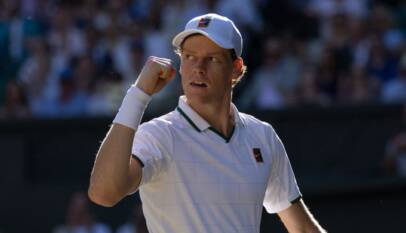
Wimbledon Final Locked at One Set Each as Sinner Fights Back Against Zverev
London, July 2026 : World No. 1 Jannik Sinner displayed remarkable resilience to fight bac…
Wimbledon Final Locked at One Set Each as Sinner Fights Back Against Zverev
London, July 2026 : World No. 1 Jannik Sinner displayed remarkable resilience to fight …