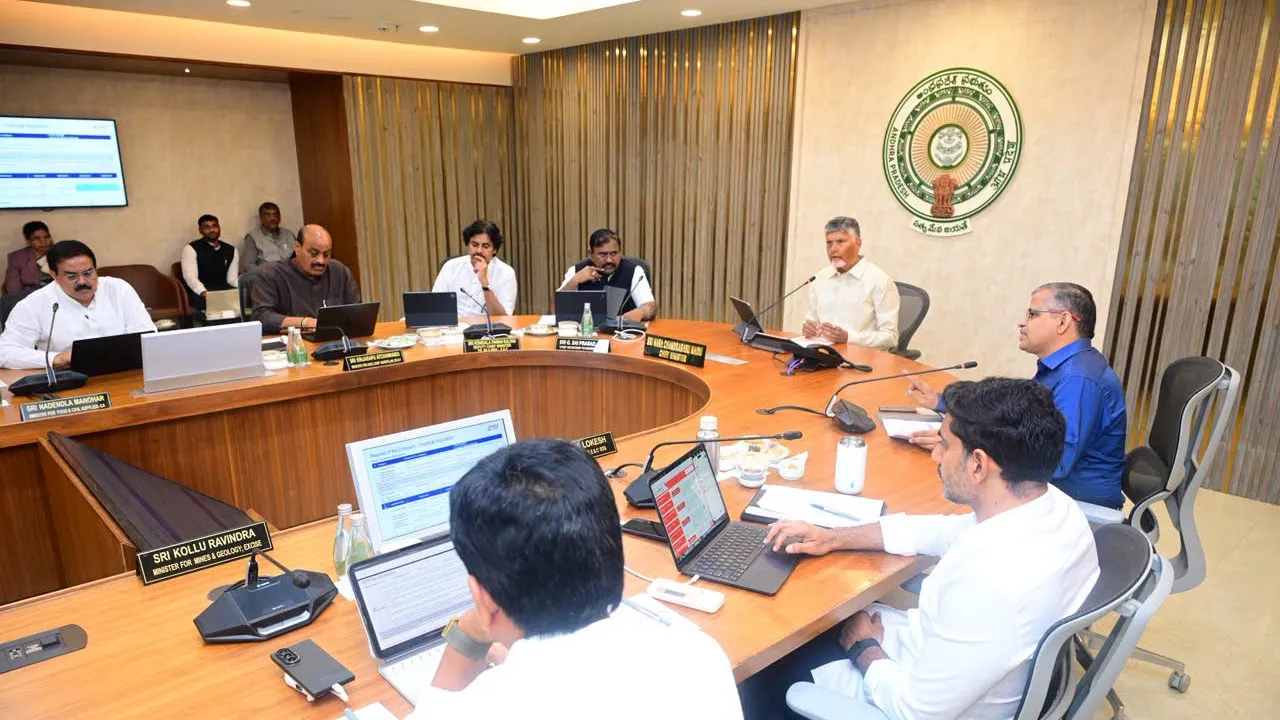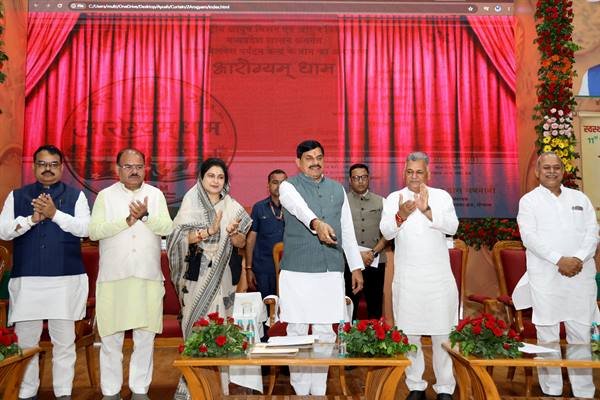
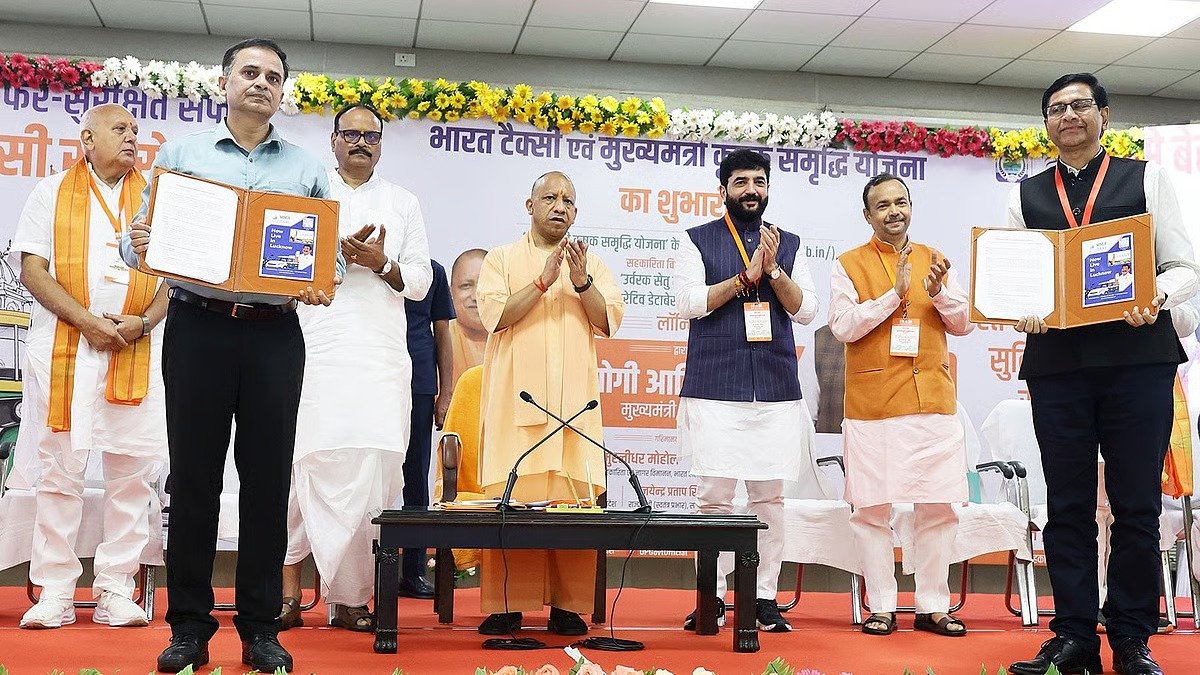
Guided by Prime Minister Shri Narendra Modi’s vision of ‘Sahkar Se Samriddhi’ and under the leadership and guidance of Union Home and Cooperation Minister Shri Amit Shah, a series of significant initiatives have been undertaken over the past few years to make India’s cooperative sector modern, transparent, technology-enabled and multidimensional. Cooperation is steadily expanding beyond its traditional domains into agriculture, rural economy, organic products, seeds, exports, storage, healthcare services and now emerging sectors such as mobility. Taking this vision forward, Union Minister of State for Cooperation Shri Murlidhar Mohol today addressed the formal launch programme of Bharat Taxi in Lucknow. Along with Lucknow, the service was also launched today in Gorakhpur, Varanasi, Kanpur and Prayagraj. Uttar Pradesh Chief Minister Shri Yogi Adityanath, Deputy Chief Minister Shri Brajesh Pathak, Agriculture Minister Shri Surya Pratap Shahi, Cooperation Minister Shri J.P.S. Rathore, Transport Minister Shri Dayashankar Singh, Chairman of Uttar Pradesh Cooperative Gram Vikas Bank Shri Vivek Singh Tomar, Additional Secretary, Ministry of Cooperation, Shri Pankaj Bansal, advisers to the Chief Minister, senior officers of the Uttar Pradesh Government, public representatives and a large number of Bharat Taxi Saarthis were present on the occasion. More than 50,000 people from different districts of Uttar Pradesh also joined the programme through the online mode.
During the programme, Chief Minister Shri Yogi Adityanath launched the ‘Mukhyamantri Krishak Samriddhi Yojana’ Portal. Along with this, the Urvarak Setu Mobile App, developed by the Cooperation Department of Uttar Pradesh, and the UPCDC Mobile App of the Uttar Pradesh Cooperative Database Centre were also launched. On the occasion, the Airport Authority, Lucknow Metro Rail and Lucknow Police exchanged Memoranda of Understanding with Bharat Taxi.
Recalling the establishment of a separate Ministry of Cooperation in July 2021, Shri Mohol underlined that Prime Minister Shri Narendra Modi’s historic decision gave a new direction and renewed momentum to the cooperative movement in the country. Under the leadership of Union Home and Cooperation Minister Shri Amit Shah, the Ministry of Cooperation has launched more than 160 new initiatives during the last five years, aimed at making cooperative institutions stronger, transparent, modern and economically capable. Highlighting the scale and reach of the movement, he noted that India today has around 8.5 lakh cooperative societies, with nearly 32 crore members associated with them, while the cooperative sector is presently active across around 30 different sectors.
Highlighting the technology-led transformation of grassroots cooperatives, Shri Mohol stated that the computerisation of around 80,000 Primary Agricultural Credit Societies (PACS) is underway across the country at a cost of approximately Rs 3,000 crore. The role of PACS, he emphasised, is no longer confined to agricultural credit, agricultural inputs, sugar and dairy businesses. PACS are now being linked with several new areas, including foodgrain storage, insurance, organic products, indigenous seeds, Common Service Centres, Pradhan Mantri Kisan Samriddhi Kendras, Jan Aushadhi Kendras and petrol-diesel distribution. With the reform of the Model Bye-Laws of PACS, they can now undertake more than 25 different economic activities, creating new opportunities for employment and income generation at the village level.
Elaborating on the Government’s effort to bring the entire ‘seed-to-market’ value chain within the cooperative framework, the Union Minister of State for Cooperation referred to the establishment of new national-level multi-State cooperative societies in line with Prime Minister Shri Narendra Modi’s resolve of ‘Sahkar Se Samriddhi’. These include Bharatiya Beej Sahakari Samiti Limited (BBSSL) for quality seeds, National Cooperative Organics Limited (NCOL) for organic products and National Cooperative Exports Limited (NCEL) for promoting the export of cooperative products. Around 70,000 cooperative societies across the country have already become associated with these three organisations, directly benefiting farmers and cooperative institutions.
Highlighting the initiatives being taken in the dairy and human resource sectors, Shri Mohol stated that under White Revolution 2.0, efforts are underway to increase the country’s present milk production capacity by approximately 40 percent. At the same time, the country’s first cooperative university has been established to provide trained and capable human resources to cooperative institutions. Emphasising that a strong and transparent cooperative movement requires professionally trained youth, he said Tribhuvan Sahkari University will play an important role in developing nearly 17 lakh trained human resources for the cooperative sector in the coming years.
Illustrating the Central Government’s growing financial support to the cooperative movement, Shri Mohol highlighted the role of the National Cooperative Development Corporation (NCDC). From its establishment in 1963 until 2014, over a period of nearly five decades, NCDC extended assistance of around Rs 45,000 crore to the cooperative sector, whereas during approximately the last 12 years, this assistance has increased to nearly Rs 4.5 lakh crore. He said this reflects the Central Government’s strong commitment towards financially strengthening the cooperative sector.
Referring to Bharat Taxi, Shri Mohol described it as an important new cooperative initiative in the mobility sector, built around the core principle “Driver is the Owner.” Explaining the significance of the model, he said the driver is not merely a service provider but also a stakeholder and owner in the cooperative ecosystem. Unlike conventional aggregator models, where drivers are required to pay a part of their earnings as commission, Bharat Taxi seeks to ensure that the maximum benefit from earnings goes directly to the Saarthis. Earnings from the service are credited directly to their accounts, while the cooperative structure also gives them a stake in ownership and participation in the decision-making process. Highlighting the rapid growth of the initiative since its launch in February 2026, he stated that more than 10 lakh Saarthis have joined Bharat Taxi within just six months and around 20,000 rides are being undertaken every day. Around 40 lakh passengers have also joined the service, while more than Rs 100 crore has been credited to the accounts of Saarthis during the last six months. Bharat Taxi is presently operating in various parts of the country, including Delhi, Gujarat, Mumbai, Jaipur and Chandigarh, and with the addition of Lucknow, Gorakhpur, Varanasi, Kanpur and Prayagraj, its presence in Uttar Pradesh has expanded significantly. Around 40,000 Saarthi brothers and sisters have already registered across these five cities and will soon begin providing services to passengers.
Commending the development trajectory of Uttar Pradesh under Chief Minister Shri Yogi Adityanath, Shri Mohol noted the State’s rapid progress in areas including law and order, infrastructure development, public welfare and cooperation. He observed that Uttar Pradesh has always had a strong social and economic foundation for cooperation. From village chaupals to farms and fields, the tradition of moving forward collectively has remained an integral part of the State’s social fabric, with cooperation providing a modern institutional expression to this spirit. Appreciating the work being undertaken under the leadership of Uttar Pradesh Cooperation Minister Shri J.P.S. Rathore, he highlighted that around 42,000 cooperative societies are presently functioning across the State. He also lauded the Uttar Pradesh Government’s decision to observe 2025 as ‘Sahkarita Mahakumbh’, under which a comprehensive campaign was undertaken to expand the cooperative movement to villages across the State.
Highlighting the success of the M-PACS membership campaign, Shri Mohol stated that more than 54 lakh new members have been enrolled in Uttar Pradesh, including approximately 17.5 lakh farmers. Describing the initiative as a notable example for the cooperative sector across the country, he recalled that Union Home and Cooperation Minister Shri Amit Shah had also appreciated Uttar Pradesh’s membership campaign and recognised its potential as a model that could be considered for replication in other States. The membership campaign has also generated a contribution of around Rs 75 crore for the cooperative sector.
Highlighting Uttar Pradesh’s progress in PACS computerisation, Shri Mohol stated that around 6,300 PACS are being computerised in three phases across the State. In addition, work is being undertaken for the computerisation of approximately 750 agricultural and rural cooperative bank units. Since April 2026, more than 1,200 new M-PACS, dairy, fisheries and other cooperative societies have been formed in Uttar Pradesh, adding approximately one lakh new members. In addition, nearly 22 lakh new members have been enrolled in already operational cooperative societies.
Drawing attention to the growing role of PACS as multipurpose rural service institutions, the Minister noted that around 5,200 Common Service Centres are currently being operated through PACS in Uttar Pradesh. Approximately 7,000 M-PACS are functioning as Pradhan Mantri Kisan Samriddhi Kendras, while 161 M-PACS are providing services as Pradhan Mantri Bhartiya Janaushadhi Kendras.
Referring to the strengthening of the cooperative banking ecosystem in the State, Shri Mohol highlighted that 16 District Cooperative Banks have been revived with assistance of around Rs 307 crore during the last few years, describing it as an important achievement for Uttar Pradesh’s cooperative sector. Another important milestone has been achieved by the Uttar Pradesh State Cooperative Bank, which has become the first cooperative bank in the country authorised to issue and update Aadhaar cards. In parallel, efforts are also underway towards the establishment of a Cooperative College in Uttar Pradesh to promote study, training and education in the cooperative sector.
Underlining the larger philosophy behind these initiatives, Shri Murlidhar Mohol described cooperation as a powerful means of making the common citizen self-reliant and ensuring dignity for his or her hard work. The expansion of the cooperative model into emerging areas such as mobility, he emphasised, reflects the widening horizons of the movement, with Bharat Taxi representing an important initiative in this direction.
Expressing confidence in the road ahead, Shri Mohol stated that under the leadership of Prime Minister Shri Narendra Modi at the Centre and Chief Minister Shri Yogi Adityanath in Uttar Pradesh, the cooperative movement will continue to expand with greater momentum towards realising the vision of ‘Sahkar Se Samriddhi’. He further underlined that the cooperative sector will play an extremely important role in realising Prime Minister Shri Narendra Modi’s resolve of ‘Viksit Bharat @2047’, with continued efforts to bring crores of farmers, workers, youth, women and small entrepreneurs into the mainstream of development through the power of cooperation.