New Delhi, Oct 2026 : India’s space sector is emerging as a significant driver of economic growth, private investment and industrial development, alongside its scientific and strategic objectives, with the country targeting a space economy worth $44 billion by 2033.
A government factsheet released on Wednesday highlighted how advancements in reusable launch vehicles, air-breathing propulsion, electric propulsion and in-space docking are strengthening India’s space capabilities while creating new commercial opportunities.
The growing participation of private industry is accelerating this transformation. NewSpace India Limited (NSIL) has signed 118 Technology Transfer Agreements to transfer 83 technologies developed by the Indian Space Research Organisation (ISRO) to domestic industries, enabling businesses to participate more actively in the space ecosystem.
Investor confidence in the sector is also rising. Cumulative investment in Indian space start-ups reached approximately $618.5 million as of March 31, 2026, according to the factsheet. Funding patterns are increasingly moving beyond early-stage seed investments towards larger rounds supporting business expansion and growth.
These developments are positioning India’s space programme as both a strategic national asset and a foundation for an enterprise-driven space economy.
Next-generation launch vehicle to boost capacity
A major milestone came in September 2024, when the Union Cabinet approved the development of the Next Generation Launch Vehicle (NGLV), with an outlay of ₹8,240 crore. The allocation covers development costs, three developmental flights, essential infrastructure, programme management and the launch campaign.
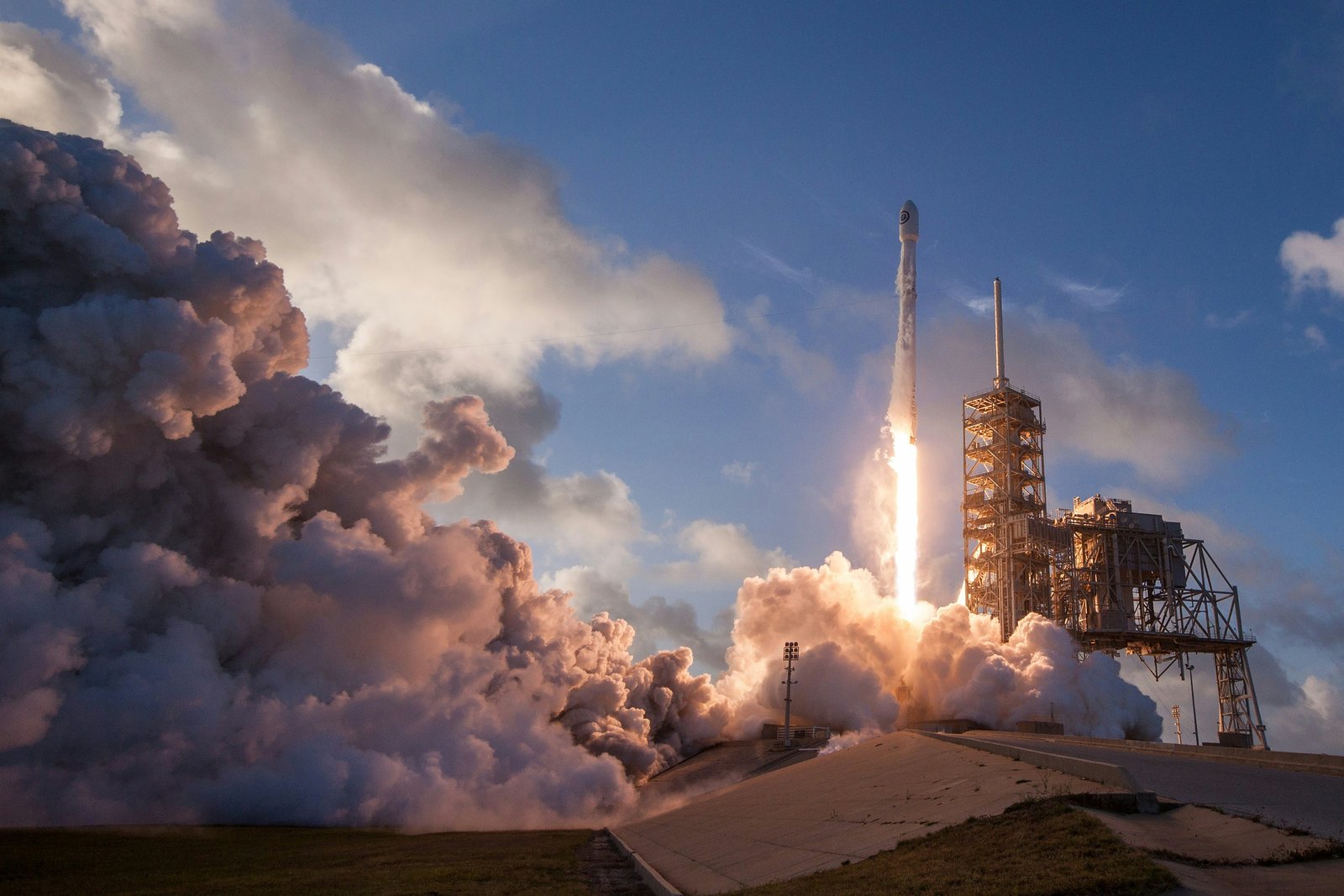
The NGLV is designed to carry payloads of up to 30 tonnes to Low Earth Orbit (LEO), three times the 10-tonne LEO payload capacity cited for India’s existing LVM3 launch vehicle.
A partially reusable variant with a payload capacity of 14 tonnes to LEO is also under development. Reusability is expected to reduce launch costs and improve the affordability of access to space.
The NGLV is intended to support national and commercial missions, including human spaceflight to the proposed Bharatiya Antariksh Station, lunar exploration and interplanetary missions. It will also help deploy communication and Earth observation satellite constellations in Low Earth Orbit, expanding India’s launch capacity and supporting commercial demand.
Space docking and human spaceflight ambitions
India is also advancing its ambitions in human spaceflight and space infrastructure. Through the Space Docking Experiment (SpaDeX), the country became the fourth nation to demonstrate autonomous docking of two spacecraft in orbit, a capability important for complex future missions.
The Gaganyaan programme is progressing towards India’s human spaceflight objectives, while plans for the Bharatiya Antariksh Station represent a longer-term ambition to establish an Indian presence in space.
Emerging technologies such as electric propulsion and advanced launch systems are expected to strengthen these programmes and create opportunities for domestic manufacturers, technology developers and start-ups.
Space technology delivering benefits to citizens
The government factsheet emphasised that India’s space programme is designed to deliver practical benefits to citizens, particularly in areas such as connectivity, agriculture, disaster management and environmental protection.
Communication satellites extend services to remote and underserved regions, while Earth observation data support crop assessment, land-use planning, environmental monitoring and disaster response.
Weather satellites track cyclones and monsoon systems, helping authorities issue early warnings and enabling farmers, fishermen and coastal communities to prepare for severe weather. These services help protect livelihoods, reduce risks and improve public administration.
Space-based communication systems also support national security and strategic requirements, strengthening India’s ability to monitor and safeguard its frontiers.
With expanding private investment, technology transfers and next-generation launch capabilities, India is seeking to build a globally competitive space industry. The target of a $44-billion space economy by 2033 reflects the government’s ambition to combine scientific progress with commercial growth, technological self-reliance and wider public benefits.