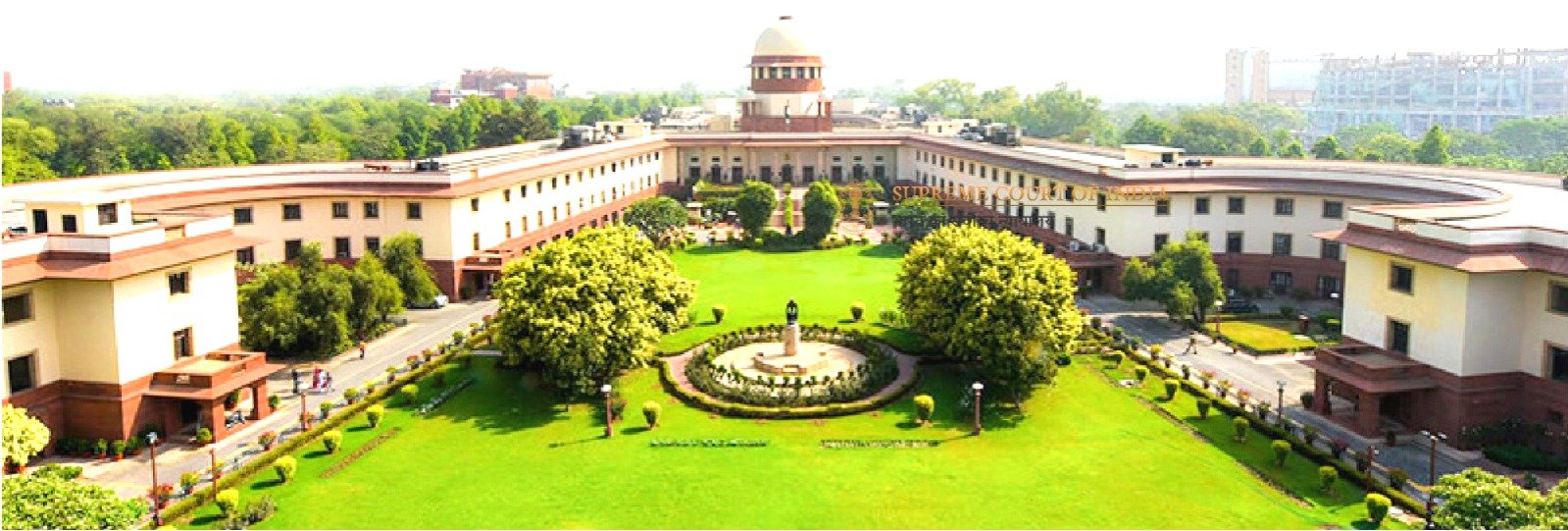
New Delhi; September 2026: The learned Supreme Court today (Thursday – 17th September 2026) has slammed the Manipur Government about the report of much lesser Forensic Investigations while the number of unnatural deaths in relief camps are predominantly higher. Of 608 deaths reported from relief camps housing internally displaced people (IDPs) in Manipur, post-mortems were conducted in only 20 cases, a figure that has raised questions over how deaths in the camps were investigated.
The figures were placed before the Supreme Court during a hearing today (17th September), where the Bench comprising Chief Justice of India Surya Kant and Justices Joymalya Bagchi and V. Mohana questioned why post-mortems had not been conducted in all cases of unnatural deaths. The court has now directed the Manipur Chief Secretary to submit a detailed report on 25 unnatural deaths reported from relief camps, including their causes, post-mortem findings and measures taken to prevent similar incidents.
The Bench also sought an explanation for the payment of only Rs. 20,000 - Rs. 30,000 to families of those who suffered unnatural deaths, despite compensation of Rs 5 lakh-Rs 10 lakh being contemplated for affected families. The proceedings were part of a batch of petitions concerning the investigation, protection, relief and rehabilitation of people affected by the ethnic violence that has erupted in Manipur in 2023.
The figures on deaths in relief camps were contained in a report submitted by an IAS officer stating that 608 deaths had occurred in relief camps, while post mortems had been conducted in only 20 cases, before the court. While addressing the media representatives, today, L. Surchandra, former coordinator of Mekola Relief Camp in Imphal West, said he encountered 04 deaths during his tenure -one unnatural and three natural. He said a post mortem was conducted in just 01 of the natural-death cases. 01 reported case of unnatural death at the camp involved 20-year-old Sukham Chanu Devi, who died by suicide at Mekola Relief Camp on January 7, 2025.
The experience at Mekola offers a ground-level perspective to the wider issue now being examined by the Supreme Court. The prolonged displacement has also raised concerns over the protection and well-being of children. Keisam Pradip Kumar, chairman of the Manipur Commission for Protection of Child Rights (MCPCR), told media reporters that the Commission had strongly recommended a “State Action Plan for Transitional Support” for children living in relief camps. According to Pradip Kumar, the proposed plan should provide for protection, educational support, access to all government-sponsored schemes available to IDPs and a mental-health support system, among other measures. He has identified protection and privacy as major concerns contributing to mental health distress among people living in relief camps, stressing the need for stronger support systems for displaced families. Pradip Kumar also said the Commission had taken up several suo motu cases relating to IDP children.
Meanwhile, the Supreme Court was apprised of the progress of investigations into cases arising from the Manipur violence. Additional Solicitor General Aishwarya Bhati informed the Bench that 42 Special Investigation Teams (SITs) had been constituted across 08 districts to investigate the cases. Chargesheets have been filed in 302 cases, closure reports in 1,583 cases, while 1,135 cases remain under investigation. Trials have commenced in 38 cases. The Court took the figures on record. The Bench was also apprised of cases being investigated by the Central Bureau of Investigation (CBI).
Former Maharashtra DGP Dattatray Padsalgikar, appointed by the Supreme Court to supervise the CBI investigations, submitted his 16th status report dated 08th September this year (2026). The report recorded that the CBI had filed final reports in 28 cases, including six closure reports, of which four had been accepted. The Court further noted that the CBI cases involve 978 cited witnesses, of whom only 06 have been examined so far. There are currently 38 accused persons in custody in these matters.
The pace of CBI trials was also discussed during the hearing. Advocate Nizamuddin Pasha submitted that the Special CBI Court at Guwahati was handling several other matters in addition to the Manipur cases, limiting the number of days that could be devoted to the latter. He has also pointed to logistical difficulties in examining witnesses remotely and the need to secure the areas from which vulnerable witnesses appear.
Chief Justice of India Surya Kant said the Court had already communicated its concerns to the jurisdictional CBI court and expressed confidence that the High Court would ensure that the Manipur cases received adequate attention. “Let’s see for some time. if further intervention is required, we will do that”, the CJI said.
The Bench also observed that there may be a need to create two additional special NIA courts in Assam. “Once (additional) NIA courts are created and pressure eases, we are sure that CBI courts will be able to deal with only Manipur cases,” CJI Kant observed.
The Supreme Court had urged on 10th August this year (2026) that the authorities to consider setting up two trial courts exclusively to deal with Manipur violence cases investigated by the CBI and the National Investigation Agency (NIA).
The latest hearing comes as authorities continue to deal with the consequences of the violence, including prolonged displacement and the challenges surrounding the protection, rehabilitation and eventual return or resettlement of affected people.
Team Maverick.