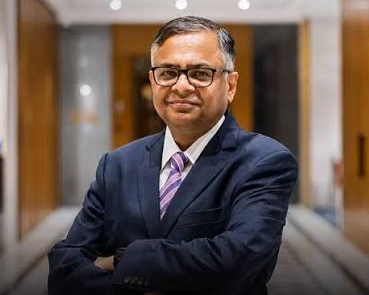
Mumbai, Sept 2026 : Tata Trusts has intensified its ongoing dispute with Tata Sons over the reappointment of N. Chandrasekaran as Chairman, asserting that the resolution considered at the Tata Sons board meeting on September 17 was not validly passed and has no legal effect.
In a statement issued on Sunday, Tata Trusts said there was no deadlock at the board meeting and argued that the Chairman's casting vote could not be used to revive what it described as an invalid resolution.
“The resolution to reappoint Mr N. Chandrasekaran as the Chairman of Tata Sons, considered at the Board meeting on September 17, 2026, was not validly passed and has no legal effect. In the eyes of the law, it is void ab initio,” Tata Trusts said.
At the centre of the dispute is the interpretation of Tata Sons' Articles of Association (AoA), particularly provisions concerning the rights of Tata Trusts as the company's majority shareholder.
Tata Trusts referred to the Supreme Court's judgment in the Tata-Mistry case, saying the ruling had upheld the protective rights available to the Trusts as the majority shareholder.
According to Tata Trusts, the AoA do not allow decisions of the Tata Sons board to be determined merely through a head count of directors. The Trusts said the articles prescribe an additional condition requiring the affirmative support of at least a majority of directors nominated by Tata Trusts.
The Tata Trusts collectively hold approximately 66 per cent of Tata Sons, according to the statement.
Tata Trusts said there are two of its nominees on the Tata Sons board and that, therefore, a majority among those two nominees would require the support of both directors. At the September 17 meeting, one of the Tata Trusts-nominated directors voted against the resolution seeking Chandrasekaran's reappointment.
Consequently, Tata Trusts argued that the affirmative support required under the AoA was not provided and that the condition for passing the resolution consequently failed.
The Trusts also rejected the argument that the Chairman of the meeting could use a casting vote to settle the matter. According to the statement, a casting vote is available only in circumstances where there is an equality of votes at the overall board level. It does not, Tata Trusts maintained, override the separate requirement concerning its nominated directors.
The Trusts said suggestions that the dissent amounted to a deadlock capable of paralysing Tata Sons were incorrect.
“It is now being suggested that a refusal of support amounts to a deadlock which would paralyse the Company and that the Chairman of the meeting was therefore entitled to resolve the position by a casting vote. There was no paralysis, and there was no deadlock,” the statement said.
Tata Trusts argued that the board had placed a question before the relevant constitutional framework of the company and that the AoA had effectively answered it by requiring the specified affirmative support.
“The exercise of a protective right conferred by a company's own constitution is not a deadlock; it is that constitution working as it was written to work,” the statement added.
The Trusts further contended that Tata Sons could not now adopt an interpretation of its AoA that was inconsistent with the position it had previously taken before the Supreme Court.
Referring to the litigation arising from the removal of former Tata Sons Chairman Cyrus Mistry, Tata Trusts said Tata Sons had defended the relevant rights as legitimate protections agreed upon between shareholders.
According to the Trusts, Tata Sons had argued before the Supreme Court that these provisions were not oppressive and represented an entitlement of the Trusts as the majority shareholder. The Supreme Court, the statement said, accepted the company's position and set aside the finding that the Articles were oppressive.
Against this backdrop, Tata Trusts questioned the interpretation now being advanced in relation to Chandrasekaran's reappointment.
“It is unfortunate that the Chairman of Tata Sons, a Company renowned for setting high standards of corporate governance, is contending reappointment on such an untenable interpretation of the Articles,” the statement said.
The dispute has also raised the issue of a potential listing of Tata Sons and whether such a move could lead to stronger corporate governance.
Tata Trusts rejected the suggestion that enhanced governance would necessarily follow from a listing, arguing that the premise assumes a governance gap that does not exist.
The Trusts said Tata Sons had for years voluntarily chosen to hold itself to standards applicable to a public company, independently of whether it was listed.
The latest statement comes amid an increasingly public disagreement between Tata Trusts and Tata Sons over the interpretation of the company's constitutional provisions and shareholder rights.
As the dispute escalates, Tata Trusts has also appointed senior advocate Abhishek Manu Singhvi to represent it legally.
Singhvi said the issue ultimately concerned the protection of shareholder rights.
“In the ultimate analysis, fundamental rights of shareholder-owners cannot be nullified in the manner in which they have been. To stultify shareholder ownership rights would spell doomsday for corporate governance across hundreds of Indian companies,” he said.
The latest developments centre on the validity of the September 17 board resolution, the interpretation of Tata Sons' Articles of Association and the extent to which Tata Trusts' rights as a majority shareholder must be taken into account in decisions concerning the company's leadership.
The two sides' differing interpretations of these provisions have now become the central point of the dispute over Chandrasekaran's proposed reappointment as Chairman of Tata Sons.
(Disclaimer :The content of this article is sourced from a news agency and has not been edited by the Mavericknews30 team.)