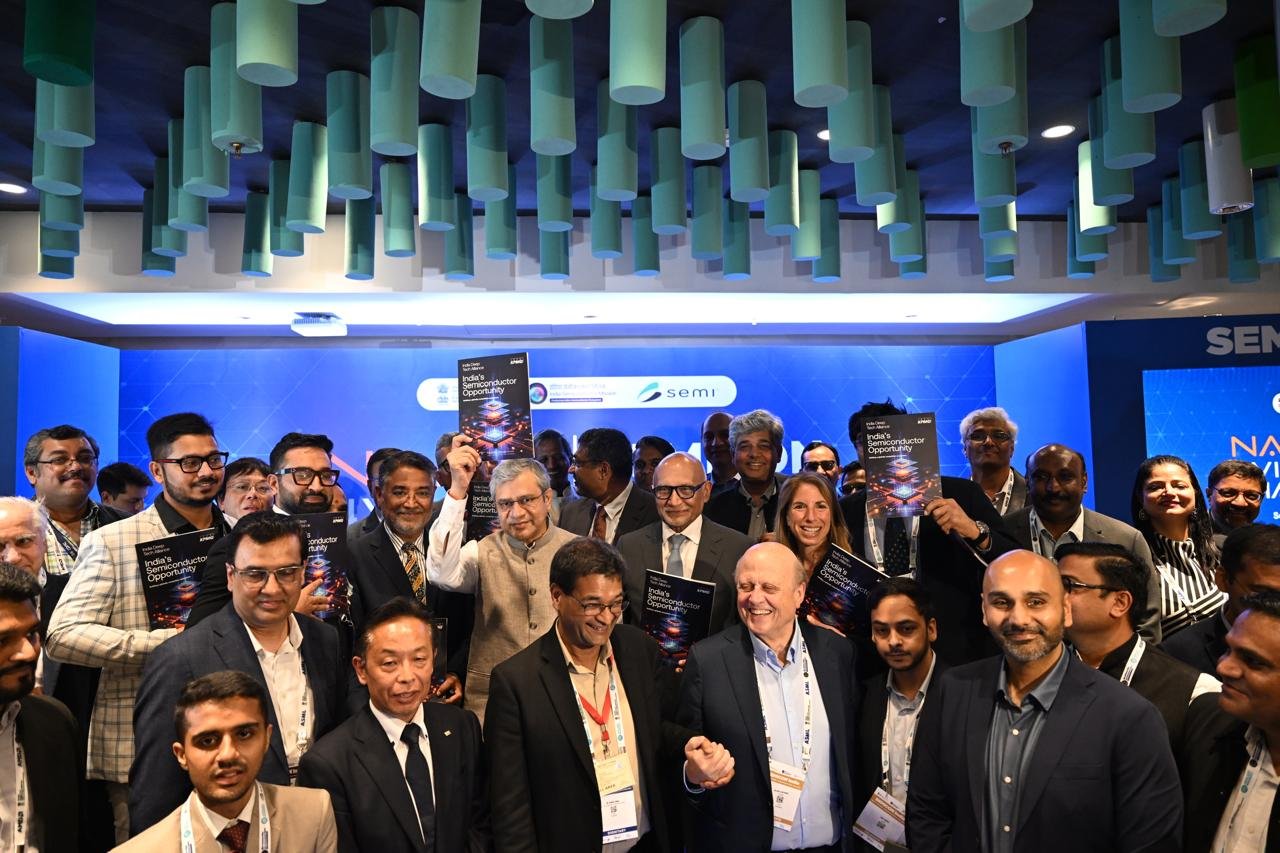
New Delhi, Sept 2026 : At least 200 chip design companies have emerged under the India Semiconductor Mission 2.0 (ISM 2.0), marking a significant step towards developing home-grown semiconductor intellectual property (IP), Union Minister for Electronics and IT Ashwini Vaishnaw said.
According to the minister, more than 105 chip design startups have gained access to advanced Electronic Design Automation (EDA) tools, while 20 startups have secured venture capital funding. The initiative is aimed at strengthening India’s semiconductor design capabilities and supporting the growth of domestic companies in the sector.
Vaishnaw said around 70,000 chip-design engineers have been trained over the past four years against the target of training 85,000 engineers. He stressed that global competitiveness in semiconductors would depend not only on quality but also on maintaining competitive costs.
The minister also noted that five of the 12 semiconductor plants approved under ISM 1.0 have already commenced commercial production, indicating progress in building domestic manufacturing capabilities.
Vaishnaw highlighted India’s growing recognition as a trusted country, along with its track record of protecting intellectual property. He also pointed to the strong domestic and international response to SEMICON India 2026, which witnessed extensive business-to-business engagements and participation from major semiconductor economies.
Country-level roundtables held during the event reflected increasing interest among global companies in expanding their engagement with India’s semiconductor ecosystem.
Foreign Secretary Vikram Misri said resilient semiconductor value chains would require trusted global partnerships. He identified reliability, credibility, incentives and value creation as key pillars of international cooperation. He also called for a balanced approach to self-reliance, combining India’s domestic strengths with global capabilities.
The India-Singapore Country Roundtable, attended by 142 participants, explored opportunities for collaboration by bringing together Singapore’s expertise in manufacturing, advanced packaging and supply chains with India’s engineering talent, large market and expanding semiconductor ecosystem.
The India-Europe Country Roundtable saw participation from 139 delegates and focused on investment, supply-chain localisation, equipment and materials, manufacturing, advanced packaging, semiconductor design, research and development, and talent development.
Meanwhile, the India-South Korea Country Roundtable, attended by 115 participants, discussed opportunities to deepen cooperation across the semiconductor value chain, including manufacturing, technology, materials, advanced packaging, investment and supply chains.
The discussions sought to leverage South Korea’s established semiconductor capabilities alongside India’s engineering talent, expanding market and growing manufacturing base, the official statement said.