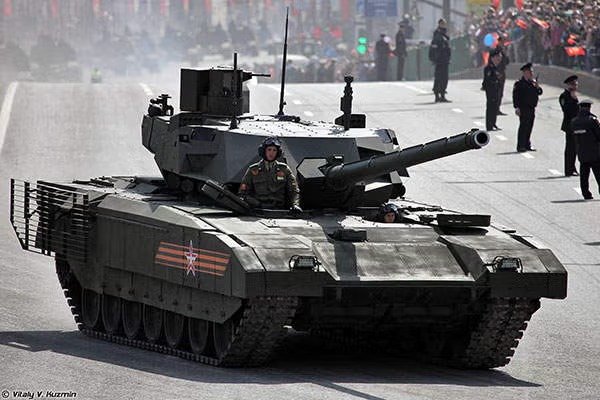
New Delhi, Sept 2026 : Indian Army Chief General Dhiraj Seth’s three-day visit to Moscow has brought India-Russia defence cooperation into renewed focus, with discussions centred on securing spare parts for India’s Russian-origin armoured fleet and exploring advanced platforms, including the T-14 Armata, BMP-3 and Pantsir-S1M.
General Seth’s visit is the first by an Indian Army Chief to Russia since 2018. During the trip, he received a ceremonial welcome and held discussions with his Russian counterpart, Colonel General Andrei Mordvichev, as well as other senior Russian officials.
A key priority during the visit is expected to be the continued supply of spares for India’s Russian-origin military platforms. The Indian Army’s Armoured Corps and Mechanised Infantry continue to operate platforms such as the T-72, T-90 and BMP-2. Ensuring reliable supply chains for these systems remains important for maintaining operational readiness.
Russia has also put forward proposals involving newer-generation defence systems under India’s Make in India initiative. Among them is the T-14 Armata main battle tank, which Moscow is reportedly pitching for India’s Future Ready Combat Vehicle programme. Russia has indicated its willingness to explore joint production, potentially allowing greater localisation of manufacturing and reducing dependence on imported systems.
The BMP-3 infantry fighting vehicle is another platform being offered to India. The Indian Army already operates a large fleet of BMP-2 infantry combat vehicles produced under licence. At the same time, India is pursuing an indigenous modernisation programme and developing the Future Infantry Combat Vehicle. The Russian proposal could therefore add another option to the ongoing evaluation of future mechanised infantry capabilities.
Air defence is also part of the broader discussions, with Russia offering the Pantsir-S1M system. The platform combines surface-to-air missiles with twin 30-mm cannons and is designed to counter a range of aerial threats, including aircraft, drones, cruise missiles and precision-guided weapons.
The system could potentially complement India’s Carrier Air Defence Tracked (CADET) programme, which envisages at least 50 per cent indigenous content. Any future consideration would therefore have to be aligned with India’s emphasis on domestic manufacturing and technology development.
The Moscow visit also reflects Russia’s effort to expand defence cooperation beyond the traditional buyer-seller relationship towards joint production, technology transfer and deeper industrial partnerships. The BrahMos missile programme is an established example of such cooperation.
Moscow is also seeking greater engagement with India’s private defence industry, indicating an effort to broaden bilateral collaboration beyond traditional government and state-owned defence entities.
India, meanwhile, continues to pursue a dual approach of strengthening indigenous defence capabilities while sustaining existing Russian-origin equipment. Earlier this year, New Delhi signed a Rs 445-crore contract for upgrades to Tunguska air defence systems, highlighting the continuing requirement to maintain and modernise legacy Russian platforms.
General Seth’s engagements in Moscow are expected to provide further momentum to bilateral defence cooperation, particularly in areas related to land-force modernisation, equipment sustainment and industrial collaboration. While discussions on the newer Russian platforms remain at the proposal stage, the visit underscores the continuing importance of India-Russia defence ties as New Delhi seeks to balance operational requirements with its push for greater domestic production.
(Disclaimer :The content of this article is sourced from a news agency and has not been edited by the Mavericknews30 team.)