Owaisi Urges Independent Muslim Leadership After Election Setbacks

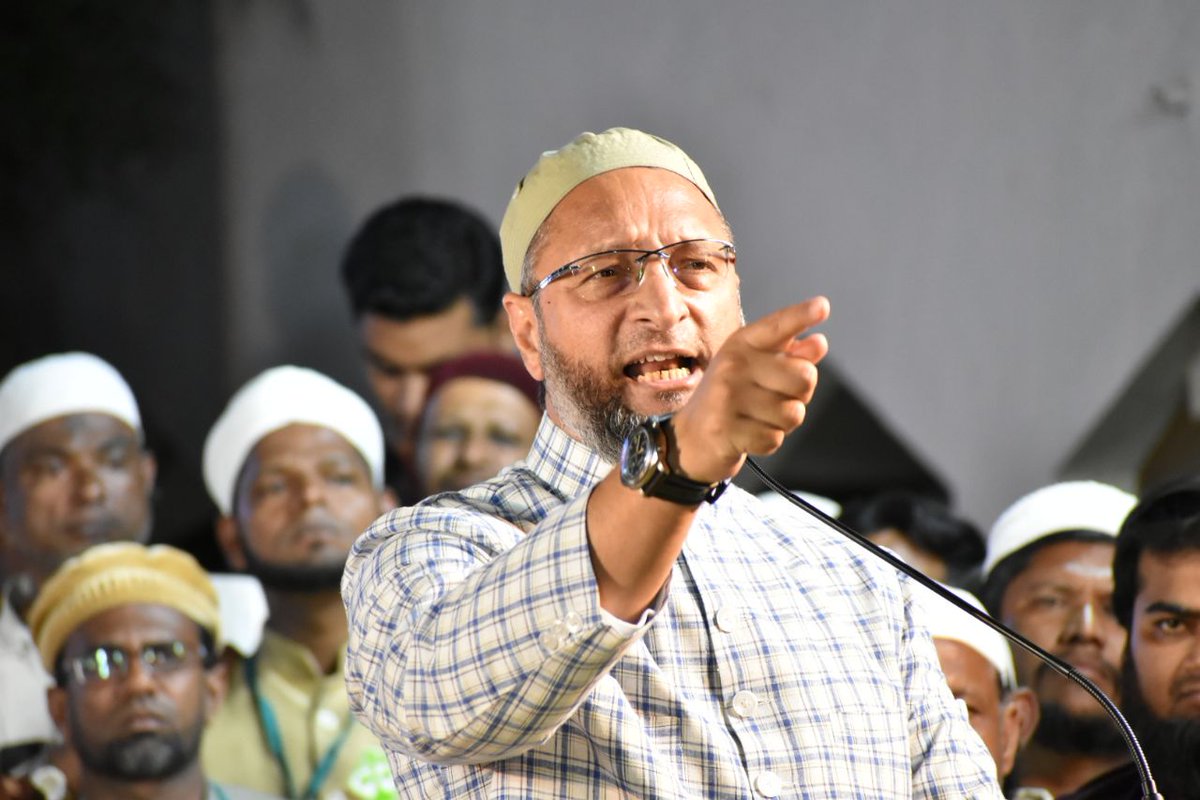
Hyderabad, May 2026 : In the wake of the latest Assembly election results, Asaduddin Owaisi, president of the All India Majlis-e-Ittehadul Muslimeen, on Tuesday called for the emergence of independent political leadership among Muslims in India, arguing that continued reliance on what he termed “so-called secular parties” has failed to safeguard the community’s interests.
Addressing media persons in Hyderabad, Owaisi said the recent outcomes, particularly in West Bengal and Assam, demonstrate the inability of traditional opposition parties to counter the electoral strength of the Bharatiya Janata Party. He urged Muslims to reassess their political strategy and focus on building their own leadership to ensure representation and accountability.
“I want to reiterate that Muslims should create their own independent political leadership. Your vote is getting wasted because you are casting it in favour of parties that claim to be secular but have failed to stop the BJP,” Owaisi said.
While acknowledging the importance of resisting communal and divisive forces, he stressed that such efforts should not come at the cost of independent political representation. According to him, decades of support extended to secular parties have not translated into tangible development or reduced discrimination faced by the community.
Owaisi pointed to electoral outcomes in states like Maharashtra, Bihar, Delhi, and West Bengal, arguing that despite significant Muslim support for opposition alliances, the BJP has continued to expand its footprint. He criticised several regional leaders, including Arvind Kejriwal, Uddhav Thackeray, and Mamata Banerjee, accusing them of adopting what he described as “soft Hindutva” approaches.
Focusing on West Bengal, Owaisi alleged that the All India Trinamool Congress government treated Muslims largely as a vote bank without making meaningful efforts to improve their socio-economic conditions during its 15-year tenure. He highlighted that despite Muslims forming a majority in around 60 Assembly constituencies and having a substantial presence in several others, the BJP managed to secure victories in many of these seats.
“The people of West Bengal have given power to the BJP. I hope the new government works for all sections of society and ensures that marginalisation of Muslims is stopped,” he said.
Owaisi attributed the Trinamool Congress’s defeat to multiple factors, including anti-incumbency, allegations of corruption, and what he described as the exploitation of Muslim voters. He also criticised Banerjee’s public image as a secular leader, claiming that it did not align with the ground reality.
Recalling political developments from the late 1990s, he pointed out that Banerjee had previously been aligned with the BJP-led government under Atal Bihari Vajpayee, suggesting that such shifts in alliances reflect broader inconsistencies among regional parties.
The AIMIM chief emphasised that independent political representation would allow Muslims to raise issues of injustice and marginalisation more effectively. He argued that having elected representatives—from corporators to Members of Parliament—would strengthen the community’s voice in governance and policy-making.
Despite AIMIM failing to win seats in West Bengal, Owaisi expressed gratitude to voters who supported the party’s candidates. He noted that the party performed relatively well in certain constituencies such as Kandi and expressed optimism about its future prospects in districts like Malda and Murshidabad.
Turning to Assam, Owaisi criticised the government led by Himanta Biswa Sarma, alleging displacement of thousands of Muslims while still retaining electoral support. He suggested that a stronger performance by Badruddin Ajmal’s party could have provided a more effective voice for Muslims in the state.
Owaisi also raised concerns about electoral roll revisions, referring to the Special Intensive Revision (SIR) process. He questioned why affected voters in West Bengal did not receive adequate support and described legal challenges to the issue as largely symbolic. He cautioned political leaders, including Revanth Reddy, to remain vigilant about such processes.
Reiterating his stance, Owaisi opposed linking voter roll revisions with questions of citizenship but urged citizens to remain alert and ensure that their names are correctly reflected in electoral lists.
With political equations shifting across states, Owaisi’s remarks are likely to fuel further debate on minority representation, opposition strategies, and the evolving dynamics of Indian electoral politics.

Delivery Of Second Indigenous Diving Support Vessel – ‘Nipun’
‘Nipun’ the second Diving Support Vessel (DSV), built by Hindustan Shipyard Limited&n…
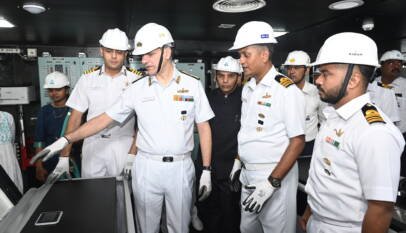
Delivery Of Second Indigenous Diving Support Vessel – ‘Nipun’
‘Nipun’ the second Diving Support Vessel (DSV), built by Hindustan Shipyard Limited was delivered to the …