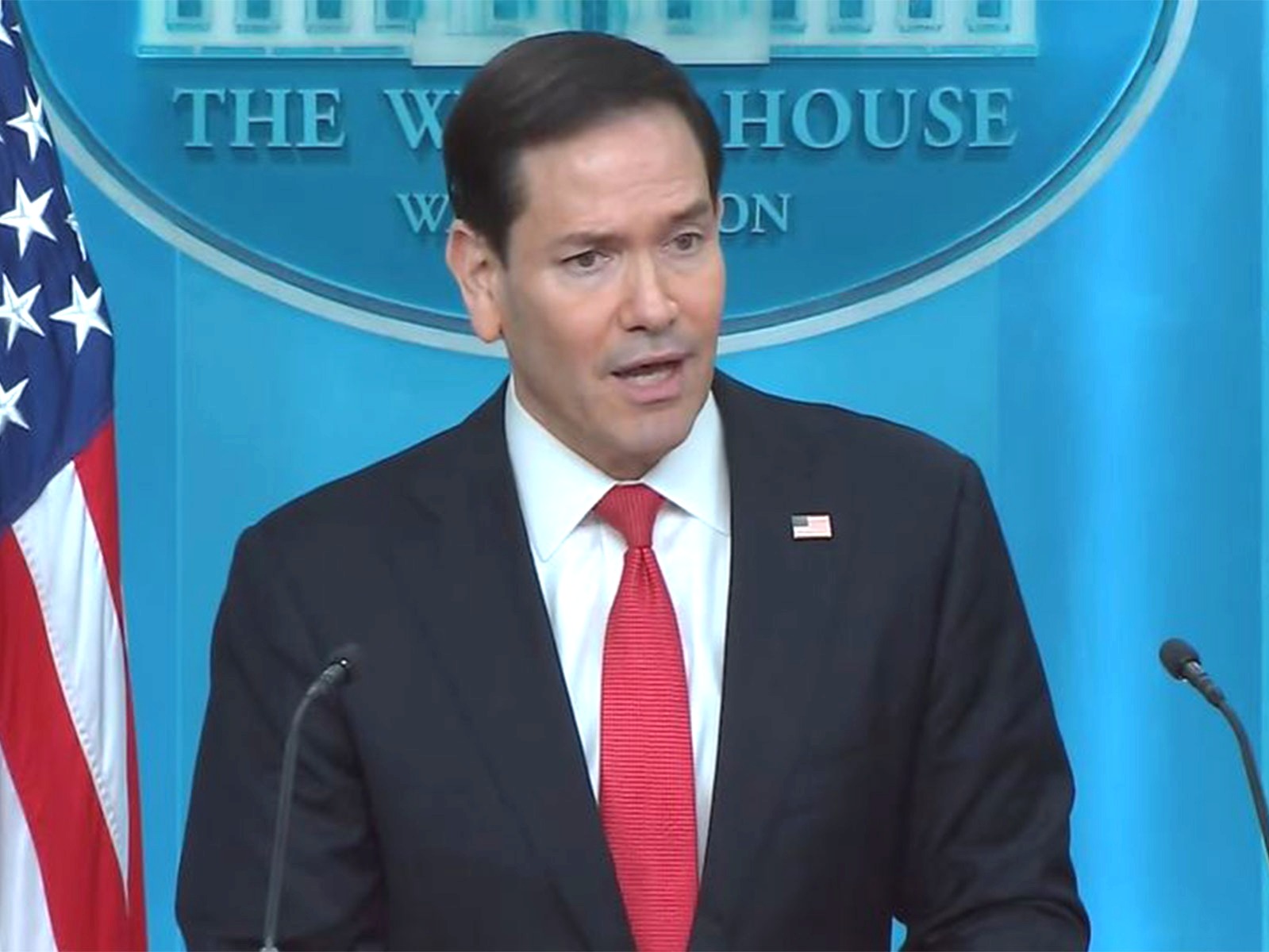
US Secretary Of States Has Briefed The Media About Project Freedom.

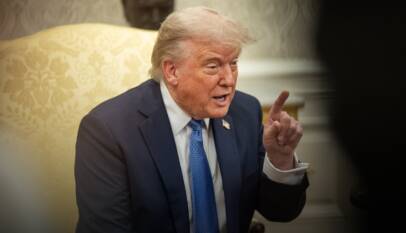
Washington DC; May 2026: Before addressing the Press, Marco Rubio had made it clear that he is only action on behalf of President Donald Trump, and shall fill the gap of Karoline Levitt.
Marco Rubio reiterated that the President announced the Project Freedom, and the goal of it is to rescue like almost 23,000 civilians from 87 different countries those who are trapped inside of the Gulf and left for dead in the Persian Gulf by this Iranian regime. For more than two months now, these innocent sailors and commercial crew members have been stranded out at sea because Iran is conducting something, and it’s not just criminal, but it’s desperate and destructive, this blockade of the Strait of Hormuz.
Nations from around the world, the overwhelming majority of whom are not even engaged in any military hostilities, are now at risk not just of losing their cargo but the lives of their own citizens because of this blockade. These ships are running out of food; running out of potable water, essential supplies, and they’re at the mercy of this piracy. And not only that, but some of them have opened fire on and rained down senseless attacks on several civilian ships already.
These sufferers are innocent bystanders who have nothing to do with any of this and nonetheless are being caught in the middle of it and are being held hostage, merely because Iran could do, just as the regime brutally slaughtered tens of thousands of their own citizens for the crime of peaceful protest, because they’re unhappy with the quality of life or the lack of quality of life in Iran today. And so, they’re sitting ducks, they are isolated, they’re starving, they’re vulnerable, and at least ten civilian sailors have already died as a result of this.
So already, many nations privately, and some publicly, have asked the United States to help free their ships and to restore freedom of navigation in the Straits of Hormuz, in this critical artery of global trade. And so, President Trump, as he always does, stepped up and answered the calls for their help. And he’s directed the United States military to guide these stranded ships to safety, to provide a protective bubble under which they can operate and move product and get themselves out of there and out of the harm’s way. And this is the first step towards reopening the strait and bringing this regime’s last-ditch act of economic arson, bringing that to a close.
Only, we’re doing it not only because we were asked, but because we’re the only ones who can. We, only we have the power to sort of take the steps that we’ve taken now. Under this president, under President Trump, the United States will help our friends. We’re going to stand up to rogue regimes like the one in Tehran, and we’re going to be unashamed to use our power and our abilities to project military power in the service of our national interest, above all else.
Now, what’s really important for you to report and for everyone to understand is this is not an offensive operation. This is a defensive operation. And what that means is very simple:
- There’s no shooting unless we’re shot at first, okay.
- We’re not attacking them. We’re not, but if they are attacking us or they’re attacking a ship, you need to respond to that.
- You’re not going to let some fast boat come up on a ship and shoot it up. We’re going to respond to it, and we’ve been successful at it.
- I don’t know what the exact number is, but I know a number of those fast boats have now been targeted and will continue to be if they pose a threat to our forces.
- We’ll shoot down drones; we’ll shoot down missiles. But it’s defensive in nature; this is defensive.
- If you hear stories about attacks and launching of – firing back and forth – it’s not back and forth. We are only responding if attacked first. This is a defensive operation, and that’s what’s occurring here.
Just about the importance of the straits for a moment, this is approximately a quarter of the world’s oil trade, along with significant volumes of fuel and fertiliser, that operate through the Straits of Hormuz. The Iranian regime cannot be allowed to dictate who uses this vital waterway. I don’t think this is also being reported enough, or maybe you are reporting. This is an international waterway, and international law is very clear, that pertinent to International waterways, no individual country can control them. There is no international law that allows you to say: I’m going to put mines in an international body of water and I’m going to blow up ships that don’t listen to us and try to go through. That’s what Iran is doing.
This is a criminal act, and someone needs to do something about it. It’s completely illegal, completely illegitimate, and completely unacceptable. And that’s why the United States military is guiding stranded commercial ships safely through the strait and is working to restore freedom of navigation and putting an end to these efforts to hold the global economy hostage.
As far as a proof of concept and as a proof of function, 02 U.S. flag merchant ships have successfully transferred the Strait of Hormuz in the first stages of this project and are now safely on their way. The U.S. military is deploying the necessary assets to extend this defensive umbrella over commercial shipping. But there should be no mistake, and as I said this already, this is a defensive operation. This is important to understand. If no shots are fired at these ships and no shots are fired at us, we’re not firing shots. But if we’re fired on, we will respond, and we will respond with lethal efficiency.
The assets supporting this project, by the way, include guided missile destroyers, over a hundred land and sea-based aircraft, multidomain unmanned platforms, and 15,000 of the finest military service members on the planet. Now, while this project steadily progresses, Operation Epic Fury – Economic Fury, I’m sorry, continues to impose maximum pressure on the Iranian regime and what remains of their already frail economy. Today, the inflation in Iran is 70%, and their currency is in total and complete freefall. U.S. sanctions enforcement is stepping up. It’s moving in lockstep with the naval blockade to degrade Iran’s capacity to generate, to move, and repatriate revenue. It directly targets the regime’s primary revenue lifelines.
The blockade alone is costing Iran as much as $500 million a day in lost revenue. 90% of total Iranian trade has been halted, causing permanent damage to Iran’s oil infrastructure as wells are forced to shut in. Again, all of this is in response to their piracy. It cannot be that you have these straits and they blow up any ship that moves and the only ships that get to go through are theirs. You can’t have a situation in which the straits are closed to everyone else but they benefit from the piracy. That can’t happen. That’s why the blockade is in place and that’s why these sanctions are crippling them. Treasury is now identifying and cutting off every dollar of revenue that’s flowing to this regime. And so, any foreign financial institution or commercial actor that enables Iran’s sanctions evasion is going to face secondary sanctions exposure and a loss of access to the U.S. financial system.
As President Trump has said and the facts clearly bear out, the United States of America holds all the cards. There is no scenario here in which, if they decide to join a ladder of escalation, they wind up getting the last say. But our preference is for these straits to be opened to the way they’re supposed to be open, back to the way it was: Anyone can use it, no mines in the water, nobody paying tolls. That’s what we have to get back to and that’s the goal here. Every day the conflict continues, however, our leverage on Iran will continue to increase and their position will continue to weaken, especially as the blockade really begins to bite in conjunction with the sanctions.
The time has come for Iran to make a sensible choice, and it’s not easy for them to do that, obviously, because they have a fracture in their own leadership system. And apart from that, I mean, the top people in that government are – to say the least, they’re insane in the brain. We need to address that, and it’s difficult because it’s hard to get past that in their system. But it’s important for them to make a sensible choice and the one that’s right for their people.
The President has proven time and again that his preference is peace, but Iran must accept the reality of the situation and come to the negotiation table and accept terms that are good for them but ultimately good for the world. The diplomatic path, and there’s a real diplomatic path, and Steve and Jared are working on that very hard. If there is one there, it could be one that leads them to reconstruction, to prosperity and to stability, and to not posing a threat to the world. The alternative is growing isolation, economic collapse, and ultimately total defeat. I know what the right choice is for Iran. I hope that the people over there making decisions will make the right one.
The last point I would make, and it really is important for them to understand this, is they really shouldn’t test the will of the United States, at least not under President Donald Trump. He has proven time and again that he will back up what he says. And if they test him, ultimately, they will lose. The hard way, the easy way, the long way, or the short way, they will lose.
QUESTION AND ANSWERS:
Q 1) Secretary Rubio, have you seen any recent indications that Iran is willing to give up its nuclear weapons program that is credible, verifiable, and that would lead to an immediate de-escalation?
A) Well, look, this is a longstanding problem for them, right? I mean, they have wanted, they have always said they don’t want a nuclear weapon. Let’s be clear: They have always said that; they just don’t mean it. And why do you say well, how do you know they don’t mean it? Well, we don’t mean it because they do all, they’re doing all the things and historically have tried to do all the things that you do if you want a nuclear weapons program.
For example, they innovate and try to innovate long-range-delivery missiles that now, in some cases, are capable of reaching much of Europe. They build these large underground centrifuges for enrichment activity. There are many countries in the world that are involved in the enrichment business, but these guys do it in mountains and in caves and in hiding. They’ve always had secret components of their nuclear program undisclosed to the world, and we know for a fact that they retain highly enriched uranium at 60%, that they did so, and that has no civilian use.
So, they have an opportunity here to agree to something that will make it clear that they are not interested in a – one thing is to say we don’t want a nuclear weapon. Another thing is to do the things that prove you don’t want a nuclear weapon. By the way, if what Iran wants is a civilian nuclear program for power plants and stuff like that, there are a lot of countries in the world that have that, and they don’t enrich. They import the enriched material. They could have that if that’s what they wanted, but they’re not acting like that what’s they wanted. They’re acting like they want a military nuclear program. That’s unacceptable.
So that’s the process we’re engaged in now to create, that’s the object of this diplomacy is to come up with some level of understanding about what are the topics that they’ve agreed to negotiate on. We don’t have to have the actual agreement written out in one day. This is highly complex and highly technical. But we have to have a diplomatic solution that is very clear about the topics that they are willing to negotiate on and the extent and the concessions they are willing to make at the front end in order to make those talks worthwhile.
That’s what Steve and Jared and the whole team is working on, and I hope to have good news on it. That’s the outcome we would prefer. That’s the outcome we would have preferred a year ago. That’s the outcome I think most of us would have preferred a long time ago. But that’s not the option they’ve given us given their activity.
Q 2) The first has to do with the blockade. There are lawmakers from both parties who claim the blockade is an act of war. What do you say to that? The second question has to do with the fuel embargo of Cuba. How long, Mr. Secretary, will that last?
A) The first one on the blockade, and so why do we have a blockade? We have a blockade because they shut down the straits. I don’t know which members of Congress you’re talking to, but here’s what I would ask them, and I would ask everybody here, it’s very simple. Iran has shut down the Straits of Hormuz. This is what Iran is saying: We will shut down the straits, no one can do through, no country in the world can go through unless we allow you to go through, and you have to pay us, but our ships can go through, meaning the Iranian ships as much as they want. That’s unacceptable. Who would agree to that?
So how are we going to have a situation where they get to close the straits to everybody, and the only people who are allowed to go through there a hundred percent without paying anything are the Iranians? If you do that, they’ll keep the straits closed forever. They’re trying to make this some new normal, okay. Under no circumstances can we ever allow them to normalise the fact that they get to blow up commercial ships and put mines in the water. Our response to that is: we’re going to blockade your ships. If everyone’s ships are not getting out, your ships are not getting out either. That’s not an act of war; that’s a defensive measure. It’s a counter to what they have decided to do.
You know what is an act of war? Putting mines in the water. Why don’t the members of Congress or whoever it is complaining about it, they should be all over that. These guys put mines in the water. That alone – mining in the water is illegal, period, under any circumstances, and they’ve done it.
On Cuba, oil blockade on Cuba, there’s no oil blockade on Cuba per se. Here’s what’s happening with Cuba, okay? Cuba used to get free oil from Venezuela, used to give them a bunch of free oil. They would take, like, 60% of that oil and resell it for cash. It wouldn’t even go to benefit the people.
The only blockade that’s happened is the Cubans have decided – I mean the Venezuelans have decided: we’re not giving you free oil anymore. And you can only imagine nowadays the way oil prices are, no one’s giving away free oil, much less to a failed regime.
The problem with Cuba is worse, okay? Their economic model doesn’t work. It doesn’t work. And the people who are in charge can’t fix it. And reason that they can’t fix it is not just because they’re communists, that’s bad enough, but they’re incompetent communists. The only thing worse than a communist is an incompetent one, and that’s what so incompetent communists run that country. They don’t know how to fix it. They really don’t. And we have 90 miles from our shores a failed state that also happens to be friendly territory for some of our adversaries. It is an unacceptable status quo, and we’ll be addressing it, but not today.
Q 3) You are going to the Vatican to meet with the Pope. Is this an attempt to smooth things over with the Pope, given the rhetoric between President Trump and Pope Leo?
A) No! No! I mean, it’s a trip we had planned from before, and obviously we had some stuff that happened, and there’s a lot to talk about with the Vatican. I’ll give you one example. The Pope just returned from a trip to Africa, where the church is growing very vibrantly. And we have shared concerns about religious freedom, religious freedom in different parts of the world. We’d love to talk to them about that.
The topic of Cuba; we gave Cuba $ 06 million of humanitarian aid, but obviously they won’t let us distribute it. We distributed it through the church. We’d like to do more. We’re willing to give more humanitarian aid to Cuba, by the way, distributed through the church, but the Cuban regime has to allow us to do it. They won’t allow us to give their own people more humanitarian aid. And we’re willing to do it through the church.
Q 4) The President recently said that the Pope is endangering a lot of Catholics as a result of his rhetoric around the Iran war. Is that a sentiment you’d agree with?
A) Well, I don’t think that’s an accurate description of what he said. I think what the President basically said is that Iran can’t have a nuclear weapon because they would use it against places that have a lot of Catholics, and Christians, and others for that matter.
It goes back to the central point – I think the President without trying to speak for him, but I think I can characterise it this way, he doesn’t understand why anybody leave aside the Pope. The President and I, for that matter; I think most people, I cannot understand why anyone would think that it’s a good idea for Iran to ever have a nuclear weapon. Look what they’re doing with the straits right now. They’re holding the whole world hostage. They have these sailors on commercial ships that are going to starve to death out there. They don’t care. They don’t care that this is melting down, they, the economies around the world, even of their own allies.
This is what they’re doing with the straits. What do you think they would do if they had a nuclear weapon? They would hold the world hostage with that nuclear weapon. That’s what they would do. They would do exactly to the world with a nuclear weapon what they’re doing now with the straits. And I think the President’s point is, how anyone cannot see that as an unacceptable outcome and an unacceptable risk is beyond him. It’s puzzling. And someone has to do something about it.
The difference between this President and, like, the six presidents that preceded him, were that he’s the only one that’s actually been willing to do something about it. Everyone says Iran can’t have a nuclear weapon, but you’ve got to do something about it at some point. And he’s been willing to address that threat. And that’s what he promised he would do when he got elected, by the way, is address threats like this.
Q 5) Mr. Secretary, the President has said multiple times that weapons were provided to the Kurdish groups to pass on the Iranian people. However, Kurdish political parties and the regional government says they have not received such weapons. Even some claim these weapons remain in the U.S. base in the region. Can you clarify who those weapons were given to, and whether you intend to retrieve them or still want to pass to the Iranian people?
A) What the President is expressing, and I think has repeatedly, is he wished the Iranian people had – look, he’s heartbroken by these images. You think about it, you’re an Iranian, okay? You’re unhappy that your economy doesn’t work for you. You don’t have freedom. You don’t have an opportunity to express yourself. You’ve got friends that’ve been shot in the head because they’re out protesting. And he just – it’s heartbreaking to him to see that these people are abused in this way and have no measures to take against their own government as a result of it.
By the way, this goes back – if you friends remember the protests in 2009, where they slaughtered people in the street. This is a vicious regime, guys. Okay? These are people that hang people from cranes in the town square so everyone can see. They continue these executions of people and have done, continue to do so for over a decade and a half now.
I think what the President is expressing is the desire that he wishes the Iranian people had an ability to fight back against some of these things that are happening to them. And I would view that as distinct and separate from the specifics of this operation that was ongoing before it concluded, and certainly different from the operation that’s going on now.
Team Maverick.



Trump Vows Continued Military Pressure on Iran, Expresses Doubts Over Diplomacy
Washington, Aug 2026: US President Donald Trump has vowed to maintain military pressure on…
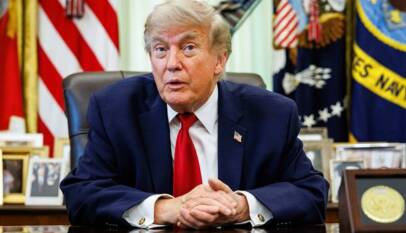
Trump Vows Continued Military Pressure on Iran, Expresses Doubts Over Diplomacy
Washington, Aug 2026: US President Donald Trump has vowed to maintain military pressure on …